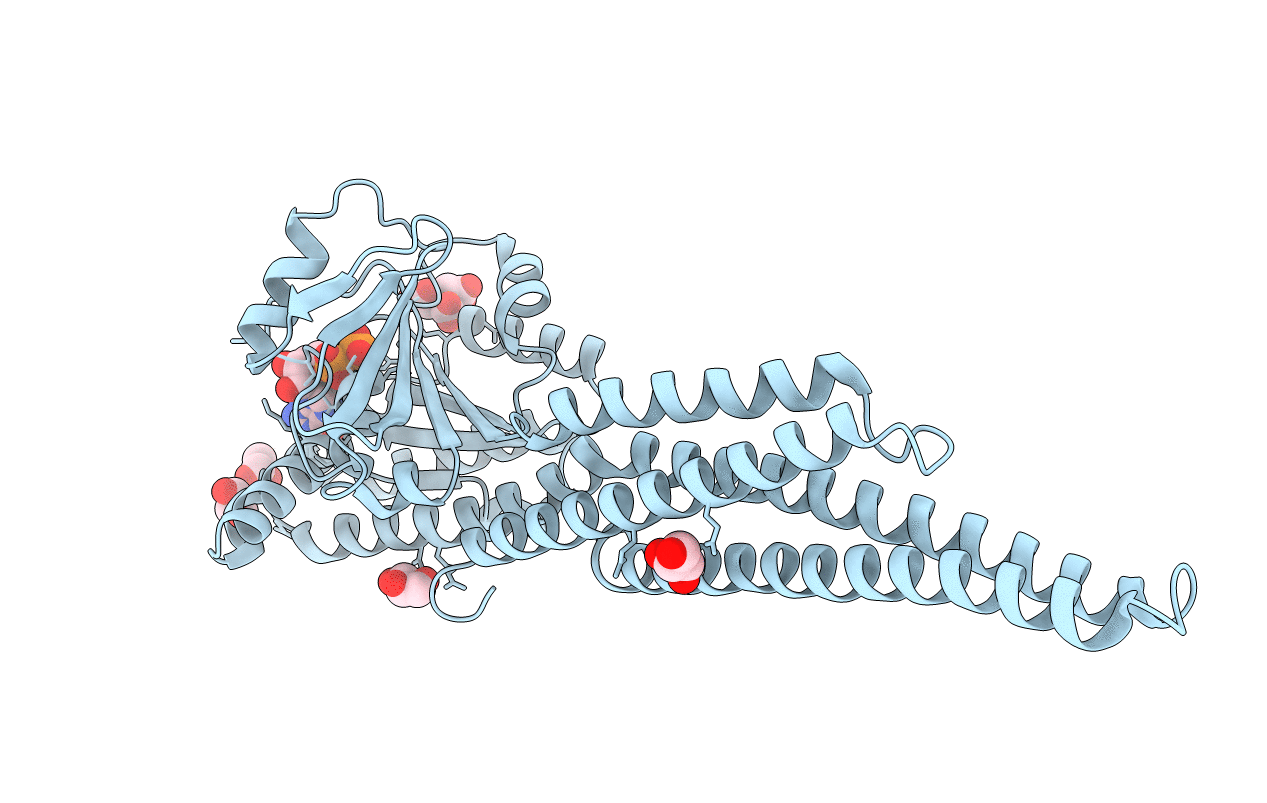
6JFK image
Deposition Date 2019-02-10
Release Date 2019-11-13
Last Version Date 2024-03-20
Entry Detail
PDB ID:
6JFK
Title:
GDP bound Mitofusin2 (MFN2)
Biological Source:
Source Organism:
Homo sapiens (Taxon ID: 9606)
Host Organism:
Method Details:
Experimental Method:
Resolution:
2.00 Å
R-Value Free:
0.21
R-Value Work:
0.17
R-Value Observed:
0.17
Space Group:
P 41 21 2

Macromolecular Entities
Structures with similar UniProt ID
Protein Blast
Polymer Type:polypeptide(L)
Molecule:Mitofusin-2,cDNA FLJ57997, highly similar to Transmembrane GTPase MFN2
Gene (Uniprot):MFN2
Chain IDs:A
Chain Length:438
Number of Molecules:1
Biological Source:Homo sapiens
Primary Citation
Structural insights of human mitofusin-2 into mitochondrial fusion and CMT2A onset.
Nat Commun 10 4914 4914 (2019)
PMID: 31664033 DOI: 10.1038/s41467-019-12912-0

Abstact

Mitofusin-2 (MFN2) is a dynamin-like GTPase that plays a central role in regulating mitochondrial fusion and cell metabolism. Mutations in MFN2 cause the neurodegenerative disease Charcot-Marie-Tooth type 2A (CMT2A). The molecular basis underlying the physiological and pathological relevance of MFN2 is unclear. Here, we present crystal structures of truncated human MFN2 in different nucleotide-loading states. Unlike other dynamin superfamily members including MFN1, MFN2 forms sustained dimers even after GTP hydrolysis via the GTPase domain (G) interface, which accounts for its high membrane-tethering efficiency. The biochemical discrepancy between human MFN2 and MFN1 largely derives from a primate-only single amino acid variance. MFN2 and MFN1 can form heterodimers via the G interface in a nucleotide-dependent manner. CMT2A-related mutations, mapping to different functional zones of MFN2, lead to changes in GTP hydrolysis and homo/hetero-association ability. Our study provides fundamental insight into how mitofusins mediate mitochondrial fusion and the ways their disruptions cause disease.

Legend

Protein

Chemical

Disease

Primary Citation of related structures
Feedback Form
Name
Email
Institute
Feedback