6JEP image
Deposition Date 2019-02-07
Release Date 2019-05-15
Last Version Date 2024-10-23
Entry Detail
PDB ID:
6JEP
Title:
Structure of a neutralizing antibody bound to the Zika envelope protein domain III
Biological Source:
Source Organism(s):
Homo sapiens (Taxon ID: 9606)
Zika virus (Taxon ID: 64320)
Expression System(s):
Method Details:
Experimental Method:
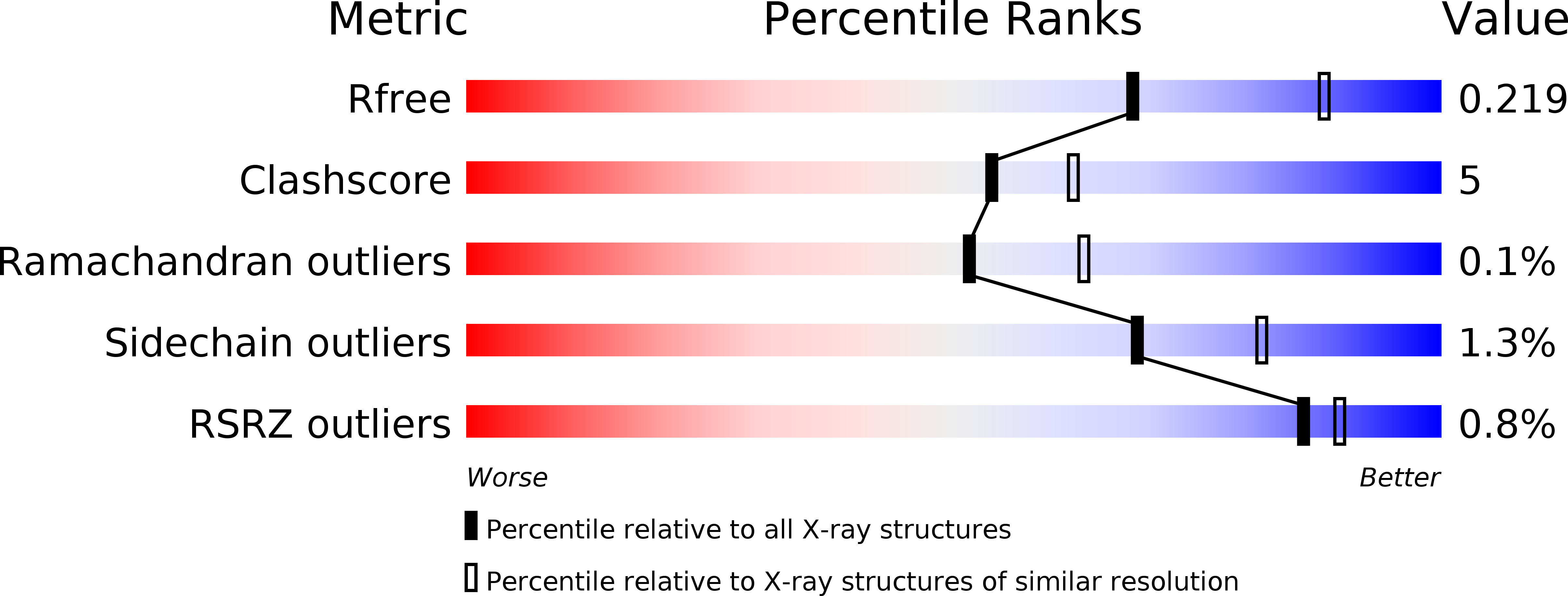
Resolution:
2.32 Å
R-Value Free:
0.21
R-Value Work:
0.16
R-Value Observed:
0.16
Space Group:
P 1 21 1
Macromolecular Entities
Structures with similar UniProt ID
Protein Blast
Polymer Type:polypeptide(L)
Molecule:Genome polyprotein
Chain IDs:C (auth: E), F
Chain Length:101
Number of Molecules:2
Biological Source:Zika virus
Polymer Type:polypeptide(L)
Molecule:heavy chain of Fab ZK2B10
Chain IDs:A (auth: H), D (auth: K)
Chain Length:235
Number of Molecules:2
Biological Source:Homo sapiens
Polymer Type:polypeptide(L)
Molecule:light chain of Fab ZK2B10
Chain IDs:B (auth: L), E (auth: I)
Chain Length:214
Number of Molecules:2
Biological Source:Homo sapiens
Primary Citation
Structural Basis for Neutralization and Protection by a Zika Virus-Specific Human Antibody.
Cell Rep 26 3360 3368.e5 (2019)
PMID: 30893607 DOI: 10.1016/j.celrep.2019.02.062

Abstact

We previously reported a human monoclonal antibody, ZK2B10, capable of protection against Zika virus (ZIKV) infection and microcephaly in developing mouse embryos. Here, we report the structural features and mechanism of action of ZK2B10. The crystal structure at a resolution of 2.32 Å revealed that the epitope is located on the lateral ridge of DIII of the envelope glycoprotein. Cryo-EM structure with mature ZIKV showed that the antibody binds to DIIIs around the icosahedral 2-fold, 3-fold, and 5-fold axes, a distinct feature compared to those reported for DIII-specific antibodies. The binding of ZK2B10 to ZIKV has no detectable effect on viral attachment to target cells or on conformational changes of the E glycoprotein in the acidic environment, suggesting that ZK2B10 functions at steps between the formation of the fusion intermediate and membrane fusion. These results provide structural and mechanistic insights into how ZK2B10 mediates protection against ZIKV infection.

Legend

Protein

Chemical

Disease

Primary Citation of related structures
Feedback Form
Name
Email
Institute
Feedback