6J7N image
Deposition Date 2019-01-18
Release Date 2020-05-13
Last Version Date 2023-11-22
Entry Detail
PDB ID:
6J7N
Keywords:
Title:
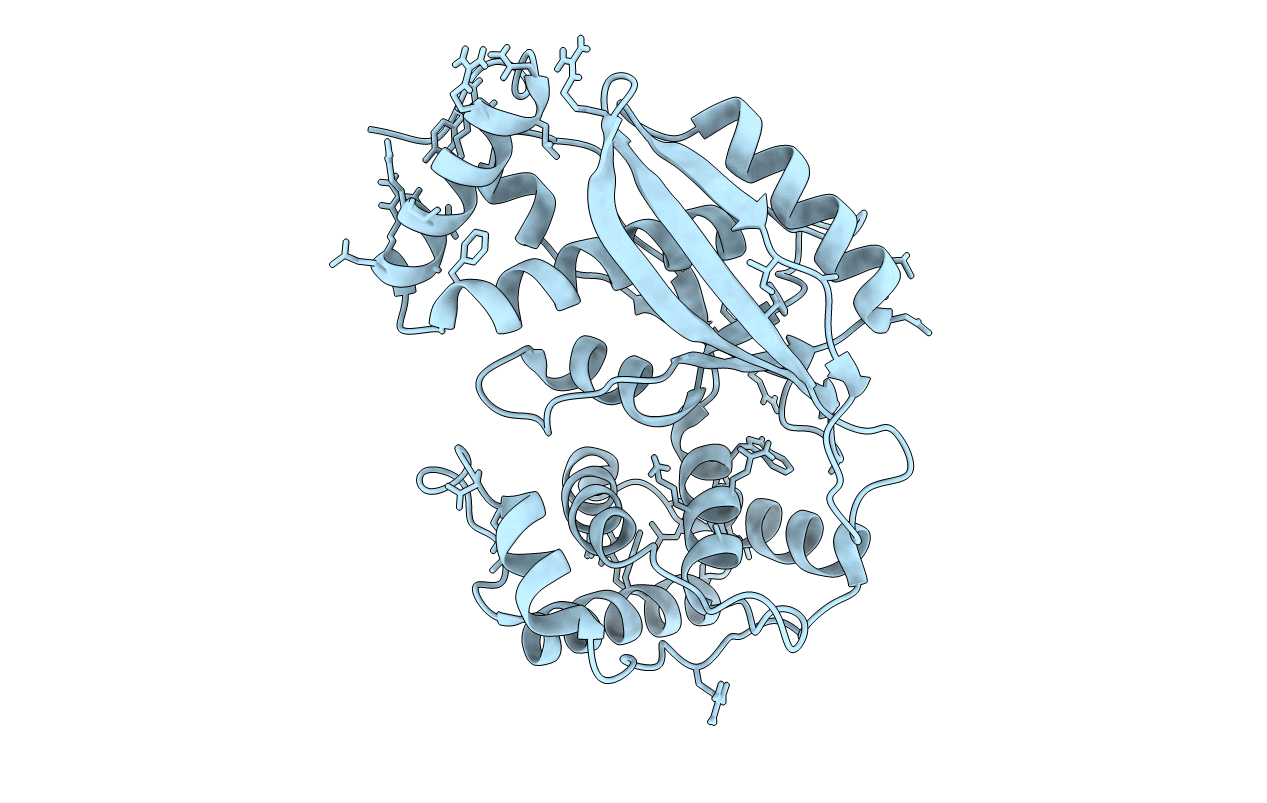
Crystal structure of toxin TglT (unusual type guanylyltransferase-like toxin, Rv1045) mutant D82A co-expressed with TakA from Mycobacterium tuberculosis
Biological Source:
Method Details:
Experimental Method:
Resolution:
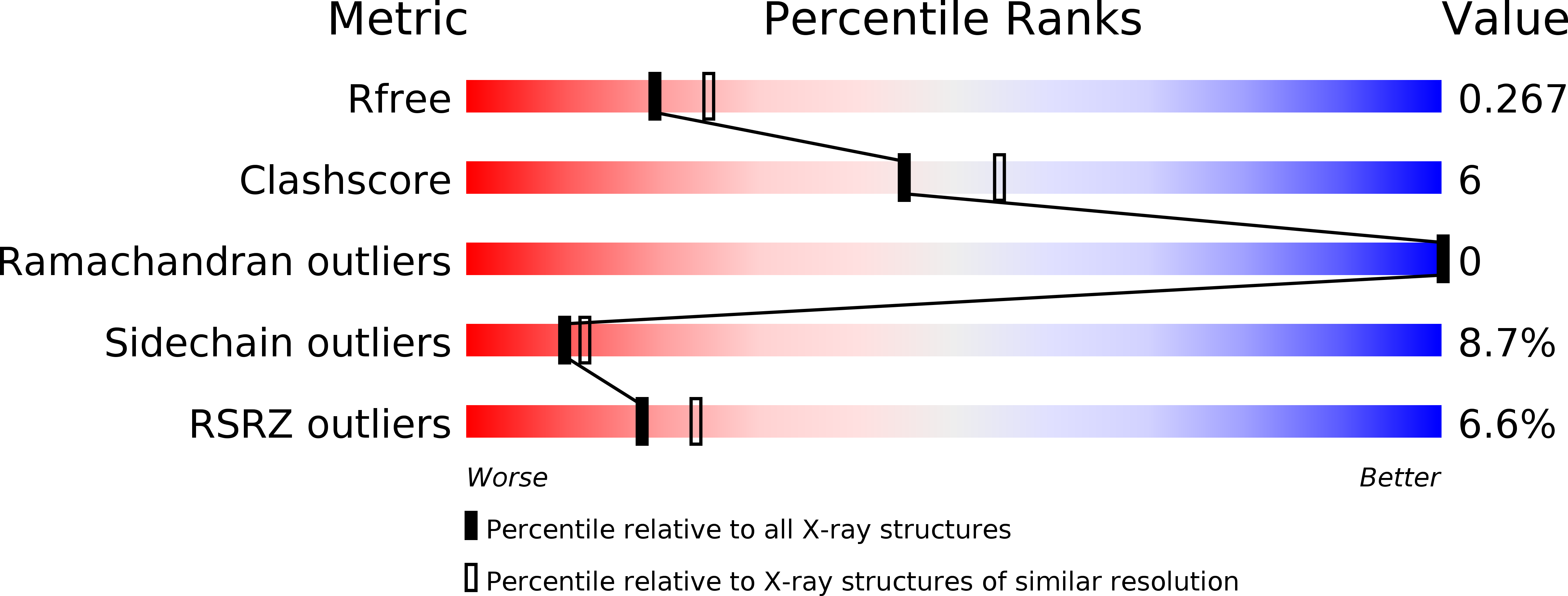
2.29 Å
R-Value Free:
0.26
R-Value Work:
0.21
R-Value Observed:
0.21
Space Group:
P 32 2 1
Macromolecular Entities
Structures with similar UniProt ID
Protein Blast
Polymer Type:polypeptide(L)
Molecule:guanylyltransferase-like toxin
Gene (Uniprot):Rv1045
Mutagens:D82A
Chain IDs:A
Chain Length:313
Number of Molecules:1
Biological Source:Mycobacterium tuberculosis (strain ATCC 25618 / H37Rv)
Ligand Molecules
Primary Citation
Characterization of a toxin-antitoxin system in Mycobacterium tuberculosis suggests neutralization by phosphorylation as the antitoxicity mechanism.
Commun Biol 3 216 216 (2020)
PMID: 32382148 DOI: 10.1038/s42003-020-0941-1

Abstact

Mycobacterium tuberculosis (Mtb) encodes an exceptionally large number of toxin-antitoxin (TA) systems, supporting the hypothesis that TA systems are involved in pathogenesis. We characterized the putative Mtb Rv1044-Rv1045 TA locus structurally and functionally, demonstrating that it constitutes a bona fide TA system but adopts a previously unobserved antitoxicity mechanism involving phosphorylation of the toxin. While Rv1045 encodes the guanylyltransferase TglT functioning as a toxin, Rv1044 encodes the novel atypical serine protein kinase TakA, which specifically phosphorylates the cognate toxin at residue S78, thereby neutralizing its toxicity. In contrast to previous predictions, we found that Rv1044-Rv1045 does not belong to the type IV TA family because TglT and TakA interact with each other as substrate and kinase, suggesting an unusual type of TA system. Protein homology analysis suggests that other COG5340-DUF1814 protein pairs, two highly associated but uncharacterized protein families widespread in prokaryotes, might share this unusual antitoxicity mechanism.

Legend

Protein

Chemical

Disease

Primary Citation of related structures
Feedback Form
Name
Email
Institute
Feedback