6J52 image
Deposition Date 2019-01-10
Release Date 2019-02-20
Last Version Date 2023-11-22
Entry Detail
PDB ID:
6J52
Keywords:
Title:
Crystal structure of CARD-only protein in frog virus 3
Biological Source:
Source Organism:
Frog virus 3 (Taxon ID: 10493)
Method Details:
Experimental Method:
Resolution:
2.50 Å
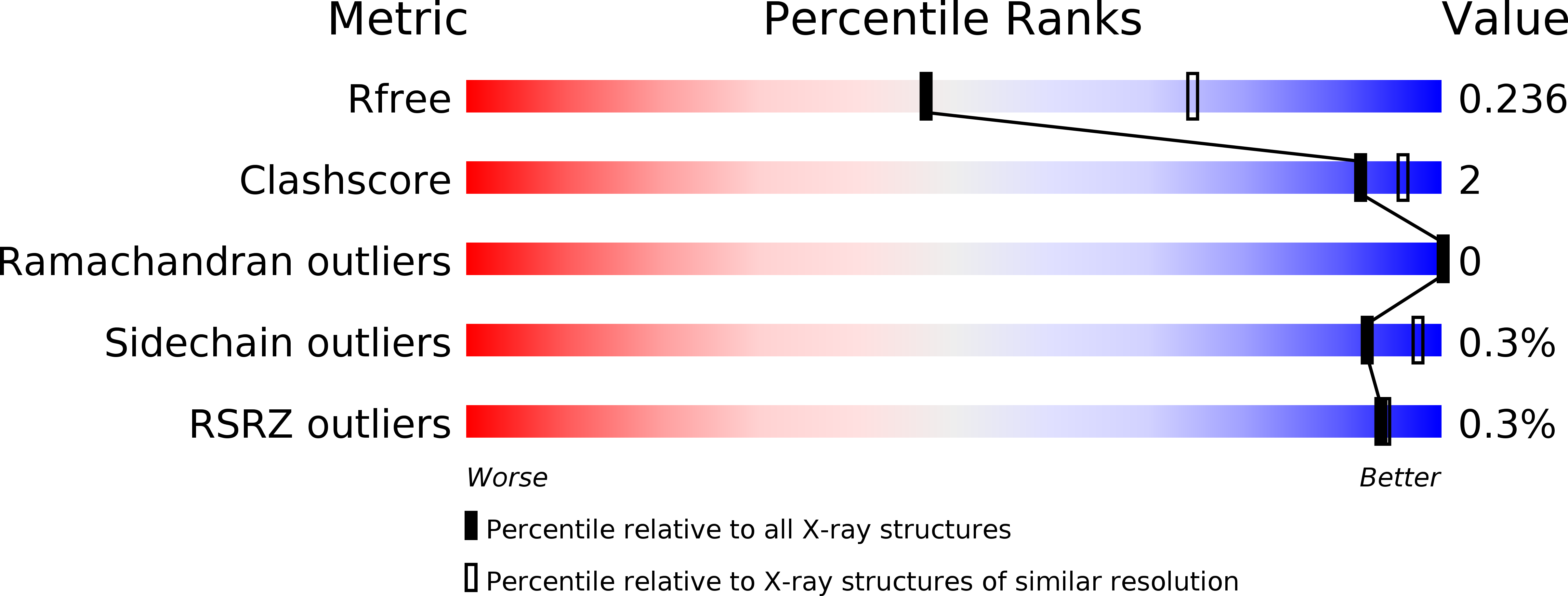
R-Value Free:
0.23
R-Value Work:
0.16
R-Value Observed:
0.17
Space Group:
P 1 21 1
Macromolecular Entities
Structures with similar UniProt ID
Protein Blast
Polymer Type:polypeptide(L)
Molecule:Caspase recruitment domain-only protein
Gene (Uniprot):orf64R
Chain IDs:A, B, C, D
Chain Length:104
Number of Molecules:4
Biological Source:Frog virus 3
Primary Citation
Structural transformation-mediated dimerization of caspase recruitment domain revealed by the crystal structure of CARD-only protein in frog virus 3.
J. Struct. Biol. 205 189 195 (2019)
PMID: 30625366 DOI: 10.1016/j.jsb.2018.12.006

Abstact

Caspase recruitment domain (CARD)-only proteins (COPs), regulate apoptosis, inflammation, and innate immunity. They inhibit the assembly of NOD-like receptor complexes such as the inflammasome and NODosome, which are molecular complexes critical for caspase-1 activation. COPs are known to interact with either caspase-1 CARD or RIP2 CARD via a CARD-CARD interaction, and inhibit caspase-1 activation or further downstream signaling. In addition to the human COPs, Pseudo-ICE, INCA, and ICEBERG, several viruses also contain viral COPs that help them escape the host immune system. To elucidate the molecular mechanism of host immunity inhibition by viral COPs, we solved the structure of a viral COP for the first time. Our structure showed that viral COP forms a structural transformation-mediated dimer, which is unique and has not been reported in any structural study of a CARD domain. Based on the current structure, and the previously solved structures of other death domain superfamily members, we propose that structural transformation-mediated dimerization might be a new strategy for dimer assembly in the death domain superfamily.

Legend

Protein

Chemical

Disease

Primary Citation of related structures
Feedback Form
Name
Email
Institute
Feedback