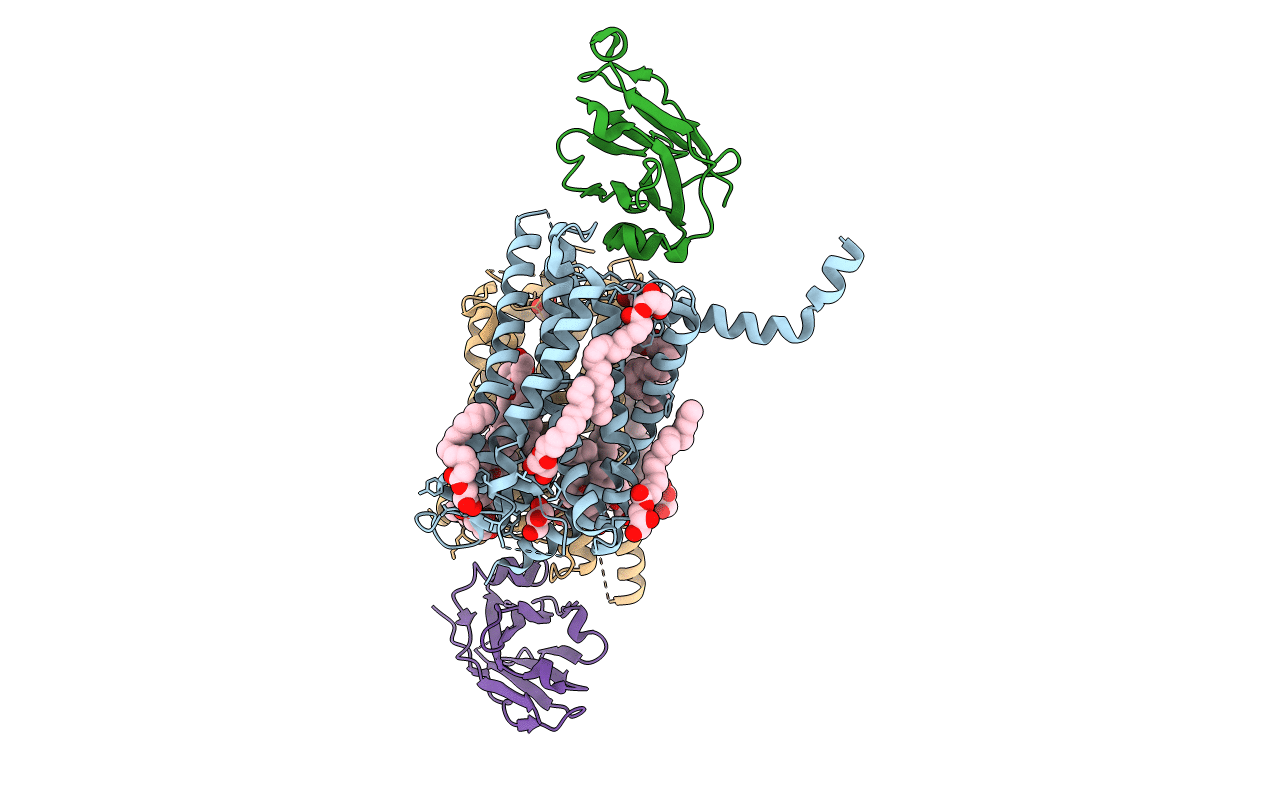
6IBB image
Deposition Date 2018-11-29
Release Date 2019-08-14
Last Version Date 2024-10-23
Entry Detail
PDB ID:
6IBB
Title:
Crystal structure of the rat isoform of the succinate receptor SUCNR1 (GPR91) in complex with a nanobody
Biological Source:
Source Organism:
Host Organism:
Method Details:
Experimental Method:
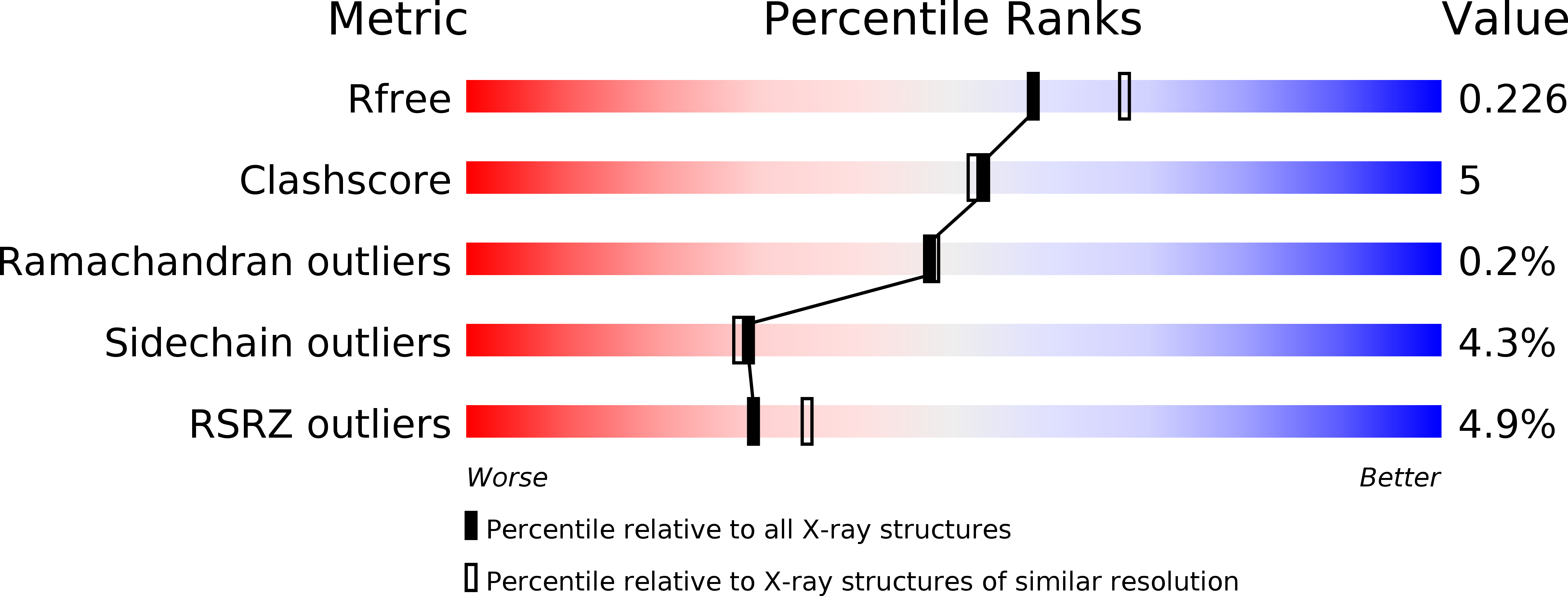
Resolution:
2.12 Å
R-Value Free:
0.21
R-Value Work:
0.17
R-Value Observed:
0.18
Space Group:
P 1 21 1
Macromolecular Entities
Structures with similar UniProt ID
Protein Blast
Polymer Type:polypeptide(L)
Molecule:Succinate receptor 1
Gene (Uniprot):Sucnr1
Chain IDs:A, C
Chain Length:342
Number of Molecules:2
Biological Source:Rattus norvegicus
Polymer Type:polypeptide(L)
Molecule:Nanobody6
Chain IDs:B, D
Chain Length:142
Number of Molecules:2
Biological Source:Vicugna pacos
Primary Citation
Structural basis of species-selective antagonist binding to the succinate receptor.
Nature 574 581 585 (2019)
PMID: 31645725 DOI: 10.1038/s41586-019-1663-8

Abstact

The tricarboxylic acid cycle intermediate succinate is involved in metabolic processes and plays a crucial role in the homeostasis of mitochondrial reactive oxygen species1. The receptor responsible for succinate signalling, SUCNR1 (also known as GPR91), is a member of the G-protein-coupled-receptor family2 and links succinate signalling to renin-induced hypertension, retinal angiogenesis and inflammation3-5. Because SUCNR1 senses succinate as an immunological danger signal6-which has relevance for diseases including ulcerative colitis, liver fibrosis7, diabetes and rheumatoid arthritis3,8-it is of interest as a therapeutic target. Here we report the high-resolution crystal structure of rat SUCNR1 in complex with an intracellular binding nanobody in the inactive conformation. Structure-based mutagenesis and radioligand-binding studies, in conjunction with molecular modelling, identified key residues for species-selective antagonist binding and enabled the determination of the high-resolution crystal structure of a humanized rat SUCNR1 in complex with a high-affinity, human-selective antagonist denoted NF-56-EJ40. We anticipate that these structural insights into the architecture of the succinate receptor and its antagonist selectivity will enable structure-based drug discovery and will further help to elucidate the function of SUCNR1 in vitro and in vivo.

Legend

Protein

Chemical

Disease

Primary Citation of related structures
Feedback Form
Name
Email
Institute
Feedback