6I9C image
Deposition Date 2018-11-22
Release Date 2019-03-06
Last Version Date 2024-05-15
Entry Detail
PDB ID:
6I9C
Keywords:
Title:
Structure of the OTU domain of OTULIN G281R mutant
Biological Source:
Source Organism:
Homo sapiens (Taxon ID: 9606)
Host Organism:
Method Details:
Experimental Method:
Resolution:
1.77 Å
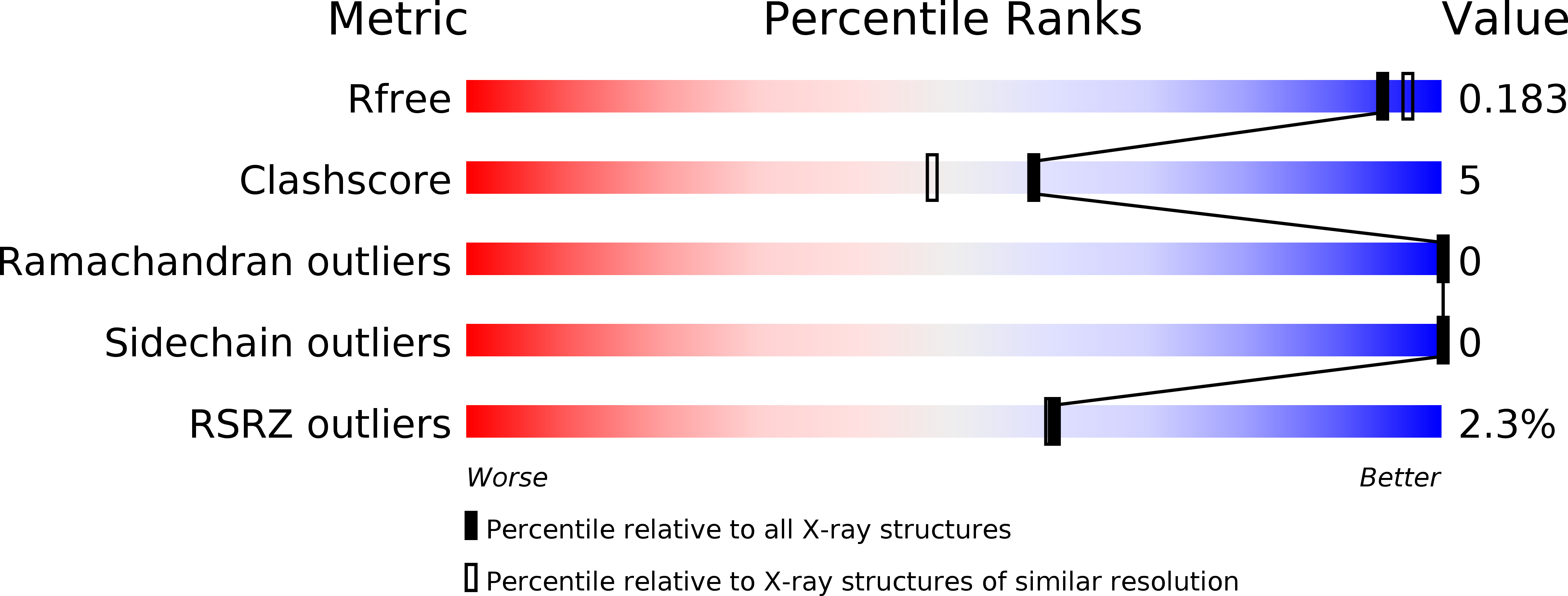
R-Value Free:
0.17
R-Value Work:
0.16
R-Value Observed:
0.16
Space Group:
P 21 21 21
Macromolecular Entities
Structures with similar UniProt ID
Protein Blast
Polymer Type:polypeptide(L)
Molecule:Ubiquitin thioesterase otulin
Gene (Uniprot):OTULIN
Mutagens:G281R
Chain IDs:A
Chain Length:268
Number of Molecules:1
Biological Source:Homo sapiens
Primary Citation
OTULIN deficiency in ORAS causes cell type-specific LUBAC degradation, dysregulated TNF signalling and cell death.
Embo Mol Med 11 ? ? (2019)
PMID: 30804083 DOI: 10.15252/emmm.201809324

Abstact

The deubiquitinase OTULIN removes methionine-1 (M1)-linked polyubiquitin signals conjugated by the linear ubiquitin chain assembly complex (LUBAC) and is critical for preventing TNF-driven inflammation in OTULIN-related autoinflammatory syndrome (ORAS). Five ORAS patients have been reported, but how dysregulated M1-linked polyubiquitin signalling causes their symptoms is unclear. Here, we report a new case of ORAS in which an OTULIN-Gly281Arg mutation leads to reduced activity and stability in vitro and in cells. In contrast to OTULIN-deficient monocytes, in which TNF signalling and NF-κB activation are increased, loss of OTULIN in patient-derived fibroblasts leads to a reduction in LUBAC levels and an impaired response to TNF Interestingly, both patient-derived fibroblasts and OTULIN-deficient monocytes are sensitised to certain types of TNF-induced death, and apoptotic cells are evident in ORAS patient skin lesions. Remarkably, haematopoietic stem cell transplantation leads to complete resolution of inflammatory symptoms, including fevers, panniculitis and diarrhoea. Therefore, haematopoietic cells are necessary for clinical manifestation of ORAS Together, our data suggest that ORAS pathogenesis involves hyper-inflammatory immune cells and TNF-induced death of both leukocytes and non-haematopoietic cells.

Legend

Protein

Chemical

Disease

Primary Citation of related structures
Feedback Form
Name
Email
Institute
Feedback