6I9B image
Deposition Date 2018-11-22
Release Date 2019-03-13
Last Version Date 2024-06-19
Entry Detail
PDB ID:
6I9B
Title:
NMR structure of the La module from human LARP4A
Biological Source:
Source Organism:
Homo sapiens (Taxon ID: 9606)
Host Organism:
Method Details:
Experimental Method:
Conformers Calculated:
300
Conformers Submitted:
20
Selection Criteria:
structures with the lowest energy
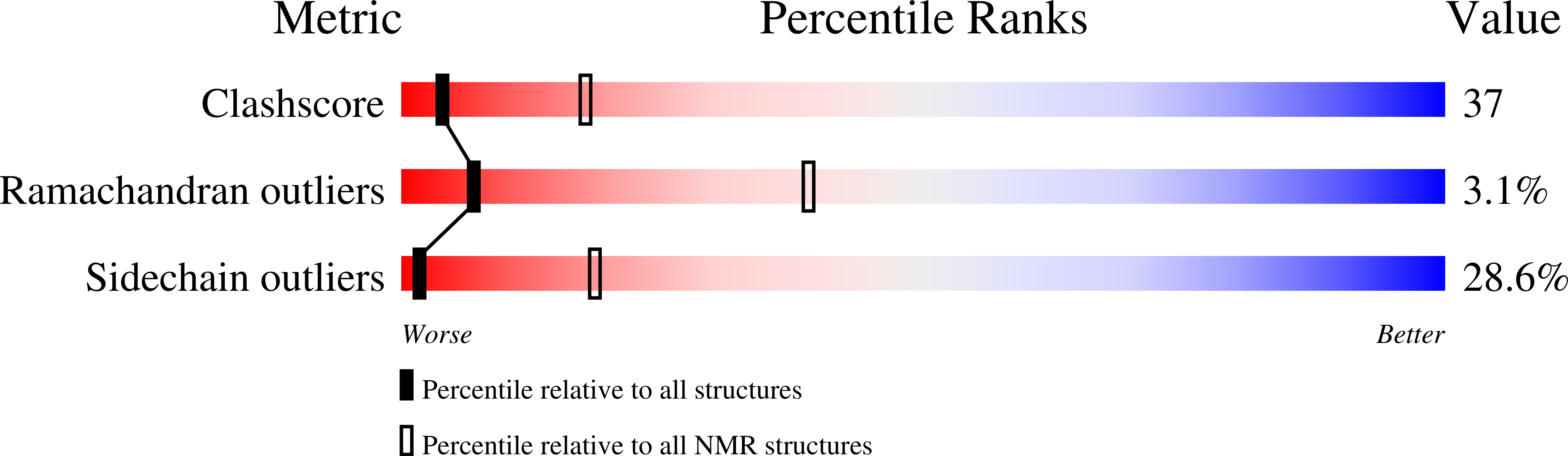
Macromolecular Entities
Structures with similar UniProt ID
Protein Blast
Polymer Type:polypeptide(L)
Molecule:La-related protein 4
Gene (Uniprot):LARP4
Chain IDs:A
Chain Length:177
Number of Molecules:1
Biological Source:Homo sapiens
Ligand Molecules
Primary Citation
LARP4A recognizes polyA RNA via a novel binding mechanism mediated by disordered regions and involving the PAM2w motif, revealing interplay between PABP, LARP4A and mRNA.
Nucleic Acids Res. 47 4272 4291 (2019)
PMID: 30820564 DOI: 10.1093/nar/gkz144

Abstact

LARP4A belongs to the ancient RNA-binding protein superfamily of La-related proteins (LARPs). In humans, it acts mainly by stabilizing mRNAs, enhancing translation and controlling polyA lengths of heterologous mRNAs. These activities are known to implicate its association with mRNA, protein partners and translating ribosomes, albeit molecular details are missing. Here, we characterize the direct interaction between LARP4A, oligoA RNA and the MLLE domain of the PolyA-binding protein (PABP). Our study shows that LARP4A-oligoA association entails novel RNA recognition features involving the N-terminal region of the protein that exists in a semi-disordered state and lacks any recognizable RNA-binding motif. Against expectations, we show that the La module, the conserved RNA-binding unit across LARPs, is not the principal determinant for oligoA interaction, only contributing to binding to a limited degree. Furthermore, the variant PABP-interacting motif 2 (PAM2w) featured in the N-terminal region of LARP4A was found to be important for both RNA and PABP recognition, revealing a new role for this protein-protein binding motif. Our analysis demonstrates the mutual exclusive nature of the PAM2w-mediated interactions, thereby unveiling a tantalizing interplay between LARP4A, polyA and PABP.

Legend

Protein

Chemical

Disease

Primary Citation of related structures
Feedback Form
Name
Email
Institute
Feedback