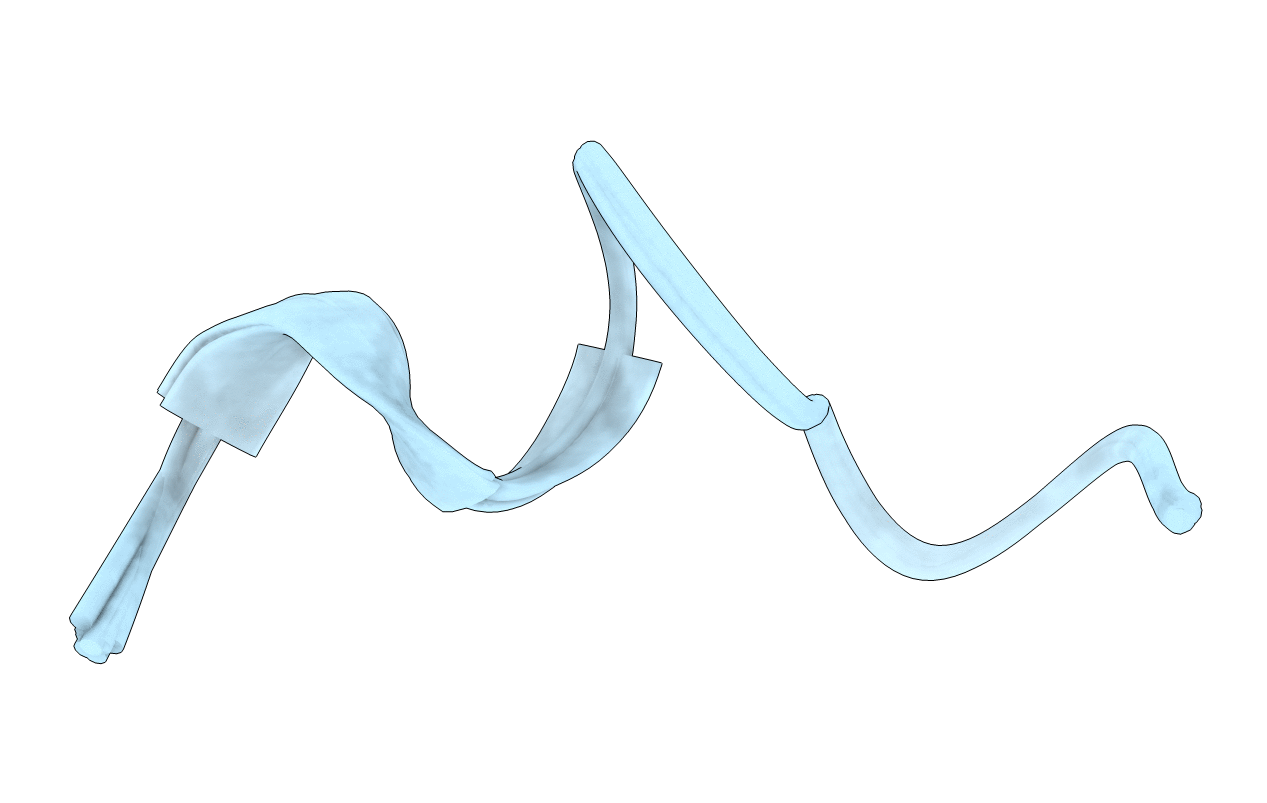
6HVK image
Deposition Date 2018-10-11
Release Date 2019-10-30
Last Version Date 2024-11-13
Entry Detail
PDB ID:
6HVK
Title:
Pepducin UT-Pep2 a biased allosteric agonist of Urotensin-II receptor
Biological Source:
Source Organism:
Homo sapiens (Taxon ID: 9606)
Method Details:
Experimental Method:
Conformers Calculated:
100
Conformers Submitted:
10
Selection Criteria:
structures with the lowest energy

Macromolecular Entities
Structures with similar UniProt ID
Protein Blast
Polymer Type:polypeptide(L)
Molecule:Urotensin-2 receptor
Gene (Uniprot):UTS2R
Chain IDs:A
Chain Length:14
Number of Molecules:1
Biological Source:Homo sapiens
Ligand Molecules
Primary Citation
Lipidated peptides derived from intracellular loops 2 and 3 of the urotensin II receptor act as biased allosteric ligands.
J.Biol.Chem. 297 101057 101057 (2021)
PMID: 34389356 DOI: 10.1016/j.jbc.2021.101057

Abstact

Over the last decade, the urotensinergic system, composed of one G protein-coupled receptor and two endogenous ligands, has garnered significant attention as a promising new target for the treatment of various cardiovascular diseases. Indeed, this system is associated with various biomarkers of cardiovascular dysfunctions and is involved in changes in cardiac contractility, fibrosis, and hypertrophy contributing, like the angiotensinergic system, to the pathogenesis and progression of heart failure. Significant investment has been made toward the development of clinically relevant UT ligands for therapeutic intervention, but with little or no success to date. This system therefore remains to be therapeutically exploited. Pepducins and other lipidated peptides have been used as both mechanistic probes and potential therapeutics; therefore, pepducins derived from the human urotensin II receptor might represent unique tools to generate signaling bias and study hUT signaling networks. Two hUT-derived pepducins, derived from the second and the third intracellular loop of the receptor (hUT-Pep2 and [Trp1, Leu2]hUT-Pep3, respectively), were synthesized and pharmacologically characterized. Our results demonstrated that hUT-Pep2 and [Trp1, Leu2]hUT-Pep3 acted as biased ago-allosteric modulators, triggered ERK1/2 phosphorylation and, to a lesser extent, IP1 production, and stimulated cell proliferation yet were devoid of contractile activity. Interestingly, both hUT-derived pepducins were able to modulate human urotensin II (hUII)- and urotensin II-related peptide (URP)-mediated contraction albeit to different extents. These new derivatives represent unique tools to reveal the intricacies of hUT signaling and also a novel avenue for the design of allosteric ligands selectively targeting hUT signaling potentially.

Legend

Protein

Chemical

Disease

Primary Citation of related structures
Feedback Form
Name
Email
Institute
Feedback