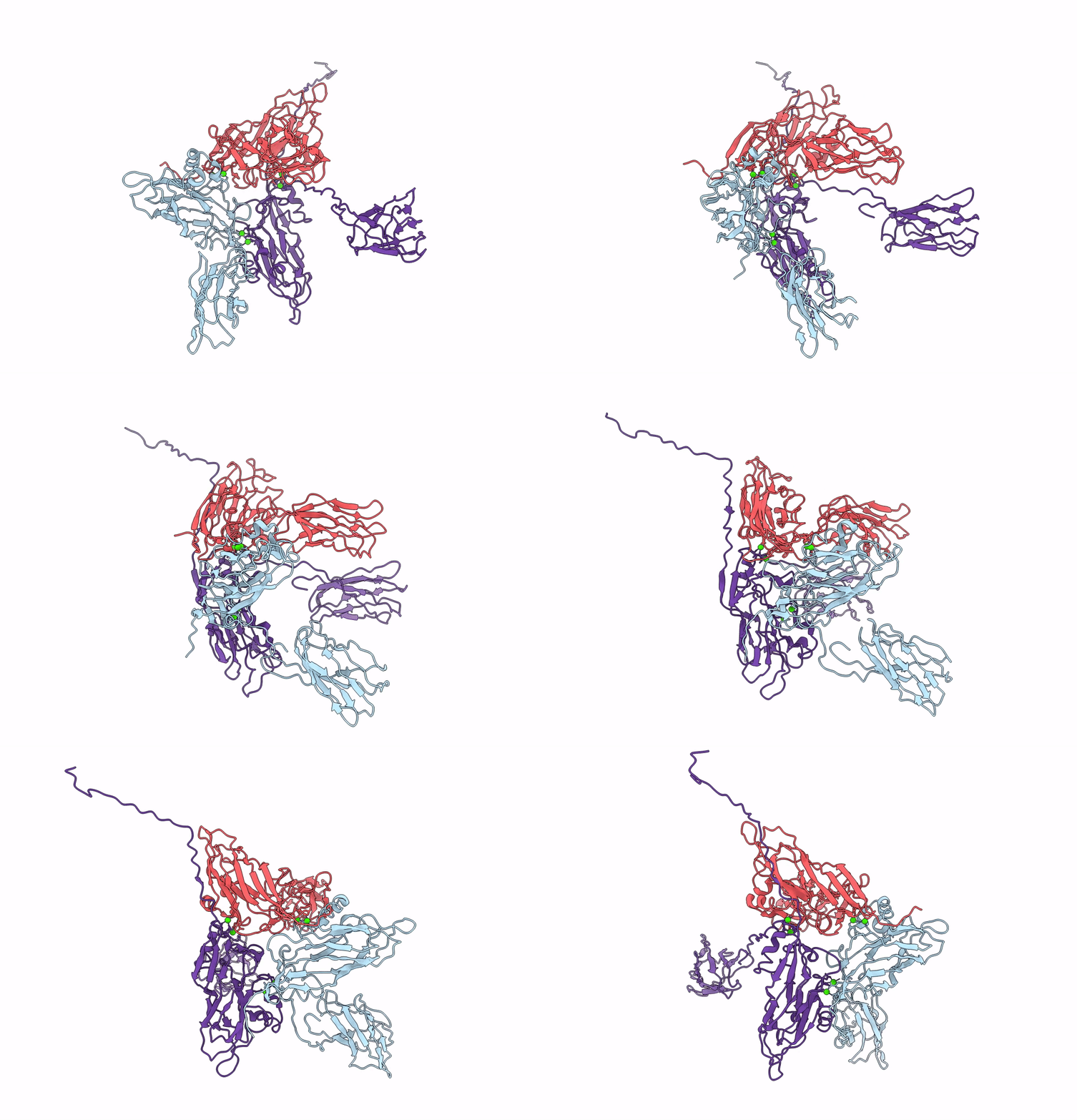
6H2B image
Deposition Date 2018-07-13
Release Date 2018-10-31
Last Version Date 2024-05-15
Entry Detail
PDB ID:
6H2B
Title:
Structure of the Macrobrachium rosenbergii Nodavirus
Biological Source:
Source Organism:
Host Organism:
Method Details:
Experimental Method:
Resolution:
3.28 Å
Aggregation State:
PARTICLE
Reconstruction Method:
SINGLE PARTICLE
Macromolecular Entities
Structures with similar UniProt ID
Protein Blast
Polymer Type:polypeptide(L)
Molecule:Capsid protein
Gene (Uniprot):CP
Chain IDs:A, B, C
Chain Length:371
Number of Molecules:3
Biological Source:Macrobrachium rosenbergii nodavirus
Ligand Molecules
Primary Citation
Structure of the Macrobrachium rosenbergii nodavirus: A new genus within the Nodaviridae?
PLoS Biol. 16 e3000038 e3000038 (2018)
PMID: 30346944 DOI: 10.1371/journal.pbio.3000038

Abstact

Macrobrachium rosenbergii nodavirus (MrNV) is a pathogen of freshwater prawns that poses a threat to food security and causes significant economic losses in the aquaculture industries of many developing nations. A detailed understanding of the MrNV virion structure will inform the development of strategies to control outbreaks. The MrNV capsid has also been engineered to display heterologous antigens, and thus knowledge of its atomic resolution structure will benefit efforts to develop tools based on this platform. Here, we present an atomic-resolution model of the MrNV capsid protein (CP), calculated by cryogenic electron microscopy (cryoEM) of MrNV virus-like particles (VLPs) produced in insect cells, and three-dimensional (3D) image reconstruction at 3.3 Å resolution. CryoEM of MrNV virions purified from infected freshwater prawn post-larvae yielded a 6.6 Å resolution structure, confirming the biological relevance of the VLP structure. Our data revealed that unlike other known nodavirus structures, which have been shown to assemble capsids having trimeric spikes, MrNV assembles a T = 3 capsid with dimeric spikes. We also found a number of surprising similarities between the MrNV capsid structure and that of the Tombusviridae: 1) an extensive network of N-terminal arms (NTAs) lines the capsid interior, forming long-range interactions to lace together asymmetric units; 2) the capsid shell is stabilised by 3 pairs of Ca2+ ions in each asymmetric unit; 3) the protruding spike domain exhibits a very similar fold to that seen in the spikes of the tombusviruses. These structural similarities raise questions concerning the taxonomic classification of MrNV.

Legend

Protein

Chemical

Disease

Primary Citation of related structures
Feedback Form
Name
Email
Institute
Feedback