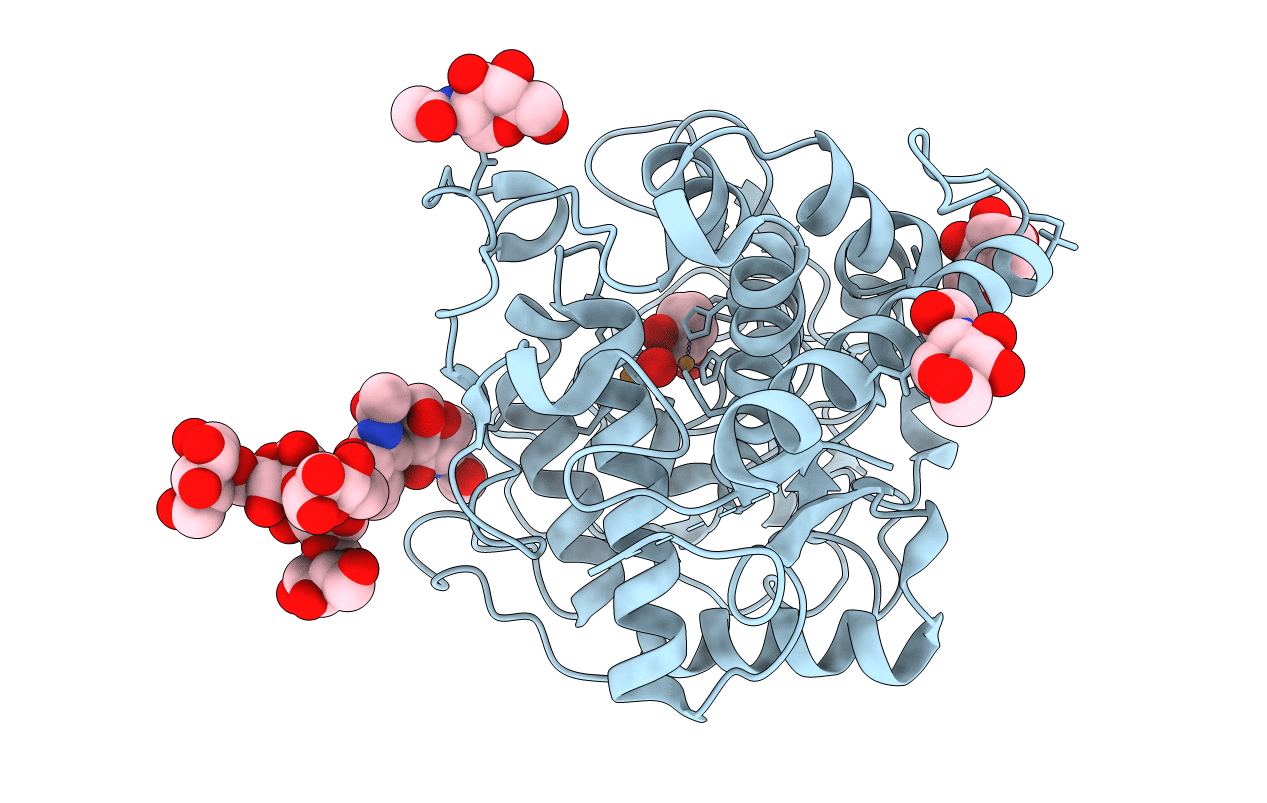
6GSG image
Deposition Date 2018-06-14
Release Date 2018-09-19
Last Version Date 2024-10-23
Entry Detail
PDB ID:
6GSG
Keywords:
Title:
Crystal structure of Aspergillus oryzae catechol oxidase complexed with resorcinol
Biological Source:
Method Details:
Experimental Method:
Resolution:
2.19 Å
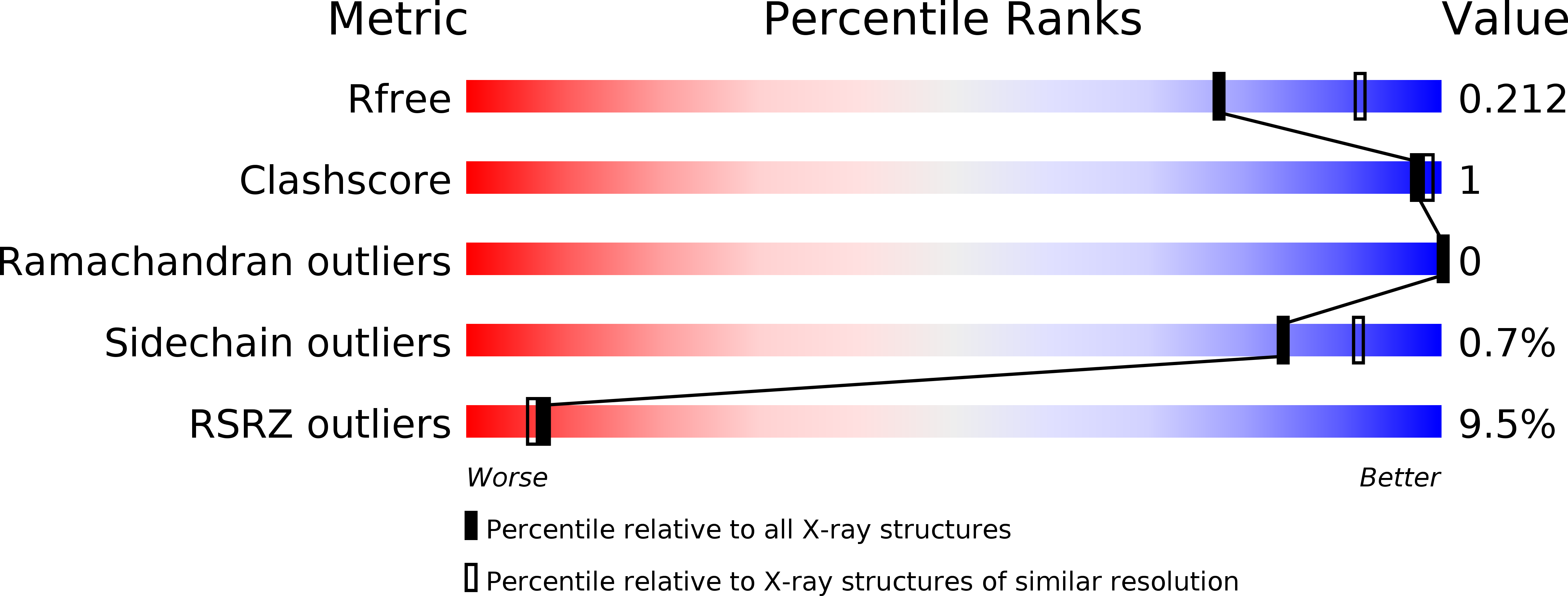
R-Value Free:
0.21
R-Value Work:
0.18
R-Value Observed:
0.18
Space Group:
P 32 2 1
Macromolecular Entities
Structures with similar UniProt ID
Protein Blast
Polymer Type:polypeptide(L)
Molecule:Catechol oxidase
Gene (Uniprot):AO090001000383
Chain IDs:A
Chain Length:383
Number of Molecules:1
Biological Source:Aspergillus oryzae (strain ATCC 42149 / RIB 40)
Modified Residue
Compound ID Chain ID Parent Comp ID Details 2D Image
SEP A SER modified residue
Primary Citation
Unraveling Substrate Specificity and Catalytic Promiscuity of Aspergillus oryzae Catechol Oxidase.
Chembiochem 19 2348 2352 (2018)
PMID: 30204291 DOI: 10.1002/cbic.201800387

Abstact

Catechol oxidases and tyrosinases are coupled binuclear copper enzymes that oxidize various o-diphenolic compounds to corresponding o-quinones. Tyrosinases have an additional monooxygenation ability to hydroxylate monophenol to o-diphenol. It is still not clear what causes the difference in the catalytic activities. We solved a complex structure of Aspergillus oryzae catechol oxidase with resorcinol bound into the active site. Catalytic activity of A. oryzae catechol oxidase was studied, for the first time, by high-resolution FT-ICR mass spectrometry to shed light on the reaction mechanism. The enzyme was also found to catalyze monooxygenation of small phenolics, which provides a novel perspective for the discussion of differences in the catalytic activity between tyrosinases and catechol oxidases. According to the results, two binding modes for resorcinol are suggested and a reaction mechanism for coupled binuclear copper enzymes is discussed.

Legend

Protein

Chemical

Disease

Primary Citation of related structures
Feedback Form
Name
Email
Institute
Feedback