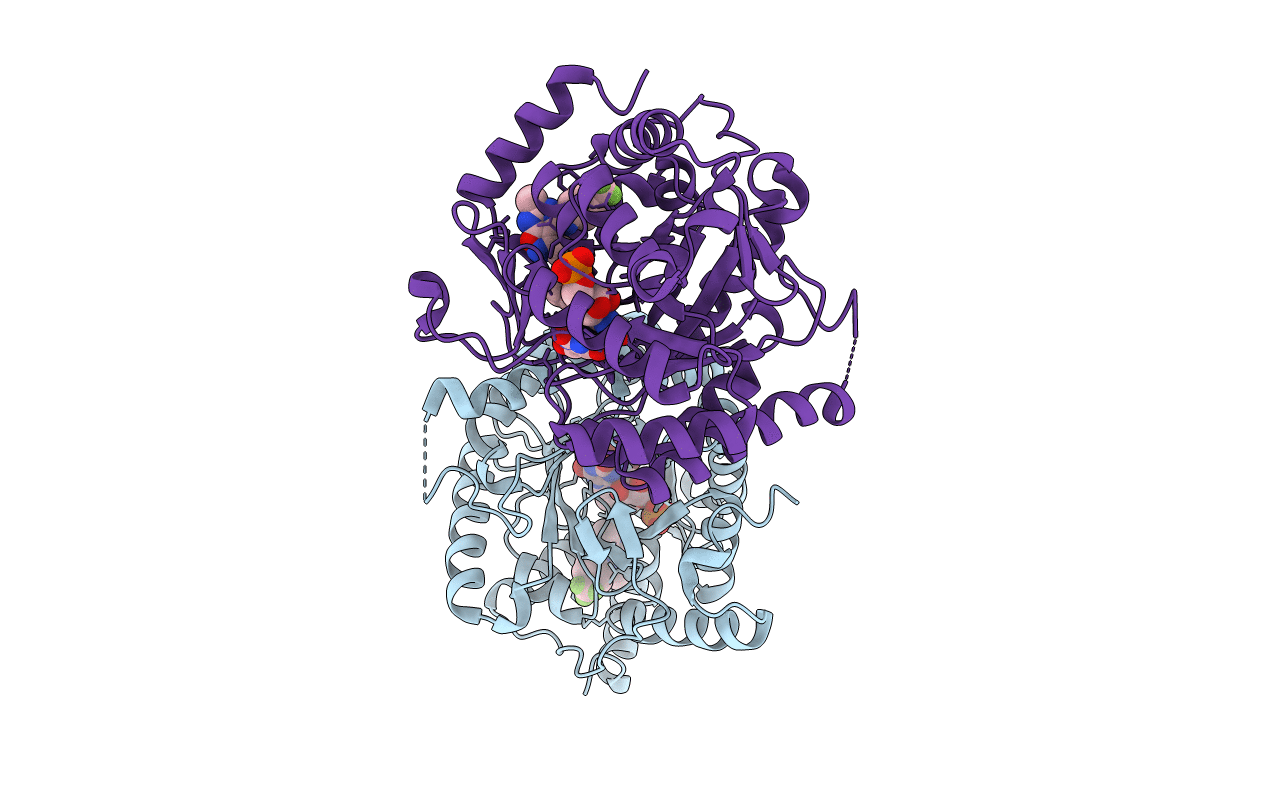
6GJG image
Deposition Date 2018-05-16
Release Date 2018-09-19
Last Version Date 2024-05-15
Entry Detail
PDB ID:
6GJG
Keywords:
Title:
Plasmodium falciparum dihydroorotate dehydrogenase DHODH in complex with 3,6-dimethyl-N-(4-(trifluoromethyl)phenyl)-(1,2)oxazolo(5,4-d)pyrimidin-4-amine
Biological Source:
Source Organism:
Host Organism:
Method Details:
Experimental Method:
Resolution:
1.99 Å
R-Value Free:
0.20
R-Value Work:
0.16
R-Value Observed:
0.16
Space Group:
P 1 21 1

Macromolecular Entities
Structures with similar UniProt ID
Protein Blast
Polymer Type:polypeptide(L)
Molecule:Dihydroorotate dehydrogenase (quinone), mitochondrial
Gene (Uniprot):PFF0160c
Chain IDs:A, B
Chain Length:401
Number of Molecules:2
Biological Source:Plasmodium falciparum
Primary Citation
Isoxazolopyrimidine-Based Inhibitors ofPlasmodium falciparumDihydroorotate Dehydrogenase with Antimalarial Activity.
ACS Omega 3 9227 9240 (2018)
PMID: 30197997 DOI: 10.1021/acsomega.8b01573

Abstact

Malaria kills nearly 0.5 million people yearly and impacts the lives of those living in over 90 countries where it is endemic. The current treatment programs are threatened by increasing drug resistance. Dihydroorotate dehydrogenase (DHODH) is now clinically validated as a target for antimalarial drug discovery as a triazolopyrimidine class inhibitor (DSM265) is currently undergoing clinical development. We discovered a related isoxazolopyrimidine series in a phenotypic screen, later determining that it targeted DHODH. To determine if the isoxazolopyrimidines could yield a drug candidate, we initiated hit-to-lead medicinal chemistry. Several potent analogues were identified, including a compound that showed in vivo antimalarial activity. The isoxazolopyrimidines were more rapidly metabolized than their triazolopyrimidine counterparts, and the pharmacokinetic data were not consistent with the goal of a single-dose treatment for malaria.

Legend

Protein

Chemical

Disease

Primary Citation of related structures
Feedback Form
Name
Email
Institute
Feedback