6GIS image
Deposition Date 2018-05-15
Release Date 2018-05-30
Last Version Date 2024-10-23
Entry Detail
PDB ID:
6GIS
Title:
Structural basis of human clamp sliding on DNA
Biological Source:
Source Organism:
Method Details:
Experimental Method:
Resolution:
2.82 Å
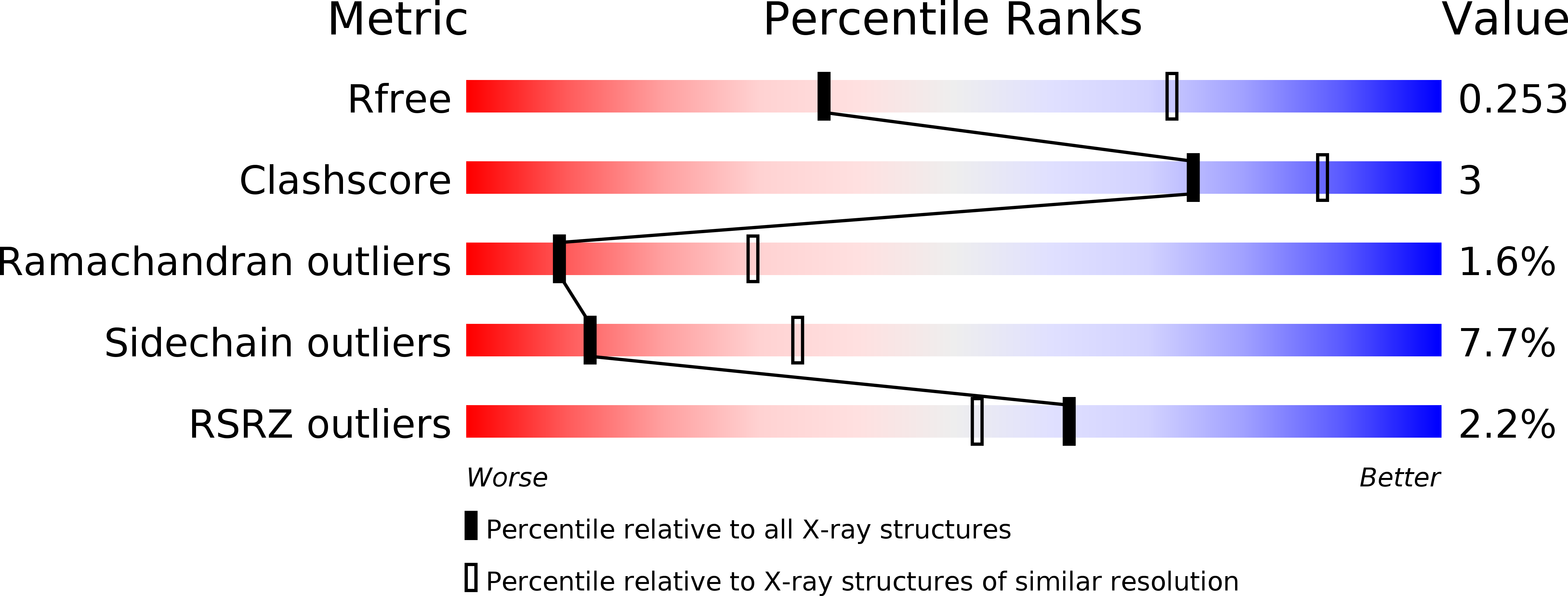
R-Value Free:
0.28
R-Value Work:
0.24
R-Value Observed:
0.24
Space Group:
H 3
Macromolecular Entities
Structures with similar UniProt ID
Protein Blast
Polymer Type:polypeptide(L)
Molecule:Proliferating cell nuclear antigen
Gene (Uniprot):PCNA
Mutagens:H from His tag
Chain IDs:A, B, C
Chain Length:262
Number of Molecules:3
Biological Source:Homo sapiens
Polymer Type:polydeoxyribonucleotide
Molecule:DNA (5'-D(P*AP*TP*AP*CP*GP*AP*TP*GP*GP*G)-3')
Chain IDs:D
Chain Length:10
Number of Molecules:1
Biological Source:synthetic construct
Polymer Type:polydeoxyribonucleotide
Molecule:DNA (5'-D(P*CP*CP*CP*AP*TP*CP*GP*TP*AP*T)-3')
Chain IDs:E
Chain Length:10
Number of Molecules:1
Biological Source:synthetic construct
Primary Citation

Abstact

Sliding clamps encircle DNA and tether polymerases and other factors to the genomic template. However, the molecular mechanism of clamp sliding on DNA is unknown. Using crystallography, NMR and molecular dynamics simulations, here we show that the human clamp PCNA recognizes DNA through a double patch of basic residues within the ring channel, arranged in a right-hand spiral that matches the pitch of B-DNA. We propose that PCNA slides by tracking the DNA backbone via a 'cogwheel' mechanism based on short-lived polar interactions, which keep the orientation of the clamp invariant relative to DNA. Mutation of residues at the PCNA-DNA interface has been shown to impair the initiation of DNA synthesis by polymerase δ (pol δ). Therefore, our findings suggest that a clamp correctly oriented on DNA is necessary for the assembly of a replication-competent PCNA-pol δ holoenzyme.

Legend

Protein

Chemical

Disease

Primary Citation of related structures
Feedback Form
Name
Email
Institute
Feedback