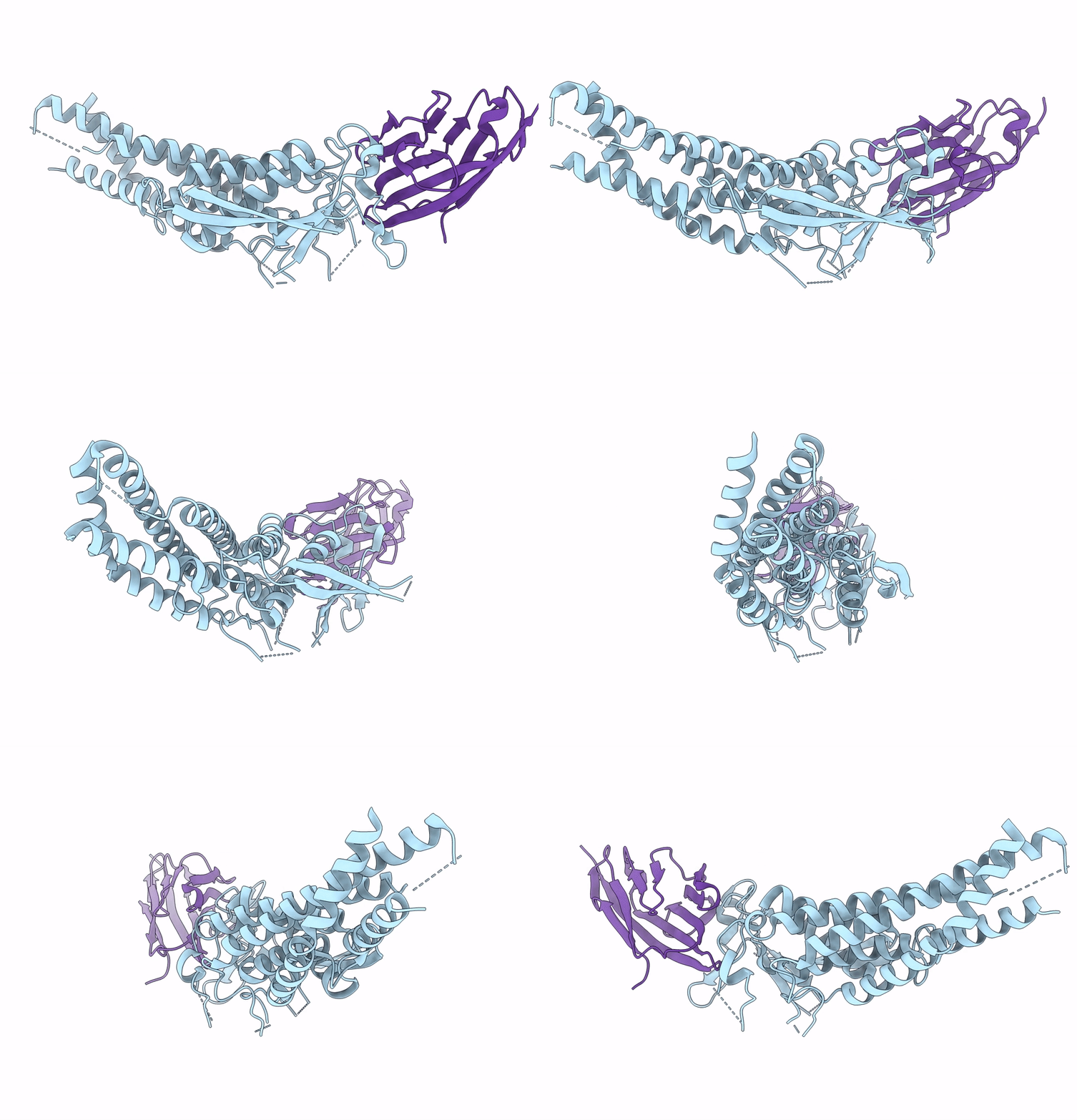
6GBG image
Deposition Date 2018-04-13
Release Date 2018-06-27
Last Version Date 2024-11-20
Entry Detail
PDB ID:
6GBG
Keywords:
Title:
Helicobacter pylori adhesin HopQ type I bound to the N-terminal domain of human CEACAM1
Biological Source:
Source Organism:
Host Organism:
Method Details:
Experimental Method:
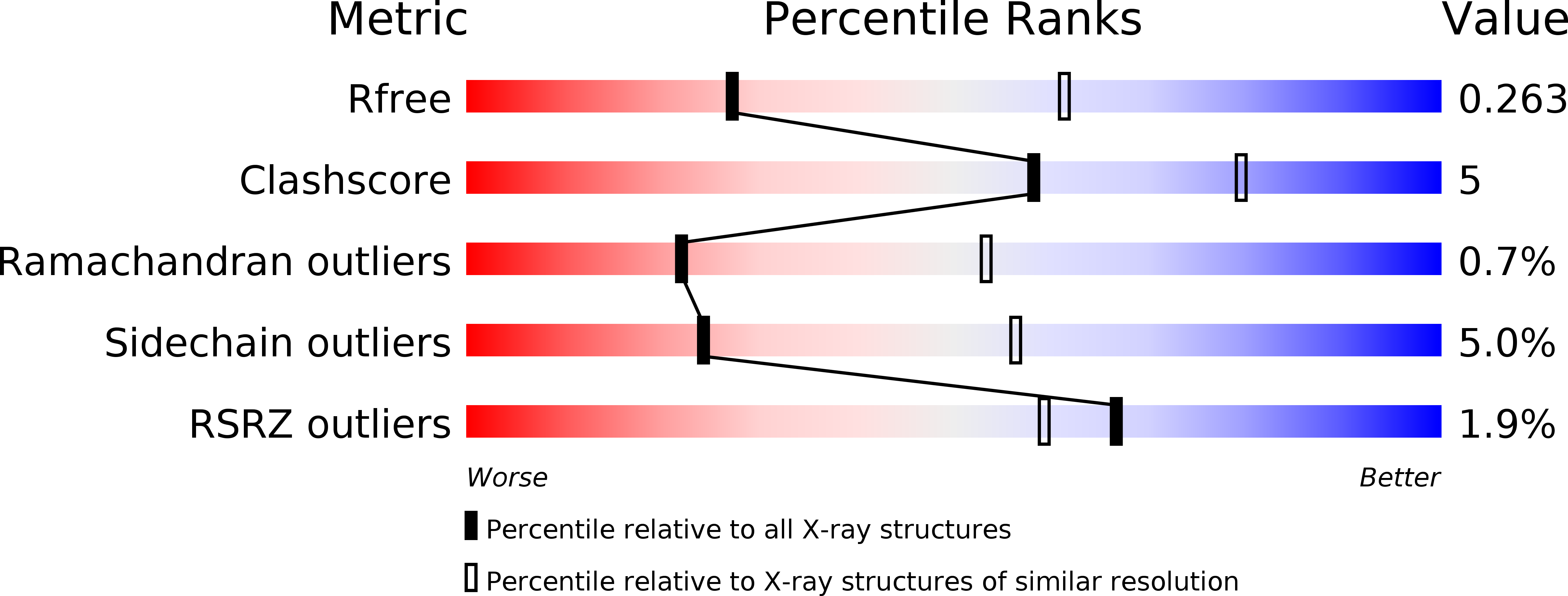
Resolution:
2.80 Å
R-Value Free:
0.26
R-Value Work:
0.20
R-Value Observed:
0.20
Space Group:
P 32 2 1
Macromolecular Entities
Structures with similar UniProt ID
Protein Blast
Polymer Type:polypeptide(L)
Molecule:Outer membrane protein
Gene (Uniprot):hopQ
Chain IDs:B (auth: A)
Chain Length:411
Number of Molecules:1
Biological Source:Helicobacter pylori (strain G27)
Structures with similar UniProt ID
Protein Blast
Polymer Type:polypeptide(L)
Molecule:Carcinoembryonic antigen-related cell adhesion molecule 1
Gene (Uniprot):CEACAM1
Chain IDs:A (auth: D)
Chain Length:115
Number of Molecules:1
Biological Source:Homo sapiens
Ligand Molecules
Primary Citation
Helicobacter pyloriadhesin HopQ disruptstransdimerization in human CEACAMs.
EMBO J. 37 ? ? (2018)
PMID: 29858229 DOI: 10.15252/embj.201798665

Abstact

The human gastric pathogen Helicobacter pylori is a major causative agent of gastritis, peptic ulcer disease, and gastric cancer. As part of its adhesive lifestyle, the bacterium targets members of the carcinoembryonic antigen-related cell adhesion molecule (CEACAM) family by the conserved outer membrane adhesin HopQ. The HopQ-CEACAM1 interaction is associated with inflammatory responses and enables the intracellular delivery and phosphorylation of the CagA oncoprotein via a yet unknown mechanism. Here, we generated crystal structures of HopQ isotypes I and II bound to the N-terminal domain of human CEACAM1 (C1ND) and elucidated the structural basis of H. pylori specificity toward human CEACAM receptors. Both HopQ alleles target the β-strands G, F, and C of C1ND, which form the trans dimerization interface in homo- and heterophilic CEACAM interactions. Using SAXS, we show that the HopQ ectodomain is sufficient to induce C1ND monomerization and thus providing H. pylori a route to influence CEACAM-mediated cell adherence and signaling events.

Legend

Protein

Chemical

Disease

Primary Citation of related structures
Feedback Form
Name
Email
Institute
Feedback