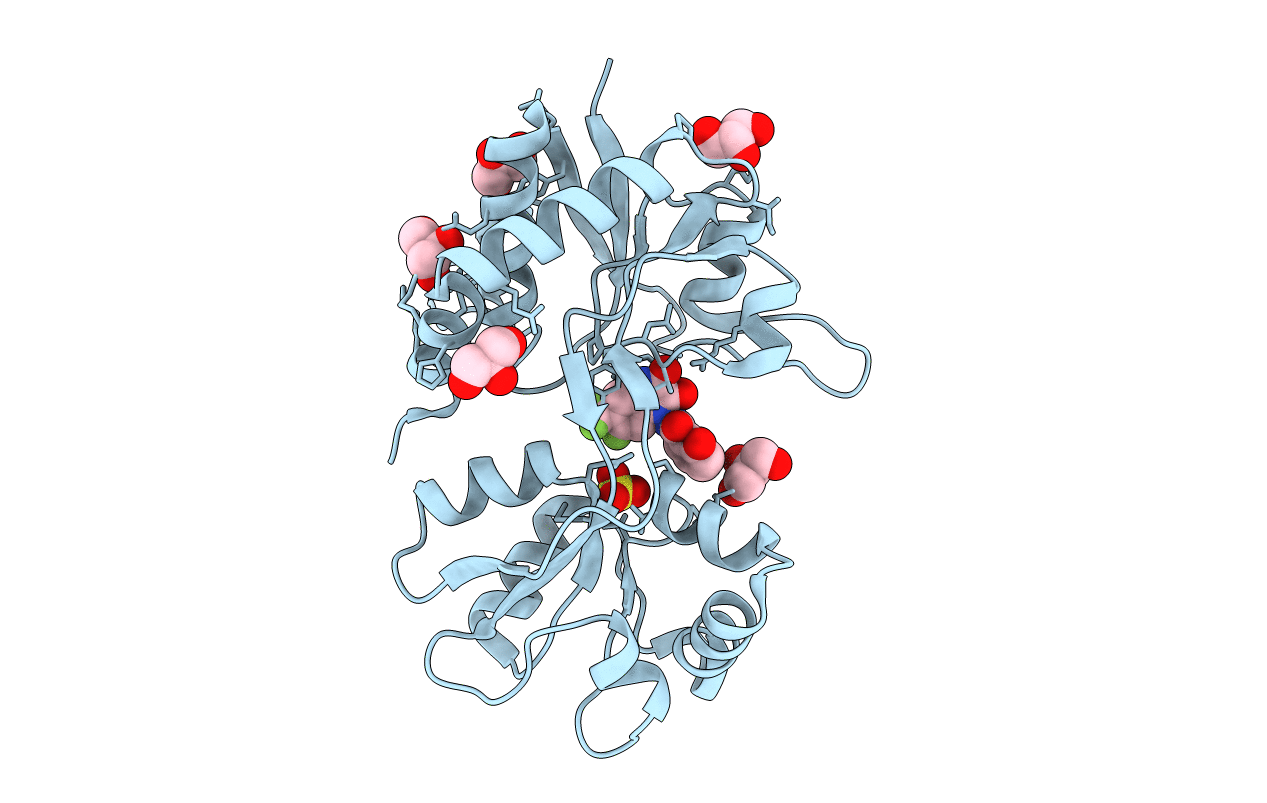
6FZ4 image
Deposition Date 2018-03-14
Release Date 2019-01-23
Last Version Date 2024-01-17
Entry Detail
PDB ID:
6FZ4
Title:
Structure of GluK1 ligand-binding domain in complex with N-(7-fluoro-2,3-dioxo-6-(trifluoromethyl)-3,4-dihydroquinoxalin-1(2H)-yl)-2-hydroxybenzamide at 1.85 A resolution
Biological Source:
Source Organism:
Method Details:
Experimental Method:
Resolution:
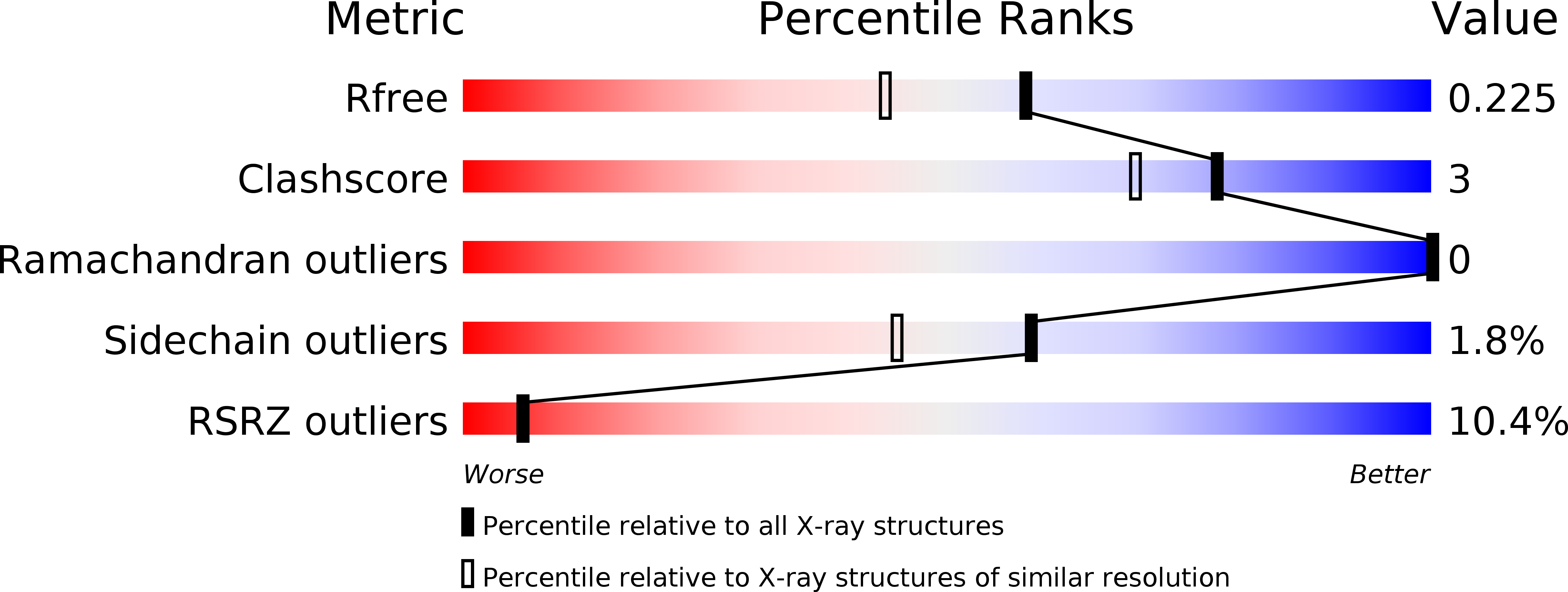
1.85 Å
R-Value Free:
0.21
R-Value Work:
0.18
R-Value Observed:
0.18
Space Group:
H 3 2
Macromolecular Entities
Structures with similar UniProt ID
Protein Blast
Polymer Type:polypeptide(L)
Molecule:Glutamate receptor ionotropic, kainate 1,Glutamate receptor ionotropic, kainate 1
Gene (Uniprot):Grik1
Chain IDs:A
Chain Length:257
Number of Molecules:1
Biological Source:Rattus norvegicus
Primary Citation
N1-Substituted Quinoxaline-2,3-diones as Kainate Receptor Antagonists: X-ray Crystallography, Structure-Affinity Relationships, and in Vitro Pharmacology.
Acs Chem Neurosci 10 1841 1853 (2019)
PMID: 30620174 DOI: 10.1021/acschemneuro.8b00726

Abstact

Among the ionotropic glutamate receptors, the physiological role of kainate receptors is less well understood. Although ligands with selectivity toward the kainate receptor subtype GluK1 are available, tool compounds with selectivity at the remaining kainate receptor subtypes are sparse. Here, we have synthesized a series of quinoxaline-2,3-diones with substitutions in the N1-, 6-, and 7-position to investigate the structure-activity relationship (SAR) at GluK1-3 and GluK5. Pharmacological characterization at native and recombinant kainate and AMPA receptors revealed that compound 37 had a GluK3-binding affinity (Ki) of 0.142 μM and 8-fold preference for GluK3 over GluK1. Despite lower binding affinity of 22 at GluK3 (Ki = 2.91 μM), its preference for GluK3 over GluK1 and GluK2 was >30-fold. Compound 37 was crystallized with the GluK1 ligand-binding domain to understand the SAR. The X-ray structure showed that 37 stabilized the protein in an open conformation, consistent with an antagonist binding mode.

Legend

Protein

Chemical

Disease

Primary Citation of related structures
Feedback Form
Name
Email
Institute
Feedback