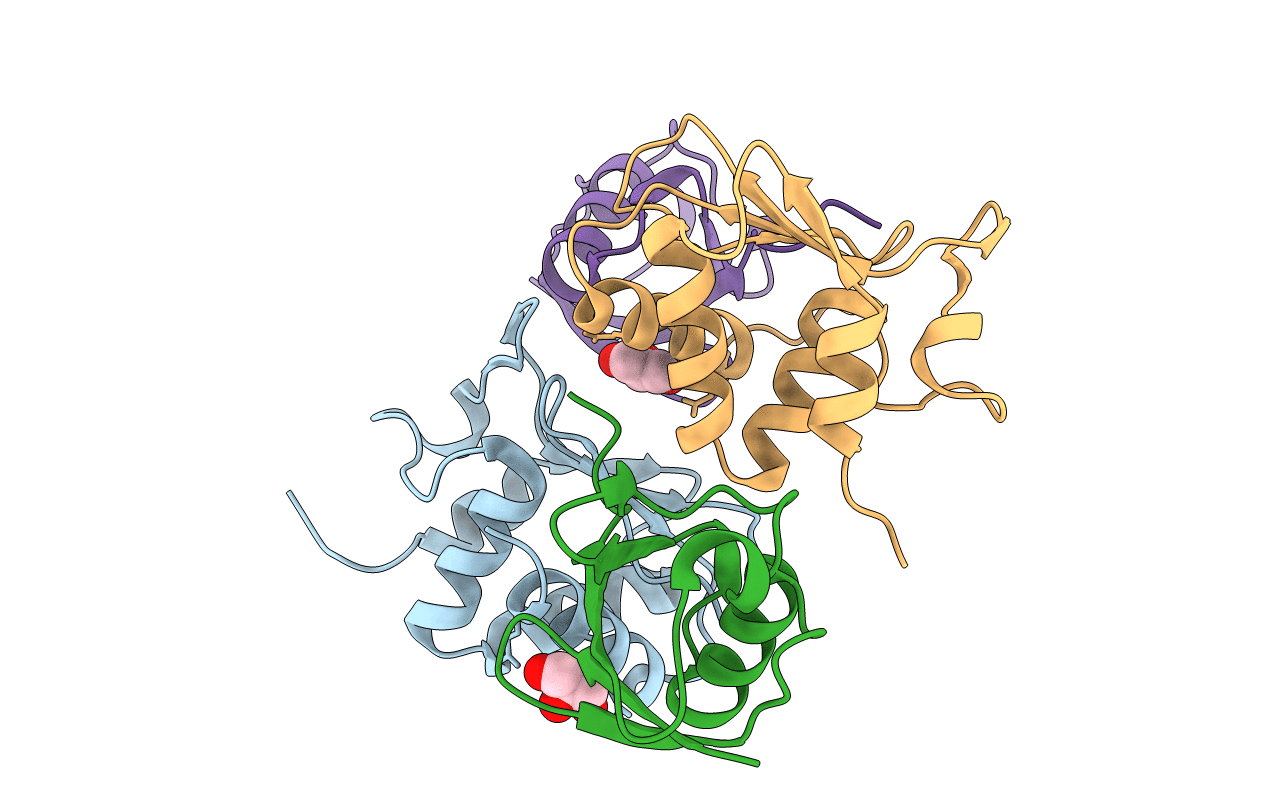
6FX4 image
Deposition Date 2018-03-08
Release Date 2018-07-11
Last Version Date 2024-11-13
Entry Detail
PDB ID:
6FX4
Keywords:
Title:
Disulfide between E3 HECT ligase Smurf2 and Ubiquitin G76C
Biological Source:
Source Organism:
Homo sapiens (Taxon ID: 9606)
Host Organism:
Method Details:
Experimental Method:
Resolution:
2.50 Å
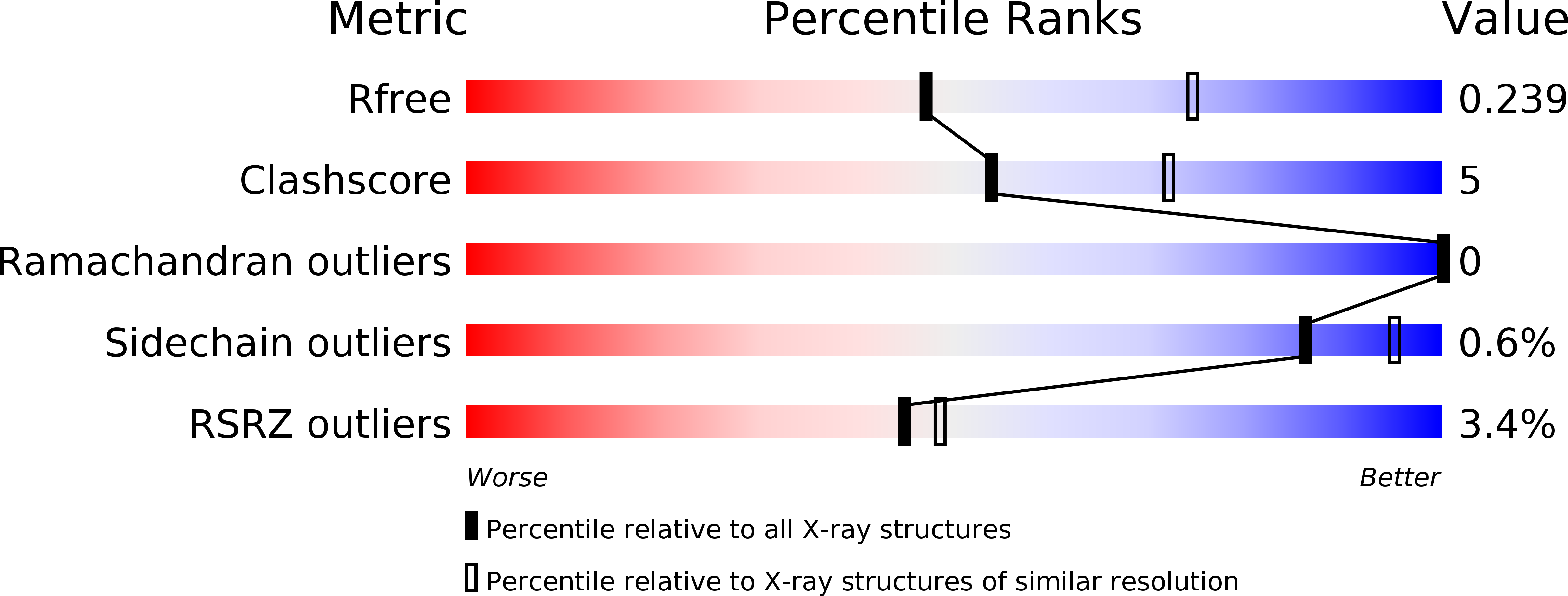
R-Value Free:
0.23
R-Value Work:
0.18
R-Value Observed:
0.18
Space Group:
P 1
Macromolecular Entities
Structures with similar UniProt ID
Protein Blast
Polymer Type:polypeptide(L)
Molecule:E3 ubiquitin-protein ligase SMURF2
Gene (Uniprot):SMURF2
Mutagens:C646A, C706N, C743S
Chain IDs:A, C
Chain Length:122
Number of Molecules:2
Biological Source:Homo sapiens
Structures with similar UniProt ID
Protein Blast
Polymer Type:polypeptide(L)
Molecule:Polyubiquitin-B
Gene (Uniprot):UBB
Mutagens:G76C
Chain IDs:B, D
Chain Length:76
Number of Molecules:2
Biological Source:Homo sapiens
Ligand Molecules
Primary Citation
beta-Sheet Augmentation Is a Conserved Mechanism of Priming HECT E3 Ligases for Ubiquitin Ligation.
J. Mol. Biol. 430 3218 3233 (2018)
PMID: 29964046 DOI: 10.1016/j.jmb.2018.06.044

Abstact

Ubiquitin (Ub) ligases (E3s) catalyze the attachment of Ub chains to target proteins and thereby regulate a wide array of signal transduction pathways in eukaryotes. In HECT-type E3s, Ub first forms a thioester intermediate with a strictly conserved Cys in the C-lobe of the HECT domain and is then ligated via an isopeptide bond to a Lys residue in the substrate or a preceding Ub in a poly-Ub chain. To date, many key aspects of HECT-mediated Ub transfer have remained elusive. Here, we provide structural and functional insights into the catalytic mechanism of the HECT-type ligase Huwe1 and compare it to the unrelated, K63-specific Smurf2 E3, a member of the Nedd4 family. We found that the Huwe1 HECT domain, in contrast to Nedd4-family E3s, prioritizes K6- and K48-poly-Ub chains and does not interact with Ub in a non-covalent manner. Despite these mechanistic differences, we demonstrate that the architecture of the C-lobe~Ub intermediate is conserved between Huwe1 and Smurf2 and involves a reorientation of the very C-terminal residues. Moreover, in Nedd4 E3s and Huwe1, the individual sequence composition of the Huwe1 C-terminal tail modulates ubiquitination activity, without affecting thioester formation. In sum, our data suggest that catalysis of HECT ligases hold common features, such as the β-sheet augmentation that primes the enzymes for ligation, and variable elements, such as the sequence of the HECT C-terminal tail, that fine-tune ubiquitination activity and may aid in determining Ub chain specificity by positioning the substrate or acceptor Ub.

Legend

Protein

Chemical

Disease

Primary Citation of related structures
Feedback Form
Name
Email
Institute
Feedback