6FQJ image
Deposition Date 2018-02-14
Release Date 2019-03-13
Last Version Date 2024-11-13
Entry Detail
PDB ID:
6FQJ
Title:
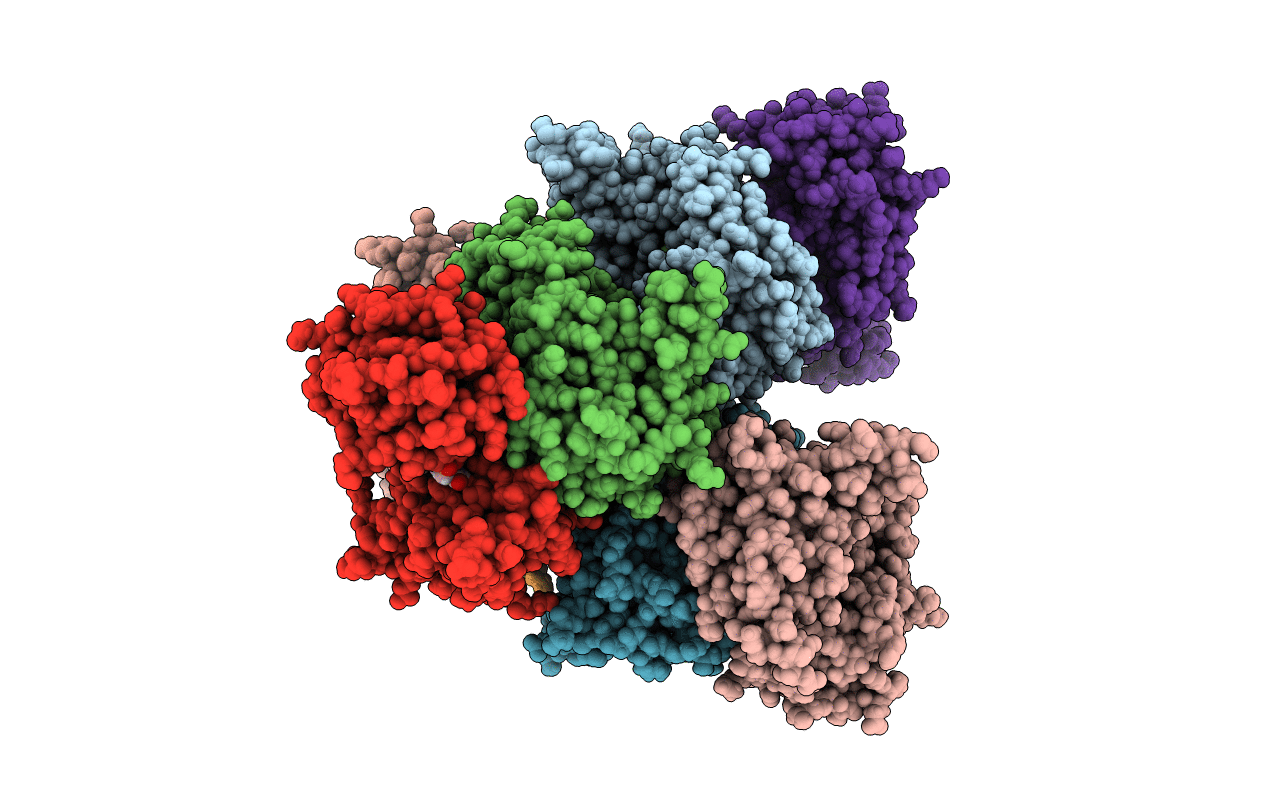
GluA2(flop) G724C ligand binding core dimer bound to ZK200775 at 2.50 Angstrom resolution
Biological Source:
Source Organism(s):
Expression System(s):
Method Details:
Experimental Method:
Resolution:
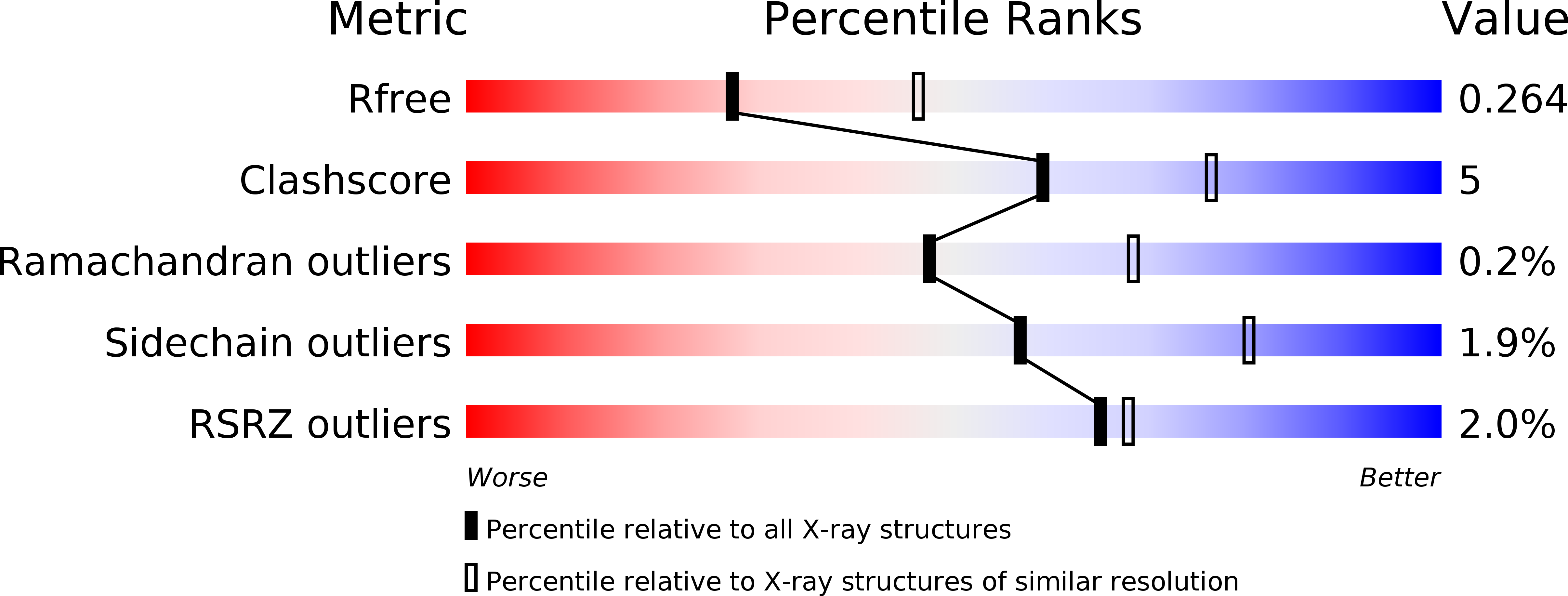
2.50 Å
R-Value Free:
0.26
R-Value Work:
0.19
R-Value Observed:
0.20
Space Group:
P 21 21 21
Macromolecular Entities
Structures with similar UniProt ID
Protein Blast
Polymer Type:polypeptide(L)
Molecule:Glutamate receptor 2,Glutamate receptor 2
Gene (Uniprot):Gria2
Chain IDs:A, B, C, D, E, F, G, H
Chain Length:264
Number of Molecules:8
Biological Source:Rattus norvegicus
Ligand Molecules
Primary Citation
Homomeric GluA2(R) AMPA receptors can conduct when desensitized.
Nat Commun 10 4312 4312 (2019)
PMID: 31541113 DOI: 10.1038/s41467-019-12280-9

Abstact

Desensitization is a canonical property of ligand-gated ion channels, causing progressive current decline in the continued presence of agonist. AMPA-type glutamate receptors (AMPARs), which mediate fast excitatory signaling throughout the brain, exhibit profound desensitization. Recent cryo-EM studies of AMPAR assemblies show their ion channels to be closed in the desensitized state. Here we present evidence that homomeric Q/R-edited AMPARs still allow ions to flow when the receptors are desensitized. GluA2(R) expressed alone, or with auxiliary subunits (γ-2, γ-8 or GSG1L), generates large fractional steady-state currents and anomalous current-variance relationships. Our results from fluctuation analysis, single-channel recording, and kinetic modeling, suggest that the steady-state current is mediated predominantly by conducting desensitized receptors. When combined with crystallography this unique functional readout of a hitherto silent state enabled us to examine cross-linked cysteine mutants to probe the conformation of the desensitized ligand binding domain of functioning AMPAR complexes.

Legend

Protein

Chemical

Disease

Primary Citation of related structures
Feedback Form
Name
Email
Institute
Feedback