6FAE image
Deposition Date 2017-12-15
Release Date 2018-01-17
Last Version Date 2024-05-08
Entry Detail
PDB ID:
6FAE
Keywords:
Title:
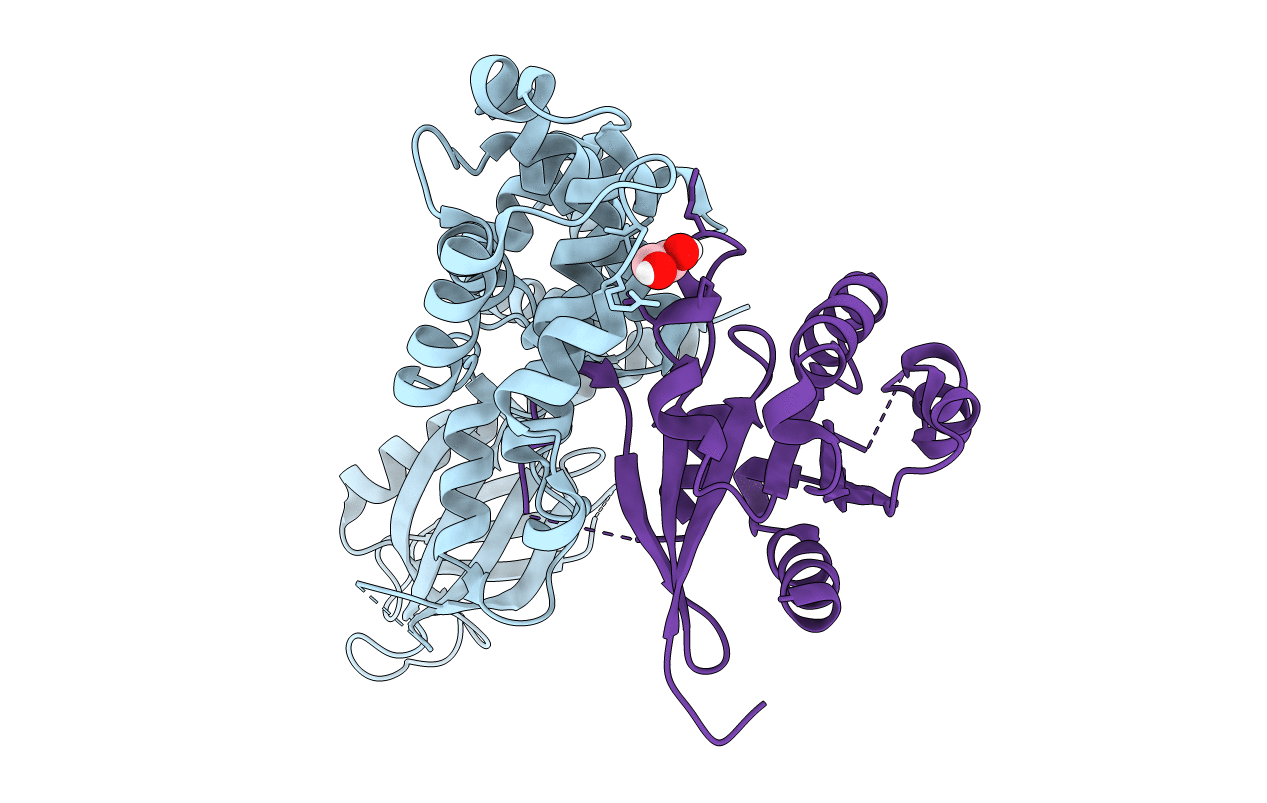
The Sec7 domain of IQSEC2 (Brag1) in complex with the small GTPase Arf1
Biological Source:
Source Organism:
Homo sapiens (Taxon ID: 9606)
Host Organism:
Method Details:
Experimental Method:
Resolution:
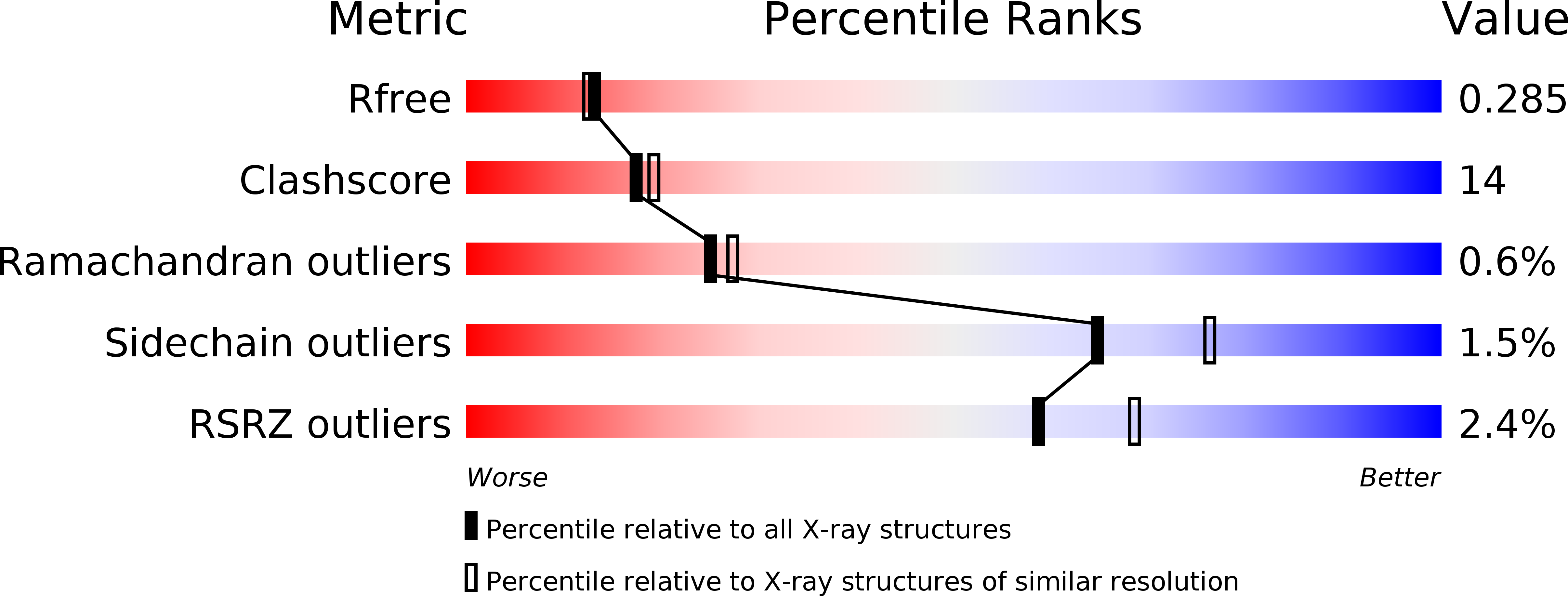
2.35 Å
R-Value Free:
0.28
R-Value Work:
0.24
R-Value Observed:
0.24
Space Group:
P 1 21 1
Macromolecular Entities
Structures with similar UniProt ID
Protein Blast
Polymer Type:polypeptide(L)
Molecule:IQ motif and SEC7 domain-containing protein 2
Gene (Uniprot):IQSEC2
Chain IDs:A
Chain Length:371
Number of Molecules:1
Biological Source:Homo sapiens
Structures with similar UniProt ID
Protein Blast
Polymer Type:polypeptide(L)
Molecule:ADP-ribosylation factor 1
Gene (Uniprot):ARF1
Chain IDs:B
Chain Length:213
Number of Molecules:1
Biological Source:Homo sapiens
Ligand Molecules
Primary Citation
Targeting the Small GTPase Superfamily through their Regulatory Proteins.
Angew.Chem.Int.Ed.Engl. ? ? ? (2019)
PMID: 30869179 DOI: 10.1002/anie.201900585

Abstact

The Ras superfamily of small GTPases are guanine-nucleotide-dependent switches essential for numerous cellular processes. Mutations or dysregulation of these proteins are associated with many diseases, but unsuccessful attempts to target the small GTPases directly have resulted in them being classed as "undruggable". The GTP-dependent signaling of these proteins is controlled by their regulators; guanine nucleotide exchange factors (GEFs), GTPase activating proteins (GAPs), and in the Rho and Rab subfamilies, guanine nucleotide dissociation inhibitors (GDIs). This review covers the recent small molecule and biologics strategies to target the small GTPases through their regulators. It seeks to critically re-evaluate recent chemical biology practice, such as the presence of PAINs motifs and the cell-based readout using compounds that are weakly potent or of unknown specificity. It highlights the vast scope of potential approaches for targeting the small GTPases in the future through their regulatory proteins.

Legend

Protein

Chemical

Disease

Primary Citation of related structures
Feedback Form
Name
Email
Institute
Feedback