6F6F image
Deposition Date 2017-12-05
Release Date 2018-07-04
Last Version Date 2024-01-17
Entry Detail
PDB ID:
6F6F
Keywords:
Title:
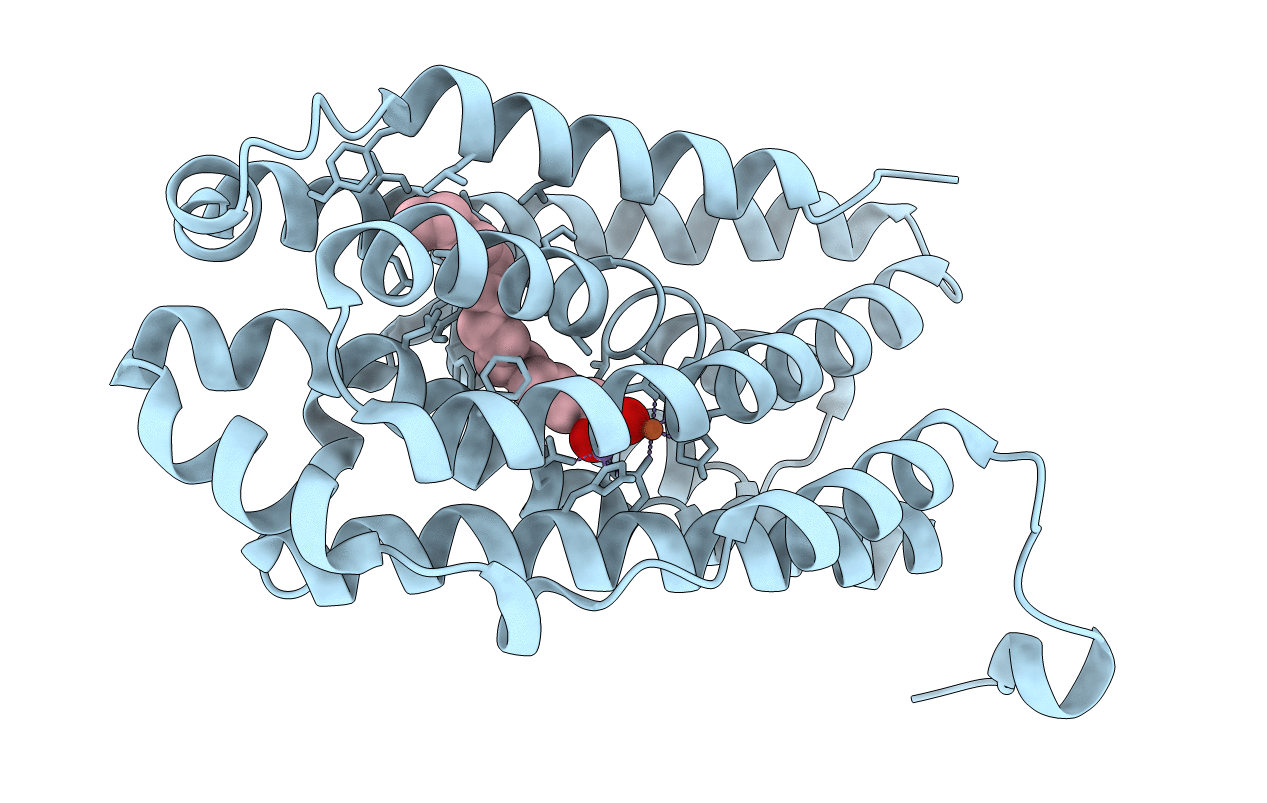
R2-like ligand-binding oxidase V72I mutant with aerobically reconstituted Mn/Fe cofactor
Biological Source:
Method Details:
Experimental Method:
Resolution:
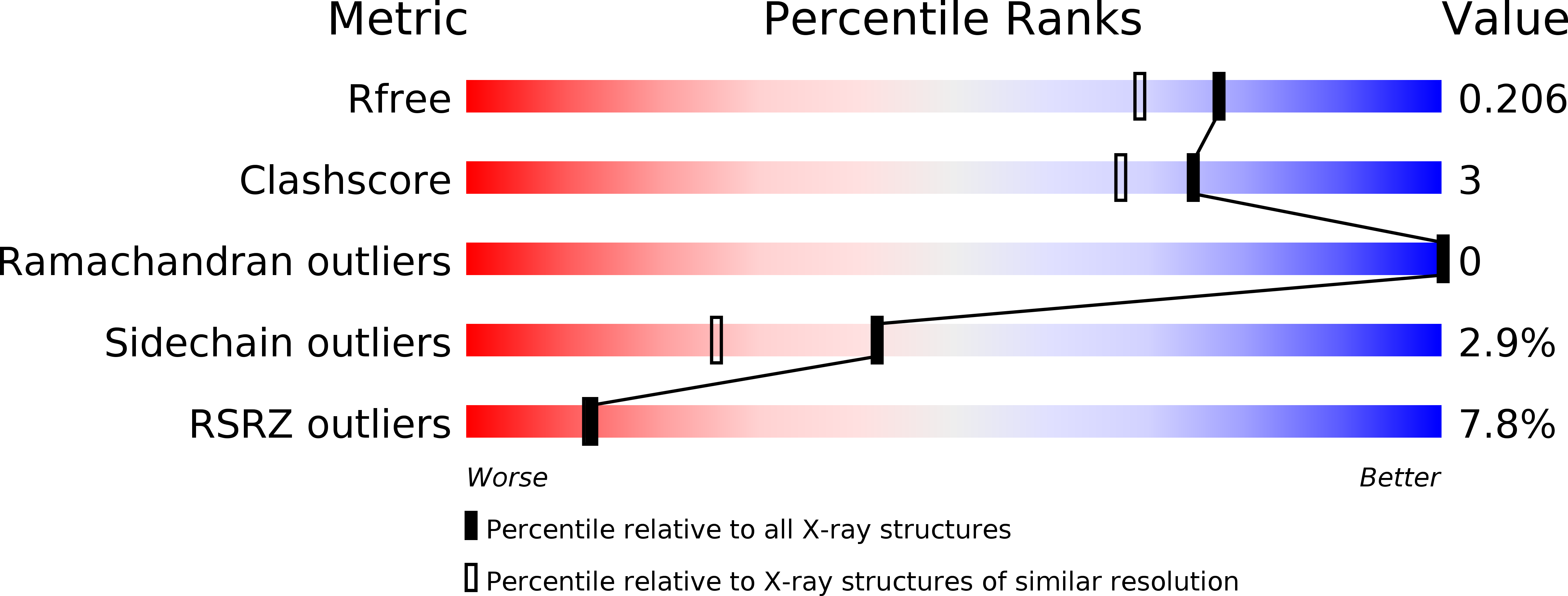
1.79 Å
R-Value Free:
0.20
R-Value Work:
0.17
R-Value Observed:
0.17
Space Group:
I 2 2 2
Macromolecular Entities
Structures with similar UniProt ID
Protein Blast
Polymer Type:polypeptide(L)
Molecule:Ribonucleotide reductase small subunit
Gene (Uniprot):GK2771
Mutagens:V72I
Chain IDs:A
Chain Length:316
Number of Molecules:1
Biological Source:Geobacillus kaustophilus (strain HTA426)
Primary Citation
Ether cross-link formation in the R2-like ligand-binding oxidase.
J. Biol. Inorg. Chem. 23 879 886 (2018)
PMID: 29946980 DOI: 10.1007/s00775-018-1583-3

Abstact

R2-like ligand-binding oxidases contain a dinuclear metal cofactor which can consist either of two iron ions or one manganese and one iron ion, but the heterodinuclear Mn/Fe cofactor is the preferred assembly in the presence of MnII and FeII in vitro. We have previously shown that both types of cofactor are capable of catalyzing formation of a tyrosine-valine ether cross-link in the protein scaffold. Here we demonstrate that Mn/Fe centers catalyze cross-link formation more efficiently than Fe/Fe centers, indicating that the heterodinuclear cofactor is the biologically relevant one. We further explore the chemical potential of the Mn/Fe cofactor by introducing mutations at the cross-linking valine residue. We find that cross-link formation is possible also to the tertiary beta-carbon in an isoleucine, but not to the secondary beta-carbon or tertiary gamma-carbon in a leucine, nor to the primary beta-carbon of an alanine. These results illustrate that the reactivity of the cofactor is highly specific and directed.

Legend

Protein

Chemical

Disease

Primary Citation of related structures
Feedback Form
Name
Email
Institute
Feedback