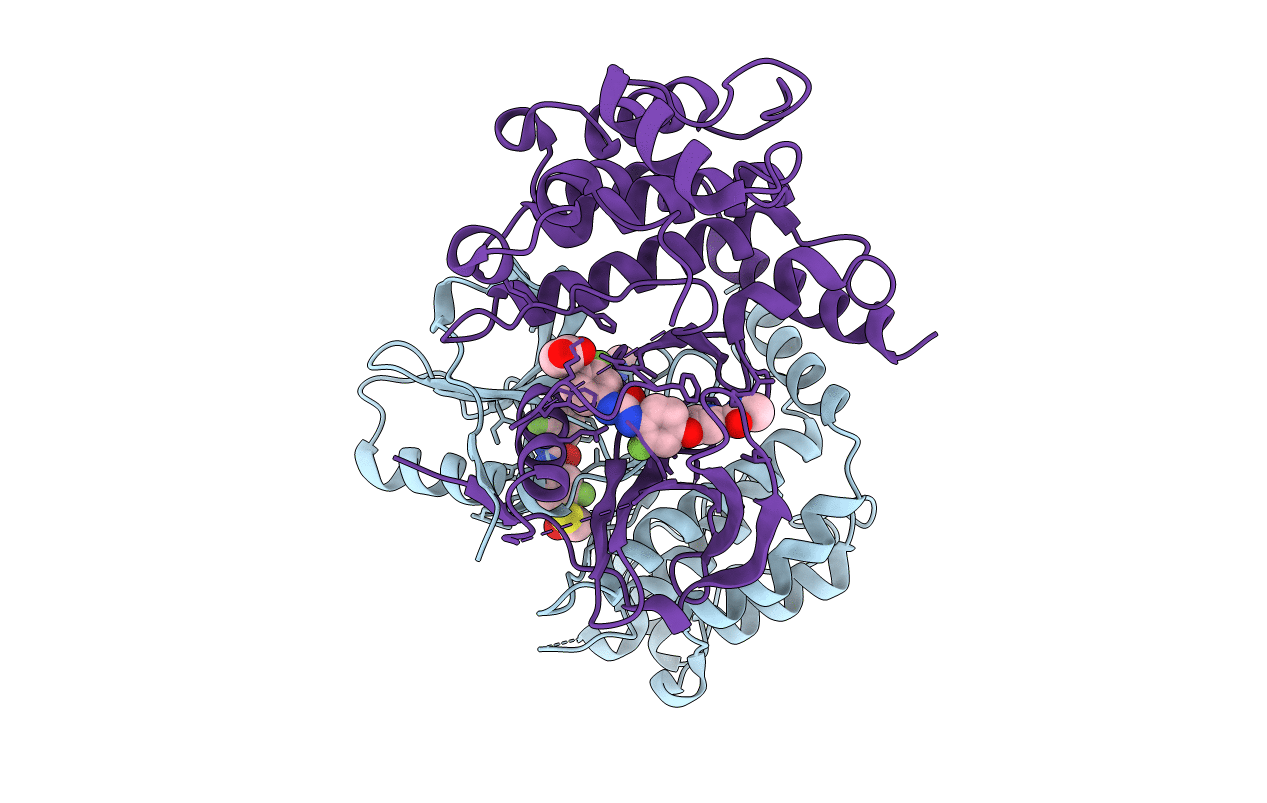
6ES0 image
Deposition Date 2017-10-19
Release Date 2018-02-21
Last Version Date 2024-01-17
Entry Detail
PDB ID:
6ES0
Keywords:
Title:
Crystal structure of the kinase domain of human RIPK2 in complex with the activation loop targeting inhibitor CS-R35
Biological Source:
Source Organism(s):
Homo sapiens (Taxon ID: 9606)
Expression System(s):
Method Details:
Experimental Method:
Resolution:
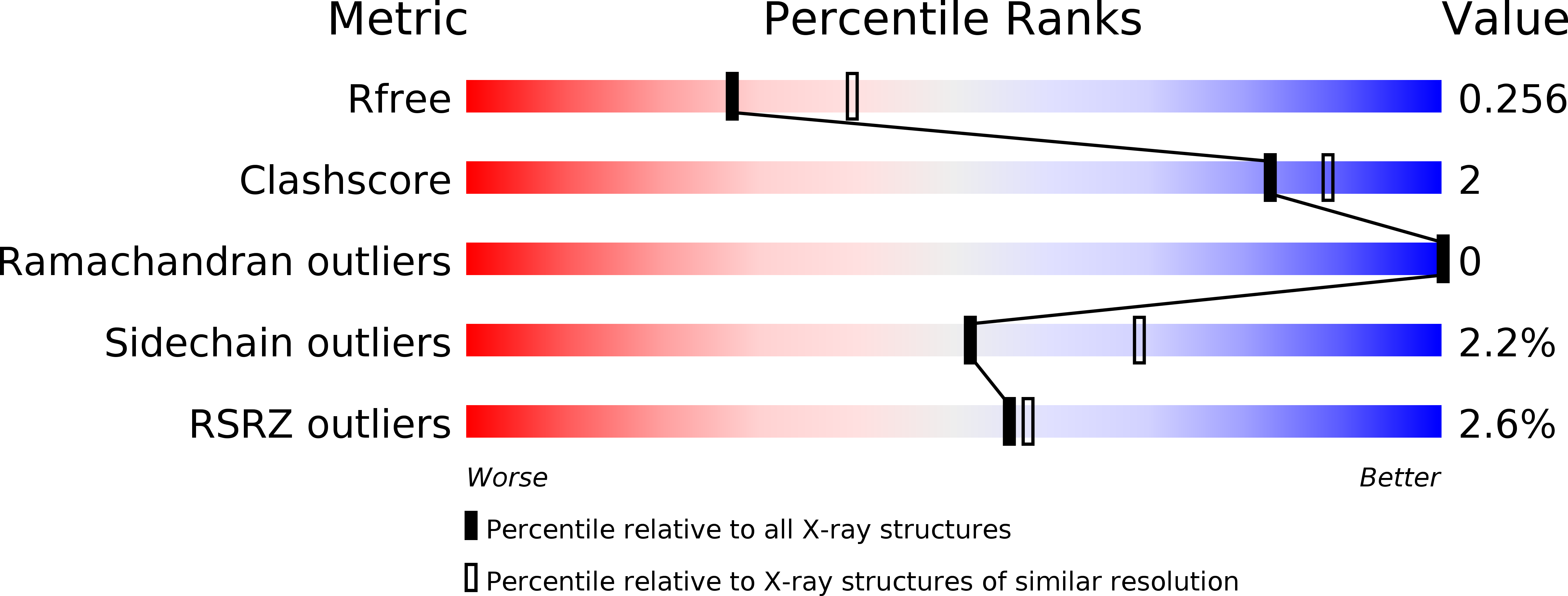
2.38 Å
R-Value Free:
0.25
R-Value Work:
0.21
R-Value Observed:
0.21
Space Group:
P 21 21 21
Macromolecular Entities
Structures with similar UniProt ID
Protein Blast
Polymer Type:polypeptide(L)
Molecule:Receptor-interacting serine/threonine-protein kinase 2
Gene (Uniprot):RIPK2
Chain IDs:A, B
Chain Length:317
Number of Molecules:2
Biological Source:Homo sapiens
Ligand Molecules
Primary Citation
Activation loop targeting strategy for design of receptor-interacting protein kinase 2 (RIPK2) inhibitors.
Bioorg. Med. Chem. Lett. 28 577 583 (2018)
PMID: 29409752 DOI: 10.1016/j.bmcl.2018.01.044

Abstact

Development of selective kinase inhibitors remains a challenge due to considerable amino acid sequence similarity among family members particularly in the ATP binding site. Targeting the activation loop might offer improved inhibitor selectivity since this region of kinases is less conserved. However, the strategy presents difficulties due to activation loop flexibility. Herein, we report the design of receptor-interacting protein kinase 2 (RIPK2) inhibitors based on pan-kinase inhibitor regorafenib that aim to engage basic activation loop residues Lys169 or Arg171. We report development of CSR35 that displayed >10-fold selective inhibition of RIPK2 versus VEGFR2, the target of regorafenib. A co-crystal structure of CSR35 with RIPK2 revealed a resolved activation loop with an ionic interaction between the carboxylic acid installed in the inhibitor and the side-chain of Lys169. Our data provides principle feasibility of developing activation loop targeting type II inhibitors as a complementary strategy for achieving improved selectivity.

Legend

Protein

Chemical

Disease

Primary Citation of related structures
Feedback Form
Name
Email
Institute
Feedback