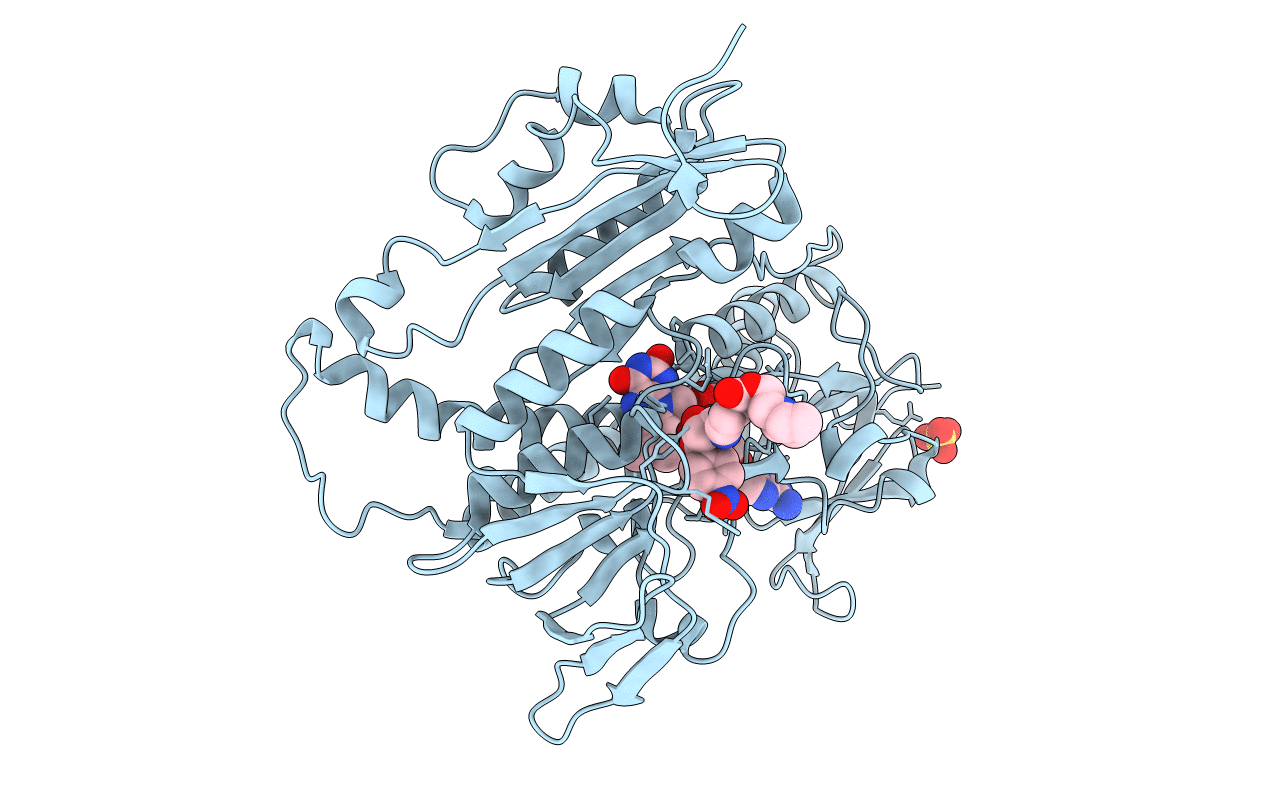
6ER5 image
Deposition Date 2017-10-17
Release Date 2018-10-31
Last Version Date 2024-11-20
Entry Detail
PDB ID:
6ER5
Keywords:
Title:
X-ray structure of Trypanothione Reductase from Leishmania infantum in complex with 2-(diethylamino)ethyl 4-((3-(4-nitrophenyl)-3-oxopropyl)amino)benzoate
Biological Source:
Source Organism:
Host Organism:
Method Details:
Experimental Method:
Resolution:
3.37 Å
R-Value Free:
0.26
R-Value Work:
0.20
R-Value Observed:
0.20
Space Group:
P 41 21 2
Macromolecular Entities
Structures with similar UniProt ID
Protein Blast
Polymer Type:polypeptide(L)
Molecule:Trypanothione reductase
Gene (Uniprot):TRYR
Chain IDs:A
Chain Length:488
Number of Molecules:1
Biological Source:Leishmania infantum
Primary Citation
Identification and binding mode of a novel Leishmania Trypanothione reductase inhibitor from high throughput screening.
Plos Negl Trop Dis 12 e0006969 e0006969 (2018)
PMID: 30475811 DOI: 10.1371/journal.pntd.0006969

Abstact

Trypanothione reductase (TR) is considered to be one of the best targets to find new drugs against Leishmaniasis. This enzyme is fundamental for parasite survival in the host since it reduces trypanothione, a molecule used by the tryparedoxin/tryparedoxin peroxidase system of Leishmania to neutralize hydrogen peroxide produced by host macrophages during infection. In order to identify new lead compounds against Leishmania we developed and validated a new luminescence-based high-throughput screening (HTS) assay that allowed us to screen a library of 120,000 compounds. We identified a novel chemical class of TR inhibitors, able to kill parasites with an IC50 in the low micromolar range. The X-ray crystal structure of TR in complex with a compound from this class (compound 3) allowed the identification of its binding site in a pocket at the entrance of the NADPH binding site. Since the binding site of compound 3 identified by the X-ray structure is unique, and is not present in human homologs such as glutathione reductase (hGR), it represents a new target for drug discovery efforts.

Legend

Protein

Chemical

Disease

Primary Citation of related structures
Feedback Form
Name
Email
Institute
Feedback