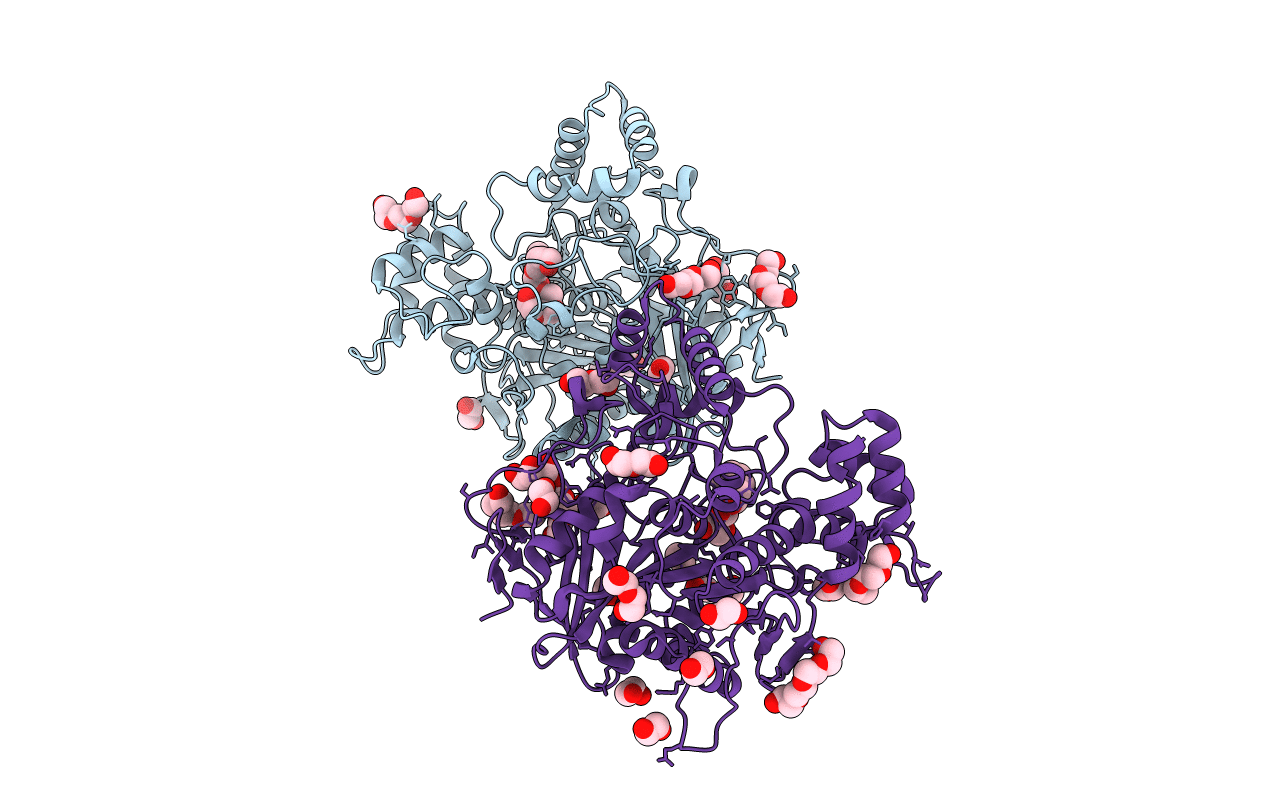
6EMI image
Deposition Date 2017-10-02
Release Date 2017-11-08
Last Version Date 2024-11-06
Entry Detail
PDB ID:
6EMI
Keywords:
Title:
Crystal structure of a variant of human butyrylcholinesterase expressed in bacteria.
Biological Source:
Source Organism:
Homo sapiens (Taxon ID: 9606)
Host Organism:
Method Details:
Experimental Method:
Resolution:
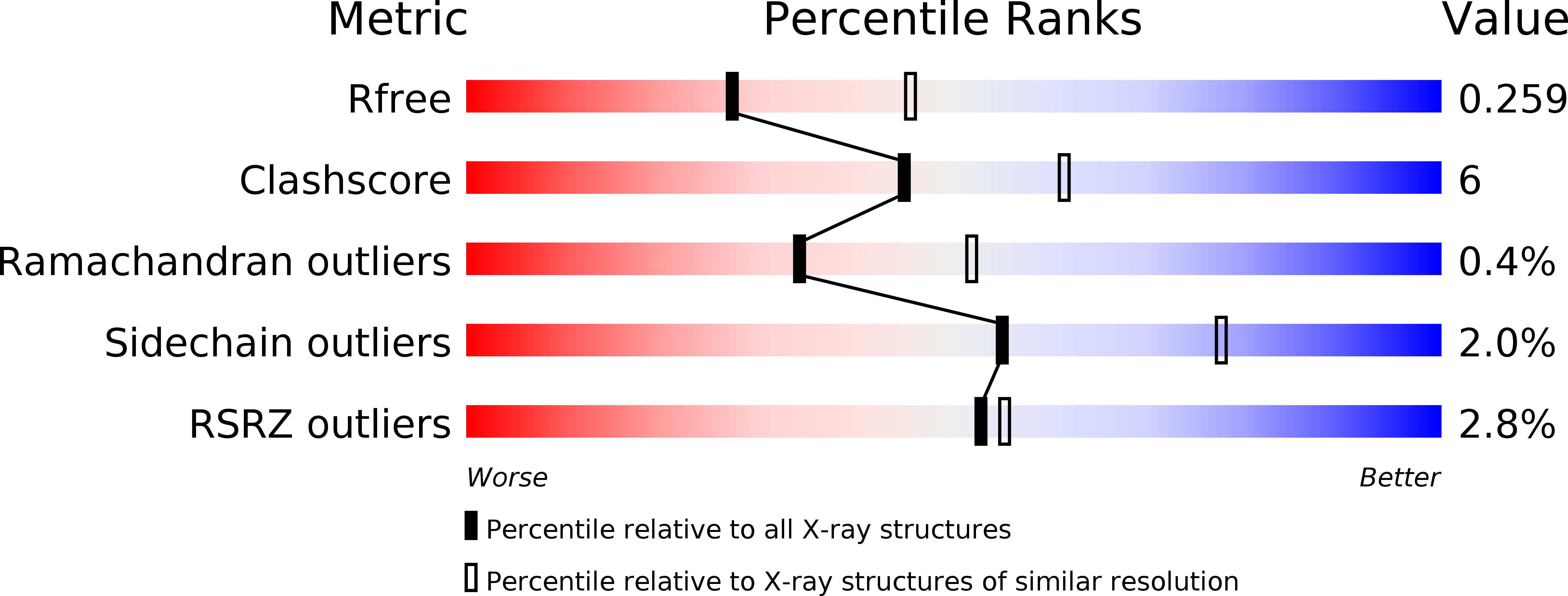
2.48 Å
R-Value Free:
0.25
R-Value Work:
0.22
R-Value Observed:
0.22
Space Group:
C 1 2 1
Macromolecular Entities
Structures with similar UniProt ID
Protein Blast
Polymer Type:polypeptide(L)
Molecule:Cholinesterase
Gene (Uniprot):BCHE
Mutagens:-3G, -2A, -1M, A7T, S48P, D54G, C66M, Q71T, L110M, I111V, H126P, Q176K, K180D, N188D, K190N, S191R, S215P, F227A, T234M, L236P, Y237E, T250L, L274D, G283S, I305T, N342D, I356V, G360N, V377E, D379E, Q380D, E387D, G390A, D391E, N397F, T406A, F409Y, S410A, W412H, F417Y, D454L, A459E, S466E, V468M, K469R, S489Q, S495P, T508S, Q518H, T523N, 530STOP
Chain IDs:A, B
Chain Length:532
Number of Molecules:2
Biological Source:Homo sapiens
Primary Citation
Bacterial Expression of Human Butyrylcholinesterase as a Tool for Nerve Agent Bioscavengers Development.
Molecules 22 ? ? (2017)
PMID: 29077024 DOI: 10.3390/molecules22111828

Abstact

Human butyrylcholinesterase is a performant stoichiometric bioscavenger of organophosphorous nerve agents. It is either isolated from outdated plasma or functionally expressed in eukaryotic systems. Here, we report the production of active human butyrylcholinesterase in a prokaryotic system after optimization of the primary sequence through the Protein Repair One Stop Shop process, a structure- and sequence-based algorithm for soluble bacterial expression of difficult eukaryotic proteins. The mutant enzyme was purified to homogeneity. Its kinetic parameters with substrate are similar to the endogenous human butyrylcholinesterase or recombinants produced in eukaryotic systems. The isolated protein was prone to crystallize and its 2.5-Å X-ray structure revealed an active site gorge region identical to that of previously solved structures. The advantages of this alternate expression system, particularly for the generation of butyrylcholinesterase variants with nerve agent hydrolysis activity, are discussed.

Legend

Protein

Chemical

Disease

Primary Citation of related structures
Feedback Form
Name
Email
Institute
Feedback