6EI9 image
Deposition Date 2017-09-18
Release Date 2018-01-17
Last Version Date 2024-01-17
Entry Detail
PDB ID:
6EI9
Keywords:
Title:
Crystal structure of E. coli tRNA-dihydrouridine synthase B (DusB)
Biological Source:
Source Organism:
Escherichia coli (Taxon ID: 562)
Method Details:
Experimental Method:
Resolution:
2.55 Å
R-Value Free:
0.23
R-Value Work:
0.19
R-Value Observed:
0.20
Space Group:
P 43
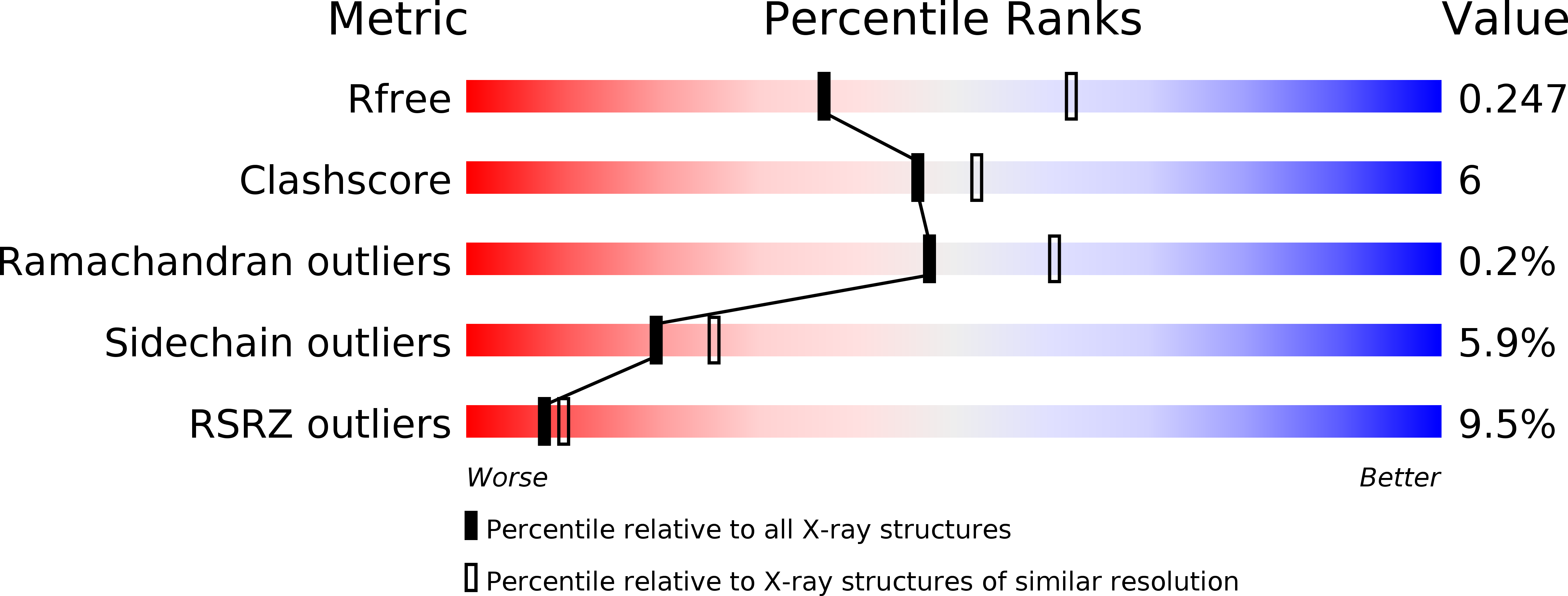
Macromolecular Entities
Structures with similar UniProt ID
Protein Blast
Polymer Type:polypeptide(L)
Molecule:tRNA-dihydrouridine synthase B
Chain IDs:A, B
Chain Length:340
Number of Molecules:2
Biological Source:Escherichia coli
Primary Citation
Unveiling structural and functional divergences of bacterial tRNA dihydrouridine synthases: perspectives on the evolution scenario.
Nucleic Acids Res. 46 1386 1394 (2018)
PMID: 29294097 DOI: 10.1093/nar/gkx1294

Abstact

Post-transcriptional base modifications are important to the maturation process of transfer RNAs (tRNAs). Certain modifications are abundant and present at several positions in tRNA as for example the dihydrouridine, a modified base found in the three domains of life. Even though the function of dihydrourine is not well understood, its high content in tRNAs from psychrophilic bacteria or cancer cells obviously emphasizes a central role in cell adaptation. The reduction of uridine to dihydrouridine is catalyzed by a large family of flavoenzymes named dihydrouridine synthases (Dus). Prokaryotes have three Dus (A, B and C) wherein DusB is considered as an ancestral protein from which the two others derived via gene duplications. Here, we unequivocally established the complete substrate specificities of the three Escherichia coli Dus and solved the crystal structure of DusB, enabling for the first time an exhaustive structural comparison between these bacterial flavoenzymes. Based on our results, we propose an evolutionary scenario explaining how substrate specificities has been diversified from a single structural fold.

Legend

Protein

Chemical

Disease

Primary Citation of related structures
Feedback Form
Name
Email
Institute
Feedback