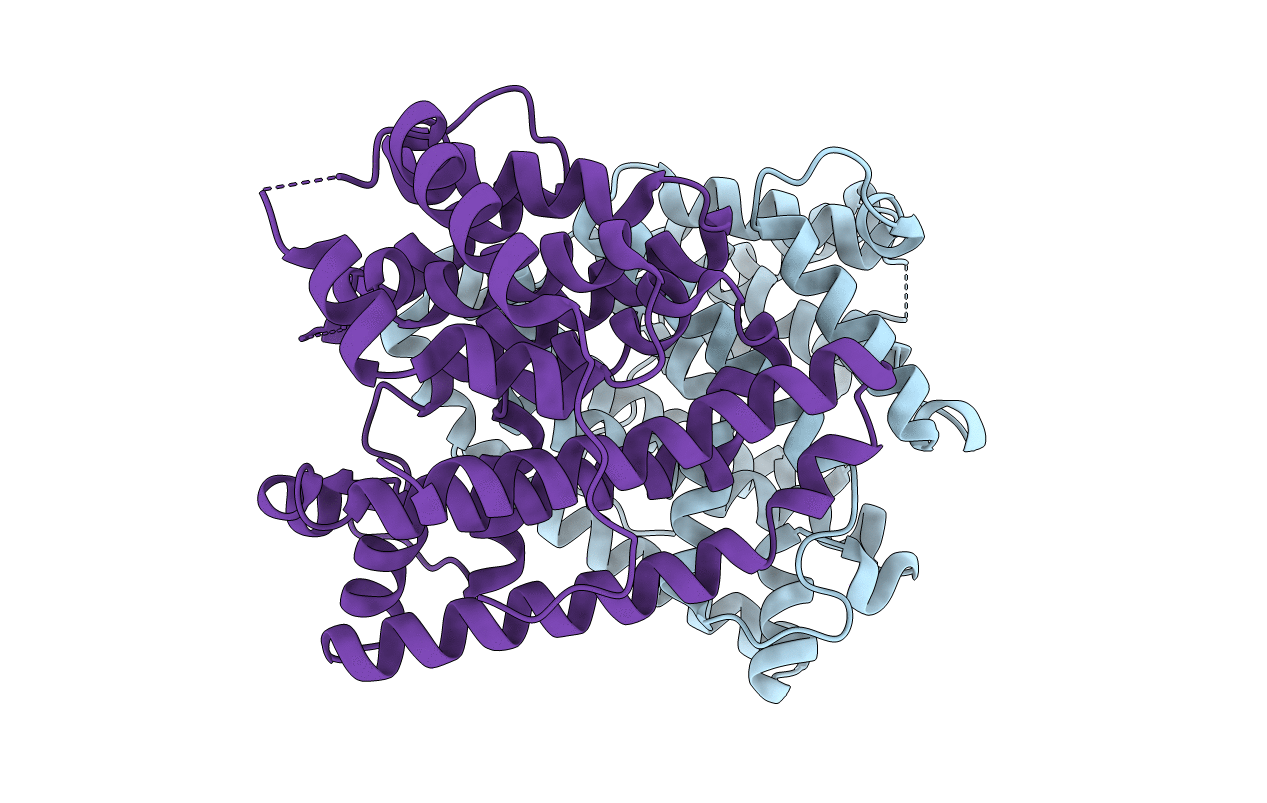
6EGK image
Deposition Date 2018-08-20
Release Date 2018-10-31
Last Version Date 2024-03-13
Entry Detail
PDB ID:
6EGK
Keywords:
Title:
T181N Cucumene Synthase
Biological Source:
Method Details:
Experimental Method:
Resolution:
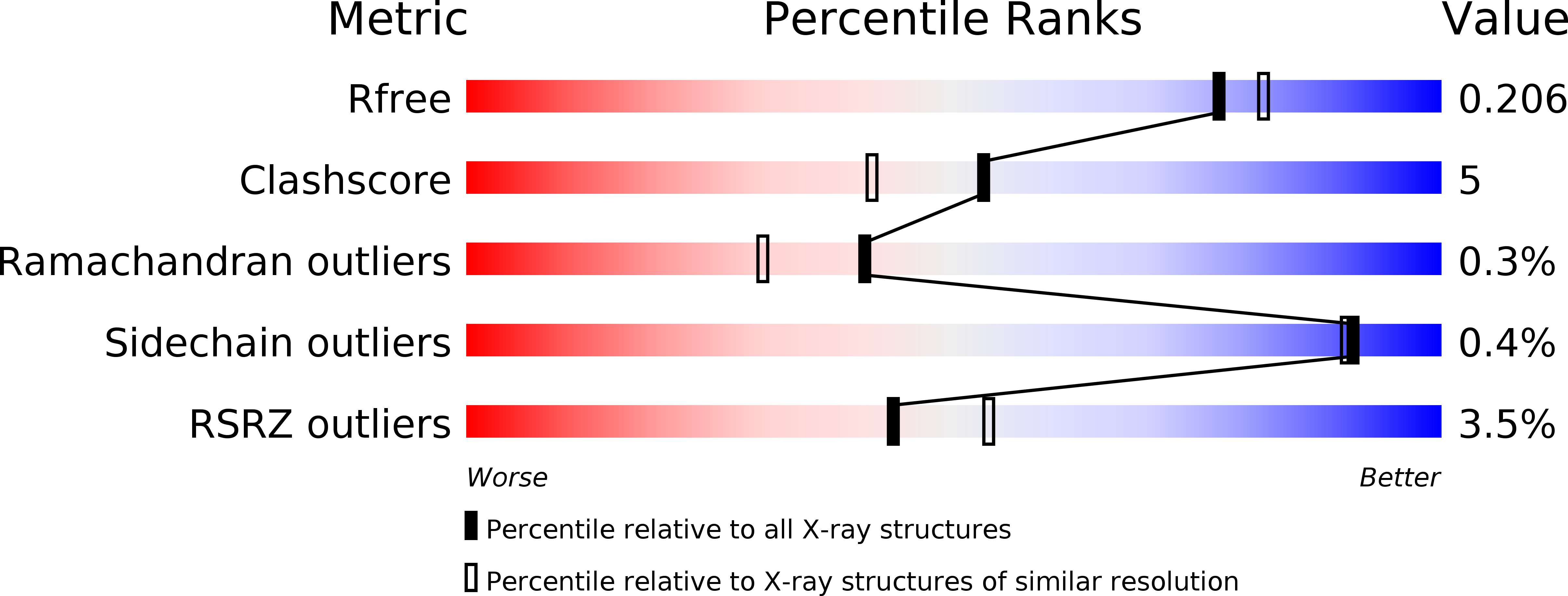
1.96 Å
R-Value Free:
0.20
R-Value Work:
0.17
R-Value Observed:
0.17
Space Group:
P 2 21 21
Macromolecular Entities
Structures with similar UniProt ID
Protein Blast
Polymer Type:polypeptide(L)
Molecule:Cucumene Synthase
Mutagens:T181N
Chain IDs:A, B
Chain Length:351
Number of Molecules:2
Biological Source:Streptomyces clavuligerus (strain ATCC 27064 / DSM 738 / JCM 4710 / NBRC 13307 / NCIMB 12785 / NRRL 3585 / VKM Ac-602)
Primary Citation
Crystal Structure of Cucumene Synthase, a Terpenoid Cyclase That Generates a Linear Triquinane Sesquiterpene.
Biochemistry 57 6326 6335 (2018)
PMID: 30346736 DOI: 10.1021/acs.biochem.8b00899

Abstact

Linear triquinanes are sesquiterpene natural products with hydrocarbon skeletons consisting of three fused five-membered rings. Importantly, several of these compounds exhibit useful anticancer, anti-inflammatory, and antibiotic properties. However, linear triquinanes pose significant challenges to organic synthesis because of the structural and stereochemical complexity of their hydrocarbon skeletons. To illuminate nature's solution to the generation of linear triquinanes, we now describe the crystal structure of Streptomyces clavuligerus cucumene synthase. This sesquiterpene cyclase catalyzes the stereospecific cyclization of farnesyl diphosphate to form a linear triquinane product, (5 S,7 S,10 R,11 S)-cucumene. Specifically, we report the structure of the wild-type enzyme at 3.05 Å resolution and the structure of the T181N variant at 1.96 Å resolution, both in the open active site conformations without any bound ligands. The high-resolution structure of T181N cucumene synthase enables inspection of the active site contour, which adopts a three-dimensional shape complementary to a linear triquinane. Several aromatic residues outline the active site contour and are believed to facilitate cation-π interactions that would stabilize carbocation intermediates in catalysis. Thus, aromatic residues in the active site not only define the template for catalysis but also play a role in reducing activation barriers in the multistep cyclization cascade.

Legend

Protein

Chemical

Disease

Primary Citation of related structures
Feedback Form
Name
Email
Institute
Feedback