6ECK image
Deposition Date 2018-08-08
Release Date 2019-12-04
Last Version Date 2024-10-23
Entry Detail
PDB ID:
6ECK
Keywords:
Title:
Pyruvate Kinase Isoform L-type with phosphorylated Ser113 (pS113) in complex with FBP
Biological Source:
Source Organism:
Host Organism:
Method Details:
Experimental Method:
Resolution:
2.36 Å
R-Value Free:
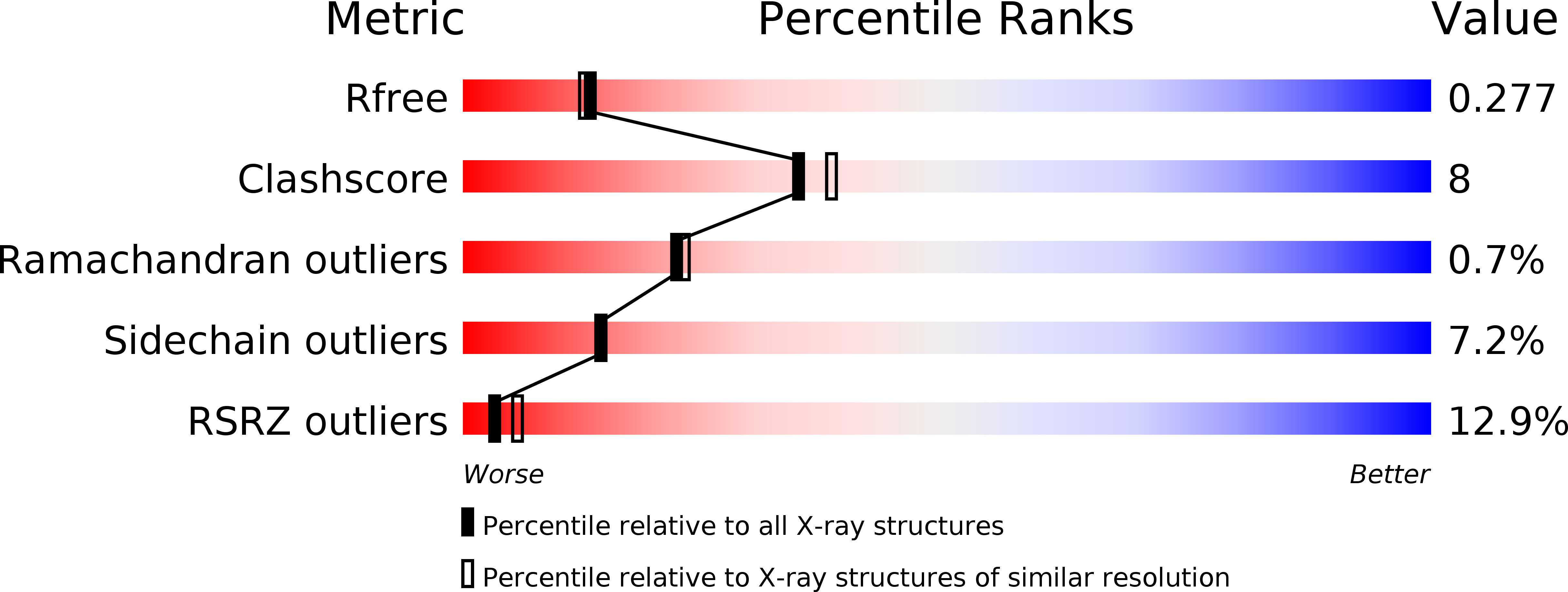
0.27
R-Value Work:
0.20
R-Value Observed:
0.20
Space Group:
P 21 21 2
Macromolecular Entities
Structures with similar UniProt ID
Protein Blast
Polymer Type:polypeptide(L)
Molecule:Pyruvate kinase PKLR
Gene (Uniprot):Pklr
Chain IDs:A, B
Chain Length:550
Number of Molecules:2
Biological Source:Rattus norvegicus
Modified Residue
Compound ID Chain ID Parent Comp ID Details 2D Image
SEP A SER modified residue
Primary Citation
Distinct Hepatic PKA and CDK Signaling Pathways Control Activity-Independent Pyruvate Kinase Phosphorylation and Hepatic Glucose Production.
Cell Rep 29 3394 3404.e9 (2019)
PMID: 31825824 DOI: 10.1016/j.celrep.2019.11.009

Abstact

Pyruvate kinase is an important enzyme in glycolysis and a key metabolic control point. We recently observed a pyruvate kinase liver isoform (PKL) phosphorylation site at S113 that correlates with insulin resistance in rats on a 3 day high-fat diet (HFD) and suggests additional control points for PKL activity. However, in contrast to the classical model of PKL regulation, neither authentically phosphorylated PKL at S12 nor S113 alone is sufficient to alter enzyme kinetics or structure. Instead, we show that cyclin-dependent kinases (CDKs) are activated by the HFD and responsible for PKL phosphorylation at position S113 in addition to other targets. These CDKs control PKL nuclear retention, alter cytosolic PKL activity, and ultimately influence glucose production. These results change our view of PKL regulation and highlight a previously unrecognized pathway of hepatic CDK activity and metabolic control points that may be important in insulin resistance and type 2 diabetes.

Legend

Protein

Chemical

Disease

Primary Citation of related structures
Feedback Form
Name
Email
Institute
Feedback