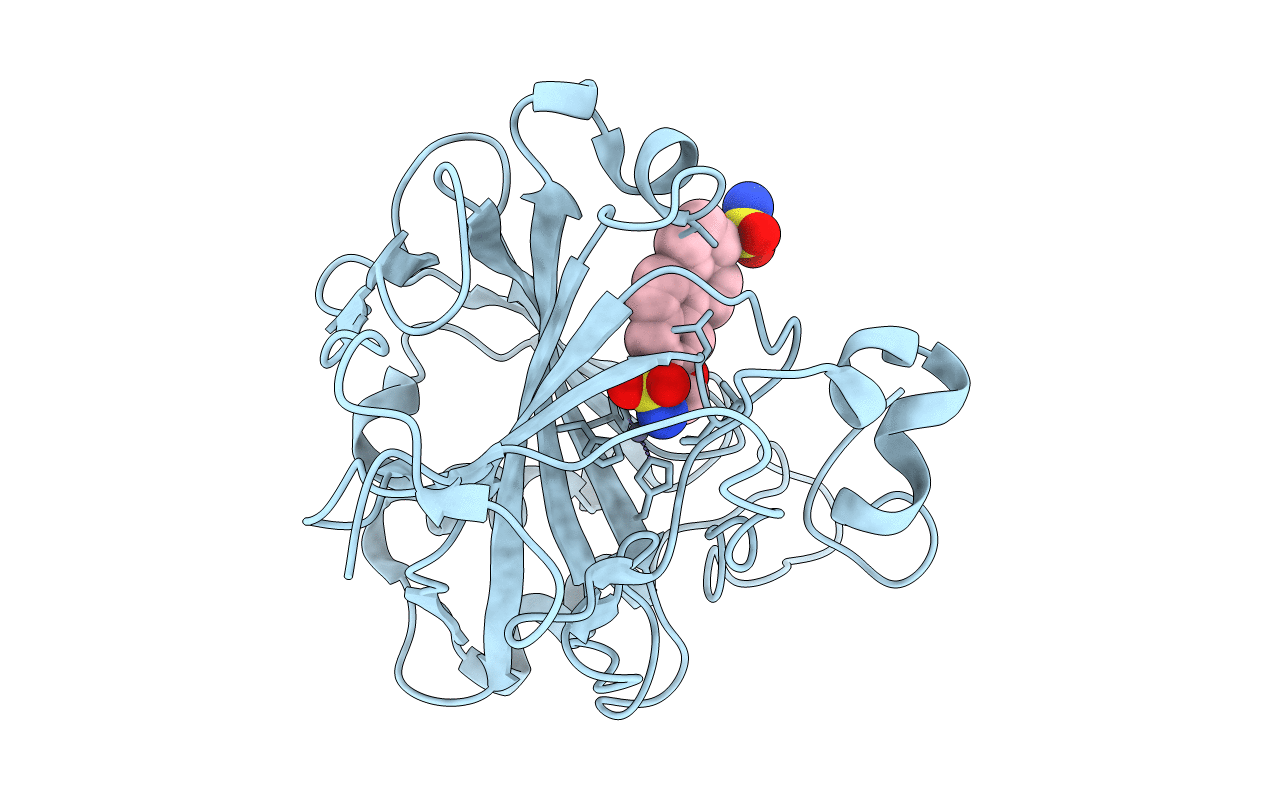
6E8X image
Deposition Date 2018-07-31
Release Date 2019-03-27
Last Version Date 2023-10-11
Entry Detail
PDB ID:
6E8X
Keywords:
Title:
CA IX mimic Complexed with Steroidal Sulfamate Compound STX 140
Biological Source:
Source Organism:
Homo sapiens (Taxon ID: 9606)
Host Organism:
Method Details:
Experimental Method:
Resolution:
1.60 Å
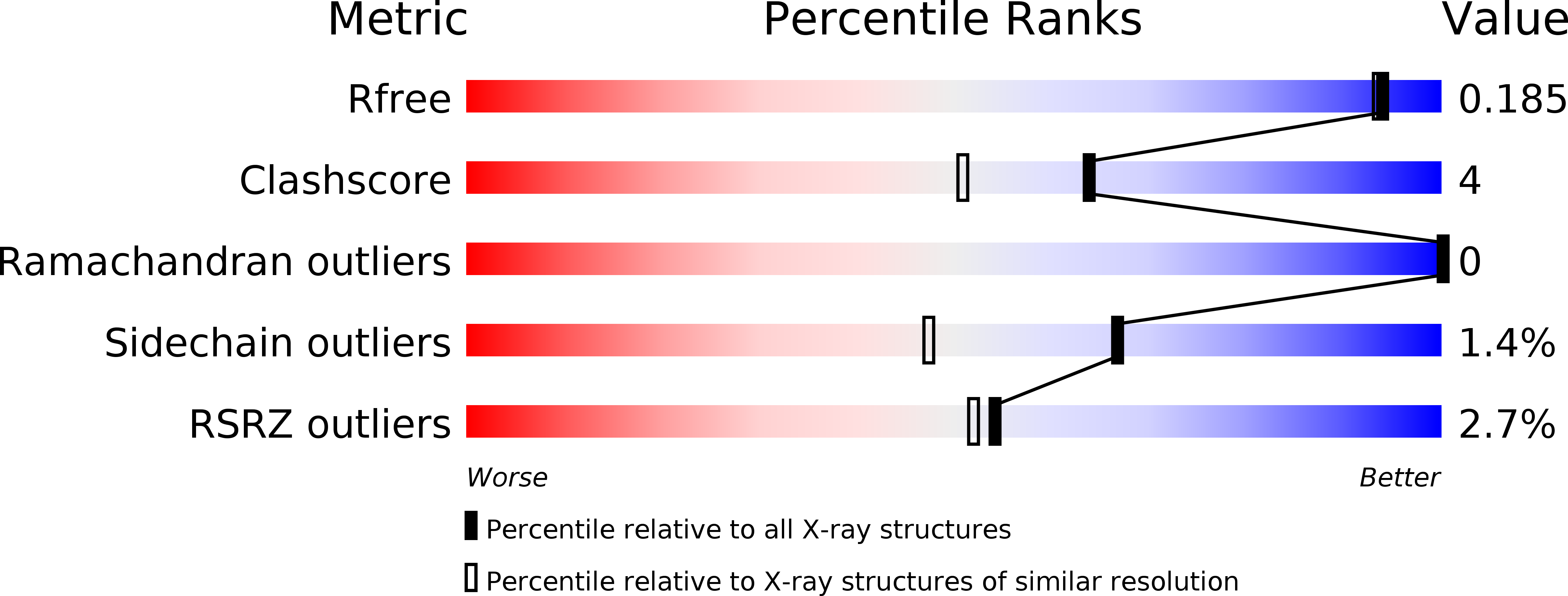
R-Value Free:
0.18
R-Value Work:
0.16
R-Value Observed:
0.16
Space Group:
P 1 21 1
Macromolecular Entities
Structures with similar UniProt ID
Protein Blast
Polymer Type:polypeptide(L)
Molecule:Carbonic anhydrase 2
Gene (Uniprot):CA2
Mutagens:A65S, N67Q, E69T, I91L, F131V, K170E, L204A
Chain IDs:A
Chain Length:257
Number of Molecules:1
Biological Source:Homo sapiens
Primary Citation
3,17 beta-Bis-sulfamoyloxy-2-methoxyestra-1,3,5(10)-triene and Nonsteroidal Sulfamate Derivatives Inhibit Carbonic Anhydrase IX: Structure-Activity Optimization for Isoform Selectivity.
J. Med. Chem. 62 2202 2212 (2019)
PMID: 30721041 DOI: 10.1021/acs.jmedchem.8b01990

Abstact

3,17β-Bis-sulfamoyloxy-2-methoxyestra-1,3,5(10)-triene (STX140), a bis-sulfamate derivative of the endogenous steroid 2-methoxyestradiol, has shown promising anticancer potency both in vitro and in vivo, with excellent bioavailability. Its activity against taxane-resistant xenografts makes it a potential drug candidate against triple-negative breast cancer (TNBC). These properties are linked to the ability of STX140 to act in a multitargeting fashion in vivo as a microtubule disruptor, leading to cell cycle arrest and with both proapoptotic and anti-angiogenic activities. Carbonic anhydrase IX (CA IX) is a well-established biomarker for aggressive cancers, including TNBC. This study reports, for the first time, the inhibitory activities of a series of steroidal and nonsteroidal sulfamate derivatives against CA IX in comparison to the ubiquitous CA II, with some compounds demonstrating 100-200-fold selectivity for CA IX over CA II. X-ray crystallographic studies of four of the most promising compounds reveal that isoform-specific residue interactions are responsible for the high specificity.

Legend

Protein

Chemical

Disease

Primary Citation of related structures
Feedback Form
Name
Email
Institute
Feedback