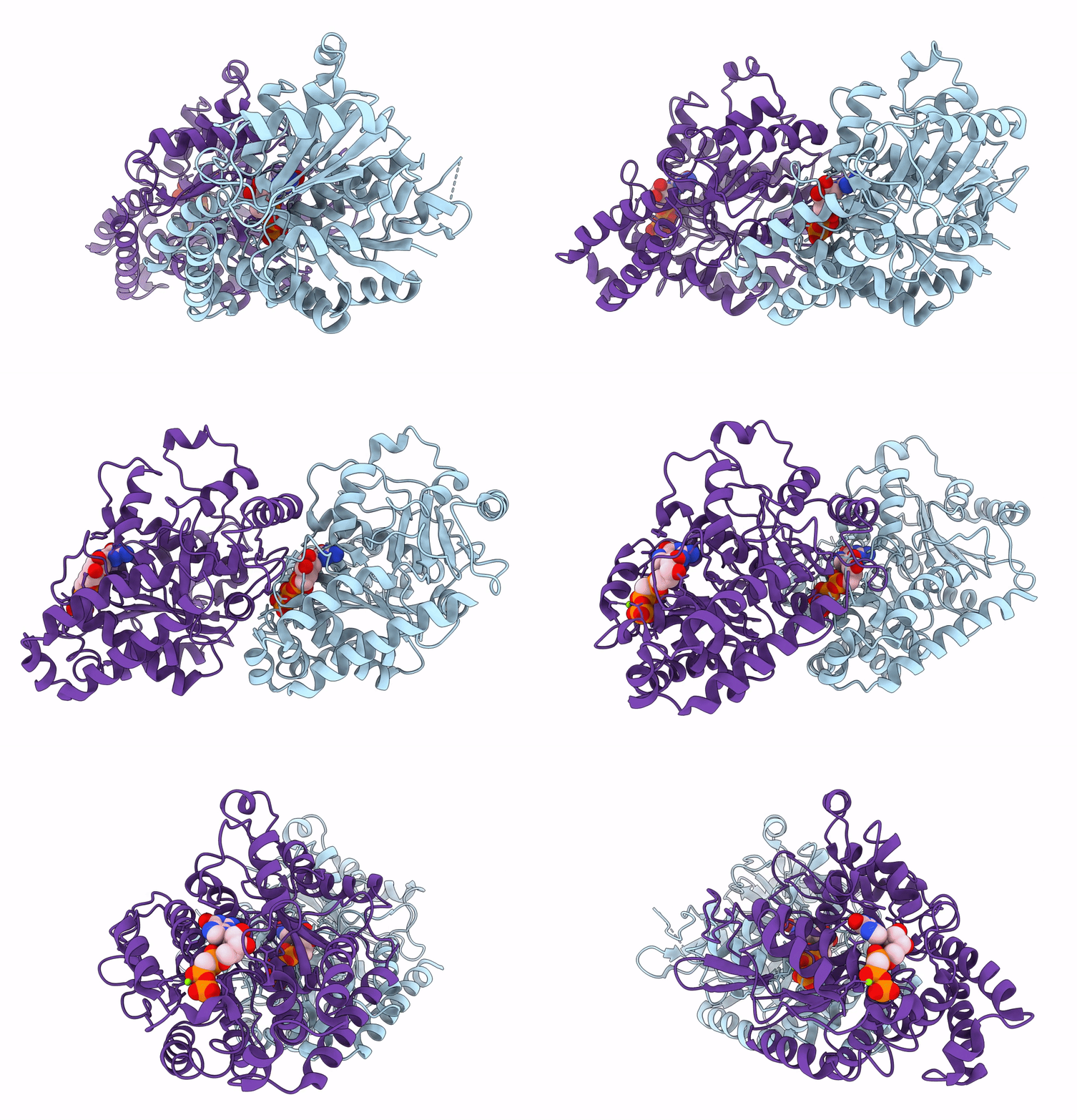
6E7C image
Deposition Date 2018-07-25
Release Date 2018-10-10
Last Version Date 2024-03-13
Entry Detail
PDB ID:
6E7C
Title:
14-pf 3-start GMPCPP-human alpha1B/beta2B microtubules
Biological Source:
Source Organism:
Homo sapiens (Taxon ID: 9606)
Host Organism:
Method Details:
Experimental Method:
Resolution:
3.65 Å
Aggregation State:
HELICAL ARRAY
Reconstruction Method:
HELICAL

Macromolecular Entities
Structures with similar UniProt ID
Protein Blast
Polymer Type:polypeptide(L)
Molecule:Tubulin alpha-1B chain
Gene (Uniprot):TUBA1B
Chain IDs:B (auth: A)
Chain Length:437
Number of Molecules:1
Biological Source:Homo sapiens
Structures with similar UniProt ID
Protein Blast
Polymer Type:polypeptide(L)
Molecule:Tubulin beta-2B chain
Gene (Uniprot):TUBB2B
Chain IDs:A (auth: B)
Chain Length:426
Number of Molecules:1
Biological Source:Homo sapiens
Primary Citation
Human beta-Tubulin Isotypes Can Regulate Microtubule Protofilament Number and Stability.
Dev. Cell 47 175 ? (2018)
PMID: 30245156 DOI: 10.1016/j.devcel.2018.08.014

Abstact

Cell biological studies have shown that protofilament number, a fundamental feature of microtubules, can correlate with the expression of different tubulin isotypes. However, it is not known if tubulin isotypes directly control this basic microtubule property. Here, we report high-resolution cryo-EM reconstructions (3.5-3.65 Å) of purified human α1B/β3 and α1B/β2B microtubules and find that the β-tubulin isotype can determine protofilament number. Comparisons of atomic models of 13- and 14-protofilament microtubules reveal how tubulin subunit plasticity, manifested in "accordion-like" distributed structural changes, can accommodate distinct lattice organizations. Furthermore, compared to α1B/β3 microtubules, α1B/β2B filaments are more stable to passive disassembly and against depolymerization by MCAK or chTOG, microtubule-associated proteins with distinct mechanisms of action. Mixing tubulin isotypes in different proportions results in microtubules with protofilament numbers and stabilities intermediate to those of isotypically pure filaments. Together, our findings indicate that microtubule protofilament number and stability can be controlled through β-tubulin isotype composition.

Legend

Protein

Chemical

Disease

Primary Citation of related structures
Feedback Form
Name
Email
Institute
Feedback