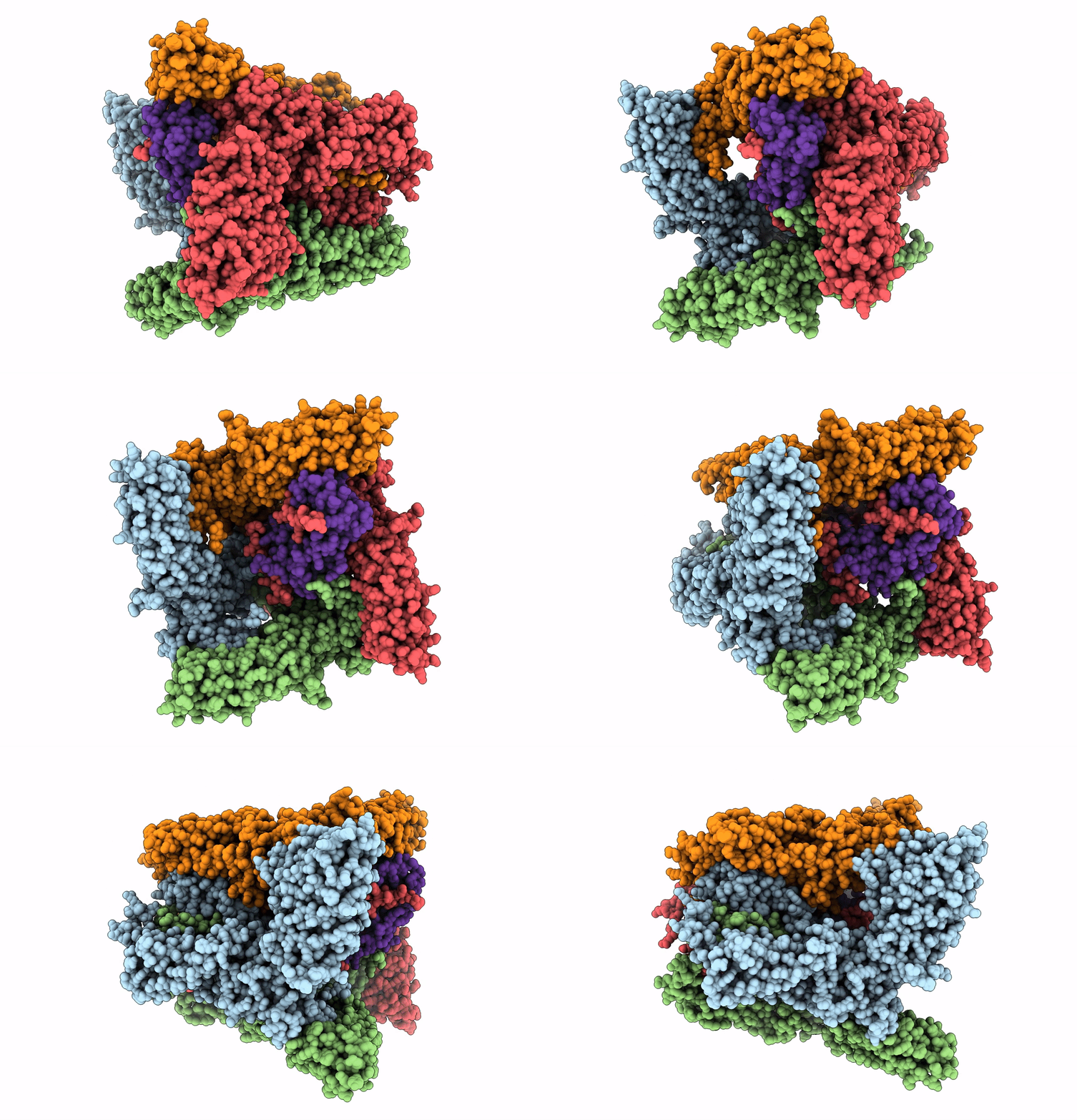
6E2F image
Deposition Date 2018-07-11
Release Date 2018-08-22
Last Version Date 2025-05-28
Entry Detail
PDB ID:
6E2F
Title:
Cryo-EM structure of human TRPV6 in complex with Calmodulin
Biological Source:
Source Organism:
Homo sapiens (Taxon ID: 9606)
Host Organism:
Method Details:
Experimental Method:
Resolution:
3.90 Å
Aggregation State:
PARTICLE
Reconstruction Method:
SINGLE PARTICLE
Macromolecular Entities
Structures with similar UniProt ID
Protein Blast
Polymer Type:polypeptide(L)
Molecule:Transient receptor potential cation channel subfamily V member 6
Gene (Uniprot):TRPV6
Chain IDs:A, B, C, D
Chain Length:725
Number of Molecules:4
Biological Source:Homo sapiens
Structures with similar UniProt ID
Protein Blast
Polymer Type:polypeptide(L)
Molecule:Calmodulin-1
Gene (Uniprot):CALM1
Chain IDs:E
Chain Length:149
Number of Molecules:1
Biological Source:Homo sapiens
Ligand Molecules
Primary Citation
Mechanism of calmodulin inactivation of the calcium-selective TRP channel TRPV6.
Sci Adv 4 eaau6088 eaau6088 (2018)
PMID: 30116787 DOI: 10.1126/sciadv.aau6088

Abstact

Calcium (Ca2+) plays a major role in numerous physiological processes. Ca2+ homeostasis is tightly controlled by ion channels, the aberrant regulation of which results in various diseases including cancers. Calmodulin (CaM)-mediated Ca2+-induced inactivation is an ion channel regulatory mechanism that protects cells against the toxic effects of Ca2+ overload. We used cryo-electron microscopy to capture the epithelial calcium channel TRPV6 (transient receptor potential vanilloid subfamily member 6) inactivated by CaM. The TRPV6-CaM complex exhibits 1:1 stoichiometry; one TRPV6 tetramer binds both CaM lobes, which adopt a distinct head-to-tail arrangement. The CaM carboxyl-terminal lobe plugs the channel through a unique cation-π interaction by inserting the side chain of lysine K115 into a tetra-tryptophan cage at the pore's intracellular entrance. We propose a mechanism of CaM-mediated Ca2+-induced inactivation that can be explored for therapeutic design.

Legend

Protein

Chemical

Disease

Primary Citation of related structures
Feedback Form
Name
Email
Institute
Feedback