Planned Maintenance: Some services may turn out to be unavailable from 15th January, 2026 to 16th January, 2026. We apologize for the inconvenience!

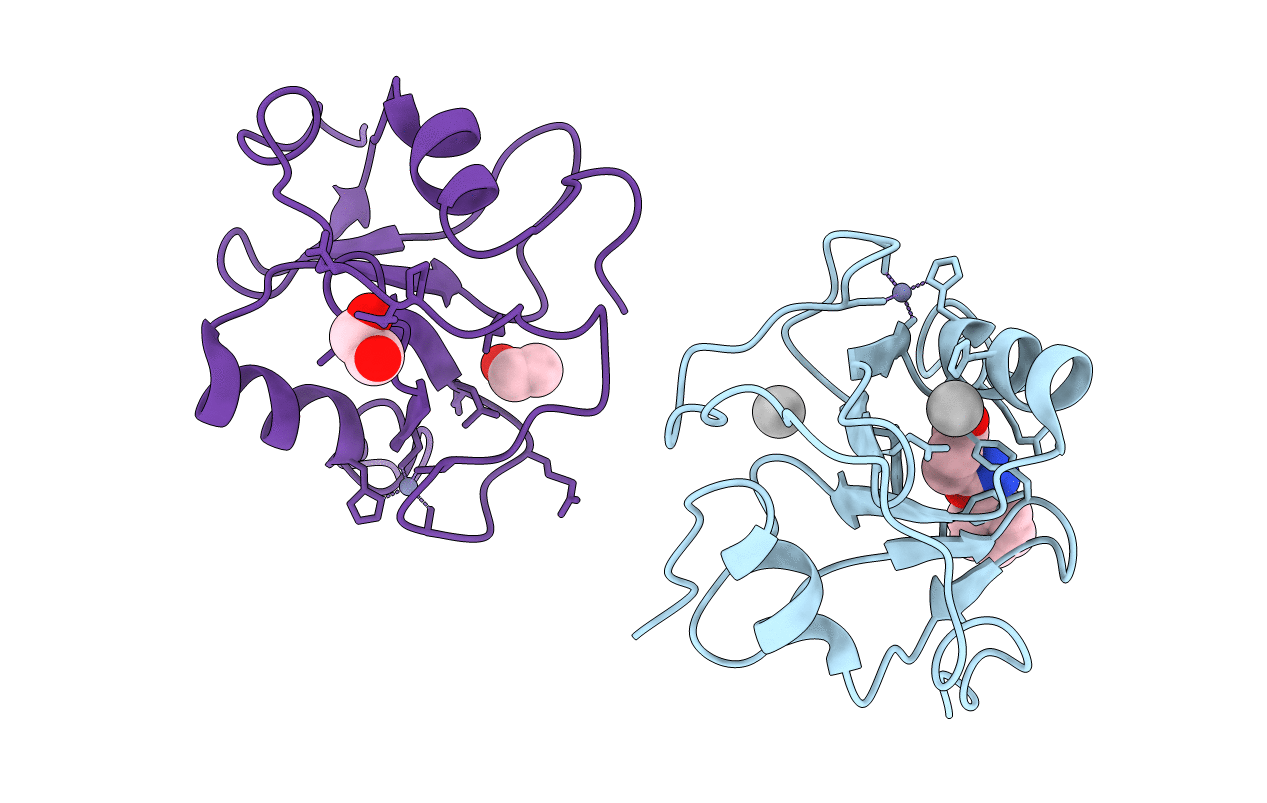
6DXT image
Deposition Date 2018-06-29
Release Date 2018-08-08
Last Version Date 2024-10-16
Entry Detail
PDB ID:
6DXT
Keywords:
Title:
Structure of USP5 zinc-finger ubiquitin binding domain co-crystallized with 3-(5-phenyl-1,3,4-oxadiazol-2-yl)propanoate
Biological Source:
Source Organism(s):
Homo sapiens (Taxon ID: 9606)
Expression System(s):
Method Details:
Experimental Method:
Resolution:
1.95 Å
R-Value Free:
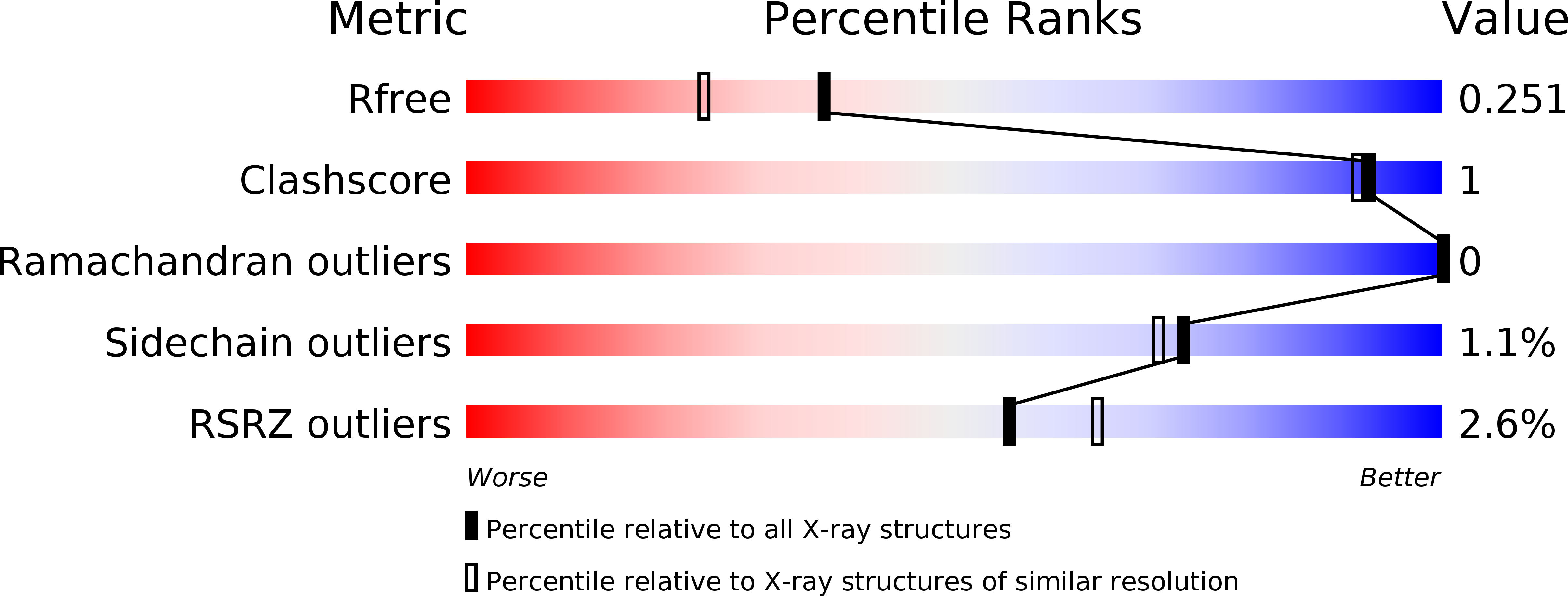
0.24
R-Value Work:
0.19
R-Value Observed:
0.19
Space Group:
C 1 2 1
Macromolecular Entities
Structures with similar UniProt ID
Protein Blast
Polymer Type:polypeptide(L)
Molecule:Ubiquitin carboxyl-terminal hydrolase 5
Gene (Uniprot):USP5
Chain IDs:A, B
Chain Length:121
Number of Molecules:2
Biological Source:Homo sapiens
Primary Citation
Discovery of Small Molecule Antagonists of the USP5 Zinc Finger Ubiquitin-Binding Domain.
J.Med.Chem. 62 10144 10155 (2019)
PMID: 31663737 DOI: 10.1021/acs.jmedchem.9b00988

Abstact

USP5 disassembles unanchored polyubiquitin chains to recycle free monoubiquitin, and is one of the 12 ubiquitin specific proteases featuring a zinc finger ubiquitin-binding domain (ZnF-UBD). This distinct structural module has been associated with substrate positioning or allosteric modulation of catalytic activity, but its cellular function remains unclear. We screened a chemical library focused on the ZnF-UBD of USP5, crystallized hits in complex with the protein, and generated a preliminary structure-activity relationship, which enables the development of more potent and selective compounds. This work serves as a framework for the discovery of a chemical probe to delineate the function of USP5 ZnF-UBD in proteasomal degradation and other ubiquitin signaling pathways in health and disease.

Legend

Protein

Chemical

Disease

Primary Citation of related structures
Feedback Form
Name
Email
Institute
Feedback