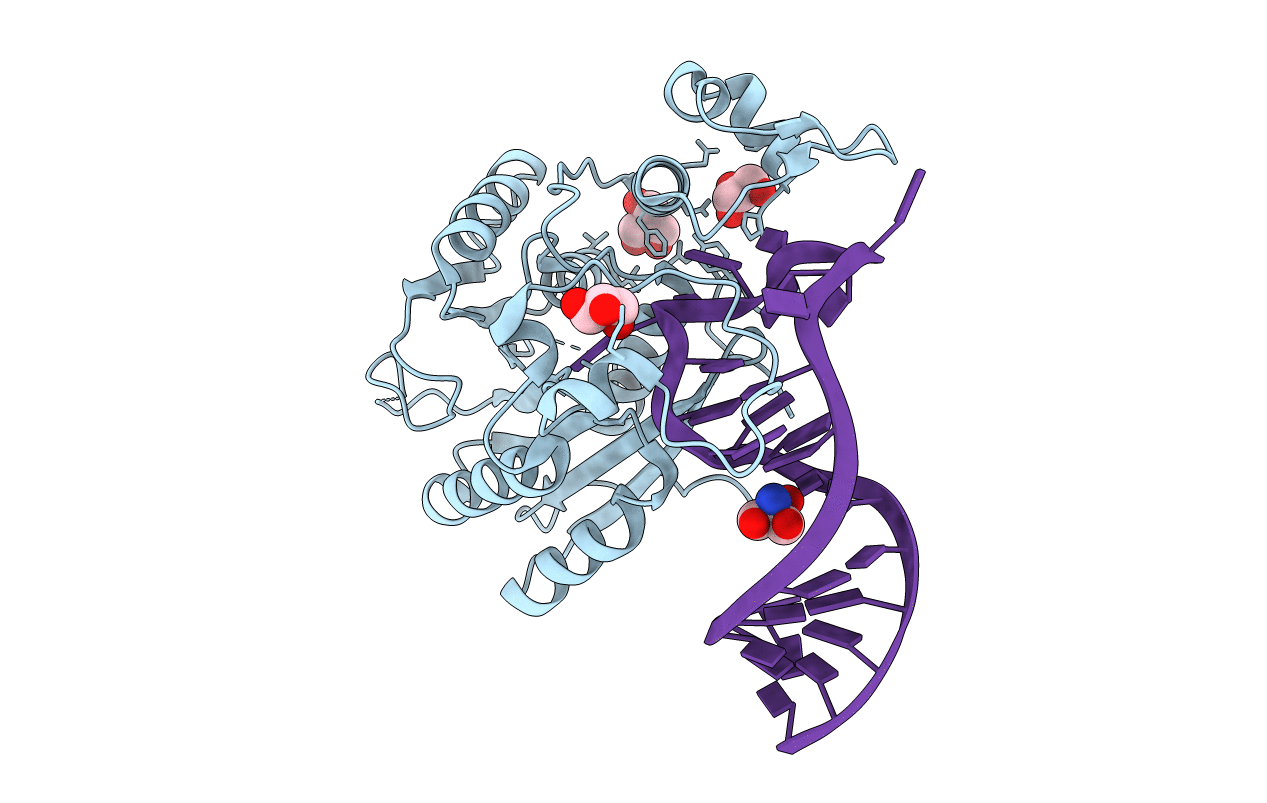
6DU4 image
Deposition Date 2018-06-19
Release Date 2018-09-26
Last Version Date 2024-04-03
Entry Detail
PDB ID:
6DU4
Keywords:
Title:
Crystal structure of hMettl16 catalytic domain in complex with MAT2A 3'UTR hairpin 1
Biological Source:
Source Organism:
Homo sapiens (Taxon ID: 9606)
Host Organism:
Method Details:
Experimental Method:
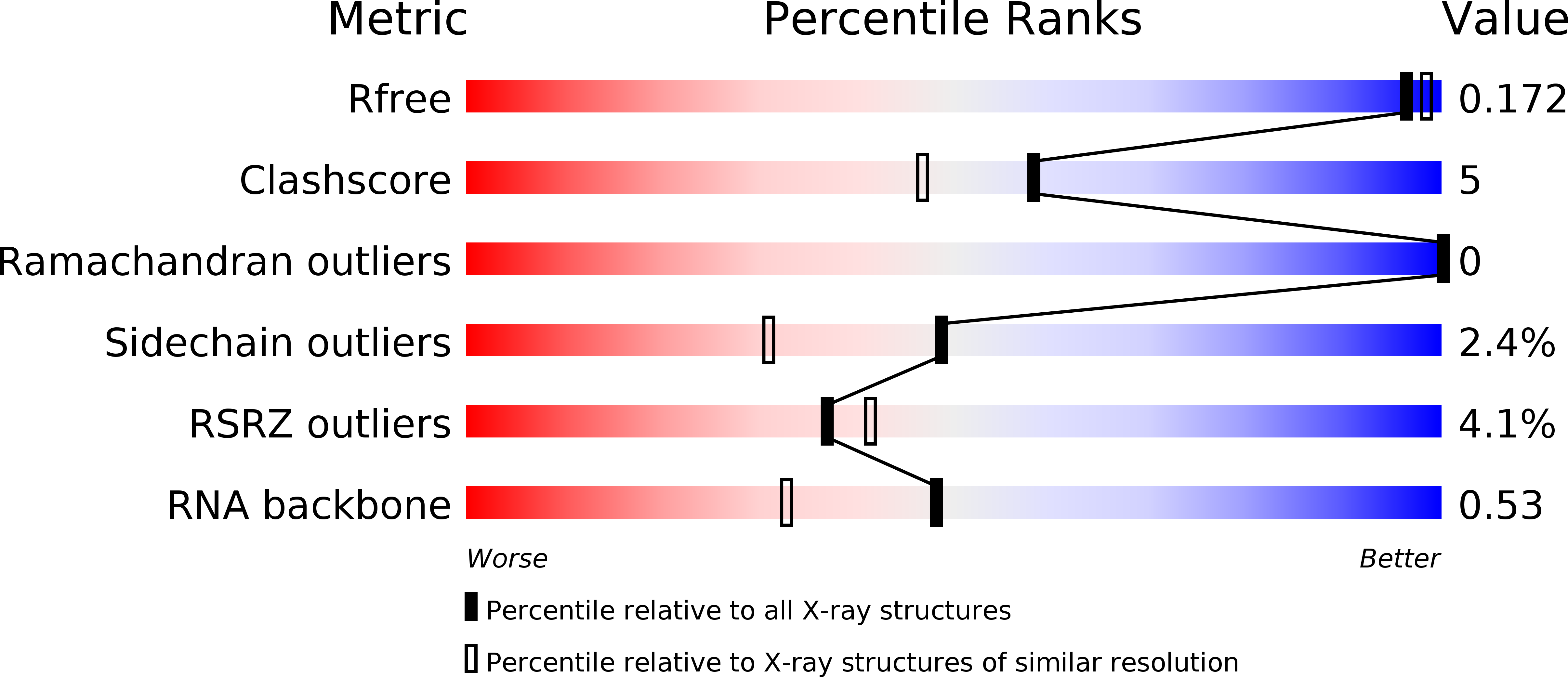
Resolution:
1.70 Å
R-Value Free:
0.17
R-Value Work:
0.15
R-Value Observed:
0.15
Space Group:
P 43
Macromolecular Entities
Structures with similar UniProt ID
Protein Blast
Polymer Type:polypeptide(L)
Molecule:U6 small nuclear RNA (adenine-(43)-N(6))-methyltransferase
Gene (Uniprot):METTL16
Chain IDs:A
Chain Length:313
Number of Molecules:1
Biological Source:Homo sapiens
Polymer Type:polyribonucleotide
Molecule:hp1x-RNA (29-MER)
Chain IDs:B
Chain Length:29
Number of Molecules:1
Biological Source:Homo sapiens
Primary Citation
Structural Basis for Regulation of METTL16, an S-Adenosylmethionine Homeostasis Factor.
Mol. Cell 71 1001 1011.e4 (2018)
PMID: 30197297 DOI: 10.1016/j.molcel.2018.07.025

Abstact

S-adenosylmethionine (SAM) is an essential metabolite that acts as a cofactor for most methylation events in the cell. The N6-methyladenosine (m6A) methyltransferase METTL16 controls SAM homeostasis by regulating the abundance of SAM synthetase MAT2A mRNA in response to changing intracellular SAM levels. Here we present crystal structures of METTL16 in complex with MAT2A RNA hairpins to uncover critical molecular mechanisms underlying the regulated activity of METTL16. The METTL16-RNA complex structures reveal atomic details of RNA substrates that drive productive methylation by METTL16. In addition, we identify a polypeptide loop in METTL16 near the SAM binding site with an autoregulatory role. We show that mutations that enhance or repress METTL16 activity in vitro correlate with changes in MAT2A mRNA levels in cells. Thus, we demonstrate the structural basis for the specific activity of METTL16 and further suggest the molecular mechanisms by which METTL16 efficiency is tuned to regulate SAM homeostasis.

Legend

Protein

Chemical

Disease

Primary Citation of related structures
Feedback Form
Name
Email
Institute
Feedback