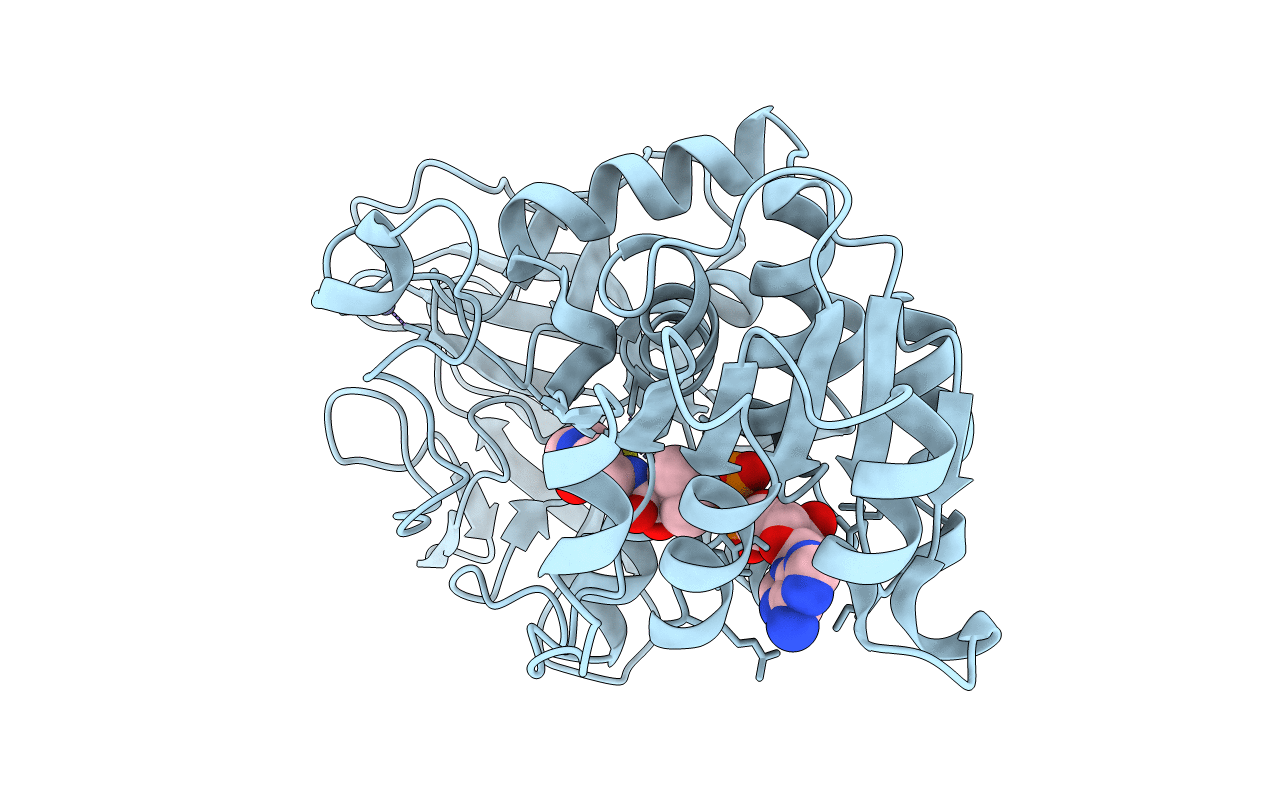
6CY3 image
Deposition Date 2018-04-04
Release Date 2018-04-18
Last Version Date 2023-10-04
Entry Detail
PDB ID:
6CY3
Keywords:
Title:
Horse liver E267N alcohol dehydrogenase complex with 3'-dephosphocoenzyme A
Biological Source:
Source Organism:
EQUUS CABALLUS (Taxon ID: 9796)
Host Organism:
Method Details:
Experimental Method:
Resolution:
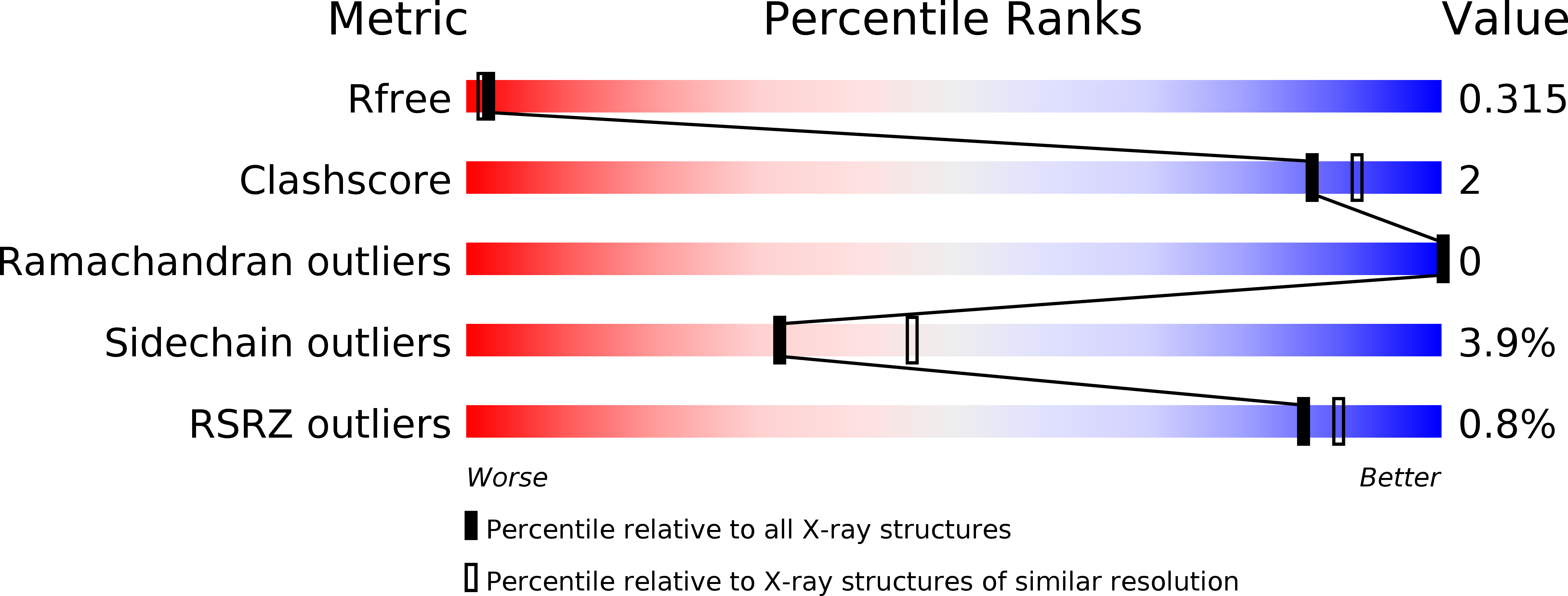
2.30 Å
R-Value Free:
0.31
R-Value Work:
0.22
R-Value Observed:
0.23
Space Group:
C 2 2 21
Macromolecular Entities
Structures with similar UniProt ID
Protein Blast
Polymer Type:polypeptide(L)
Molecule:alcohol dehydrogenase
Mutagens:E267N
Chain IDs:A
Chain Length:374
Number of Molecules:1
Biological Source:EQUUS CABALLUS
Primary Citation
Substitutions of a buried glutamate residue hinder the conformational change in horse liver alcohol dehydrogenase and yield a surprising complex with endogenous 3'-Dephosphocoenzyme A.
Arch. Biochem. Biophys. 653 97 106 (2018)
PMID: 30018019 DOI: 10.1016/j.abb.2018.07.003

Abstact

Glu-267 is highly conserved in alcohol dehydrogenases and buried as a negatively-charged residue in a loop of the NAD coenzyme binding domain. Glu-267 might have a structural role and contribute to a rate-promoting vibration that facilitates catalysis. Substitutions of Glu-267 with histidine or asparagine residues increase the dissociation constants for the coenzymes (NAD+ by ∼40-fold, NADH by ∼200-fold) and significantly decrease catalytic efficiencies by 16-1200-fold various substrates and substituted enzymes. The turnover numbers modestly change with the substitutions, but hydride transfer is at least partially rate-limiting for turnover for alcohol oxidation. X-ray structures of the E267H and E267 N enzymes are similar to the apoenzyme (open) conformation of the wild-type enzyme, and the substitutions are accommodated by local changes in the structure. Surprisingly, the E267H and E267 N enzymes have endogenous (from the expression in E. coli) 3'-dephosphocoenzyme A bound in the active site with the ADP moiety in the NAD binding site and the pantethiene sulfhydryl bound to the catalytic zinc. The kinetics and crystallography show that the substitutions of Glu-267 hinder the conformational change, which occurs when wild-type enzyme binds coenzymes, and affect productive binding of substrates.

Legend

Protein

Chemical

Disease

Primary Citation of related structures
Feedback Form
Name
Email
Institute
Feedback