6CMN image
Deposition Date 2018-03-05
Release Date 2018-06-06
Last Version Date 2023-10-04
Entry Detail
PDB ID:
6CMN
Title:
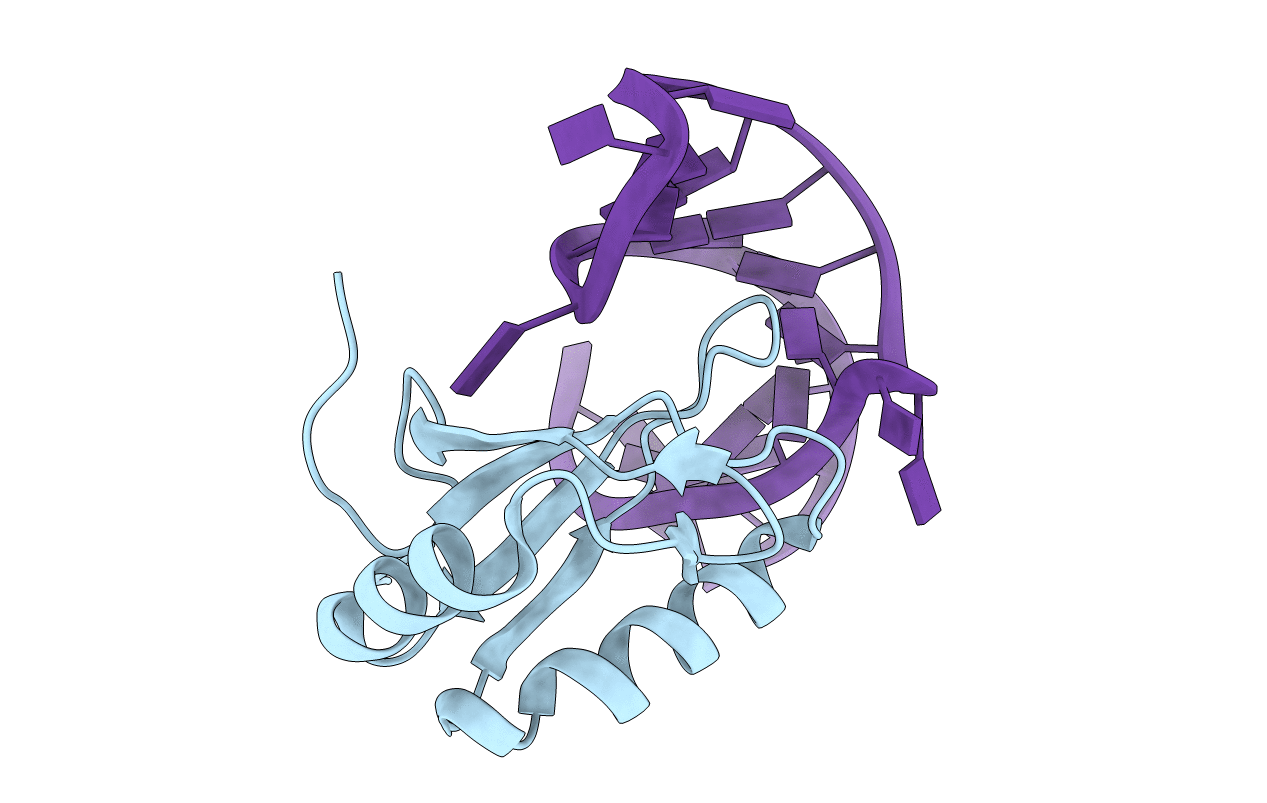
Co-Crystal Structure of HIV-1 TAR Bound to Lab-Evolved RRM TBP6.7
Biological Source:
Source Organism:
Host Organism:
Method Details:
Experimental Method:
Resolution:
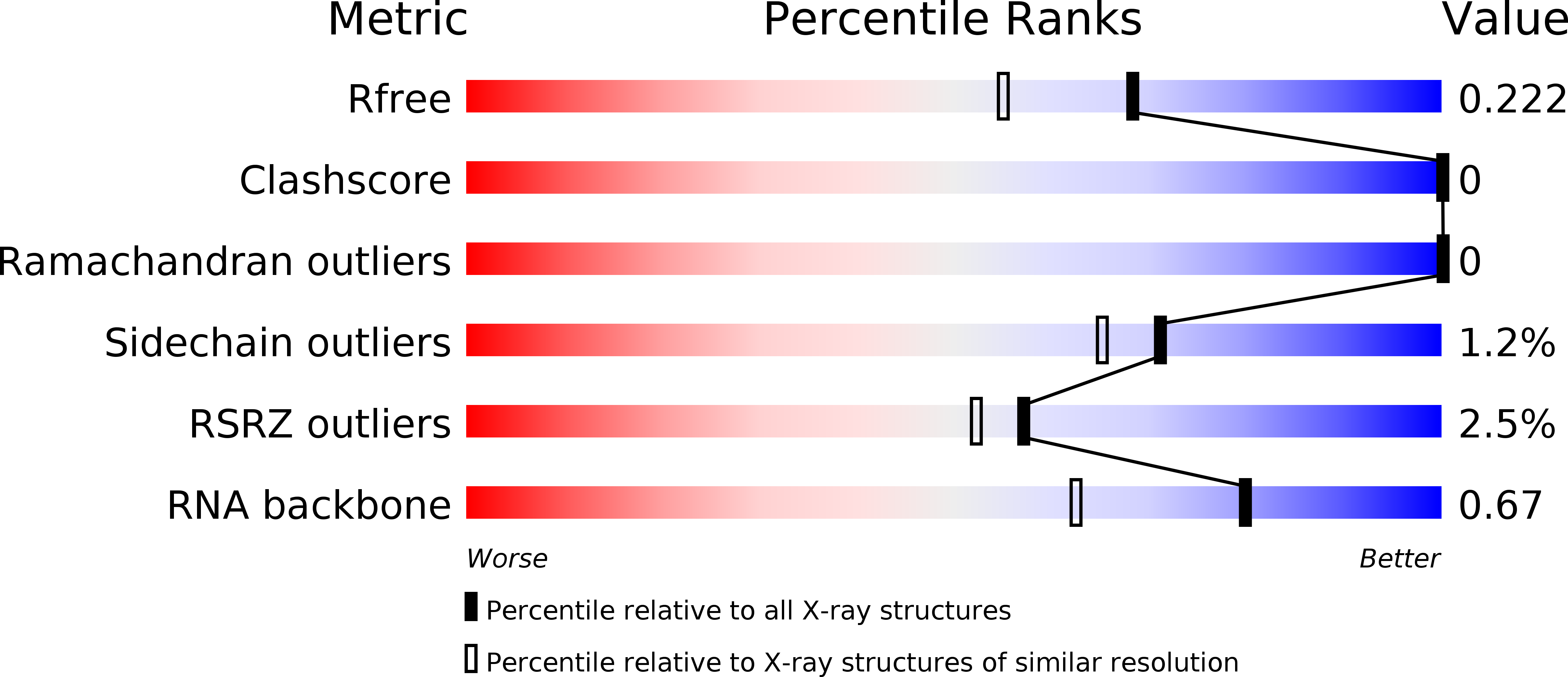
1.80 Å
R-Value Free:
0.22
R-Value Work:
0.18
R-Value Observed:
0.19
Space Group:
P 43 21 2
Macromolecular Entities
Structures with similar UniProt ID
Protein Blast
Polymer Type:polypeptide(L)
Molecule:TAR-Binding Protein 6.7
Gene (Uniprot):SNRPA
Mutagens:E19S, Y31H, Q36R, S46P, S48Q, L49R, K50T, M51P, R83A, S91K, D92R, I94P
Chain IDs:A
Chain Length:119
Number of Molecules:1
Biological Source:Oryctolagus cuniculus
Polymer Type:polyribonucleotide
Molecule:Trans-Activation Response RNA Element
Chain IDs:B (auth: D)
Chain Length:27
Number of Molecules:1
Biological Source:Human immunodeficiency virus 1
Primary Citation
Structure of HIV TAR in complex with a Lab-Evolved RRM provides insight into duplex RNA recognition and synthesis of a constrained peptide that impairs transcription.
Nucleic Acids Res. 46 6401 6415 (2018)
PMID: 29961805 DOI: 10.1093/nar/gky529

Abstact

Natural and lab-evolved proteins often recognize their RNA partners with exquisite affinity. Structural analysis of such complexes can offer valuable insight into sequence-selective recognition that can be exploited to alter biological function. Here, we describe the structure of a lab-evolved RNA recognition motif (RRM) bound to the HIV-1 trans-activation response (TAR) RNA element at 1.80 Å-resolution. The complex reveals a trio of arginines in an evolved β2-β3 loop penetrating deeply into the major groove to read conserved guanines while simultaneously forming cation-π and salt-bridge contacts. The observation that the evolved RRM engages TAR within a double-stranded stem is atypical compared to most RRMs. Mutagenesis, thermodynamic analysis and molecular dynamics validate the atypical binding mode and quantify molecular contributions that support the exceptionally tight binding of the TAR-protein complex (KD,App of 2.5 ± 0.1 nM). These findings led to the hypothesis that the β2-β3 loop can function as a standalone TAR-recognition module. Indeed, short constrained peptides comprising the β2-β3 loop still bind TAR (KD,App of 1.8 ± 0.5 μM) and significantly weaken TAR-dependent transcription. Our results provide a detailed understanding of TAR molecular recognition and reveal that a lab-evolved protein can be reduced to a minimal RNA-binding peptide.

Legend

Protein

Chemical

Disease

Primary Citation of related structures
Feedback Form
Name
Email
Institute
Feedback