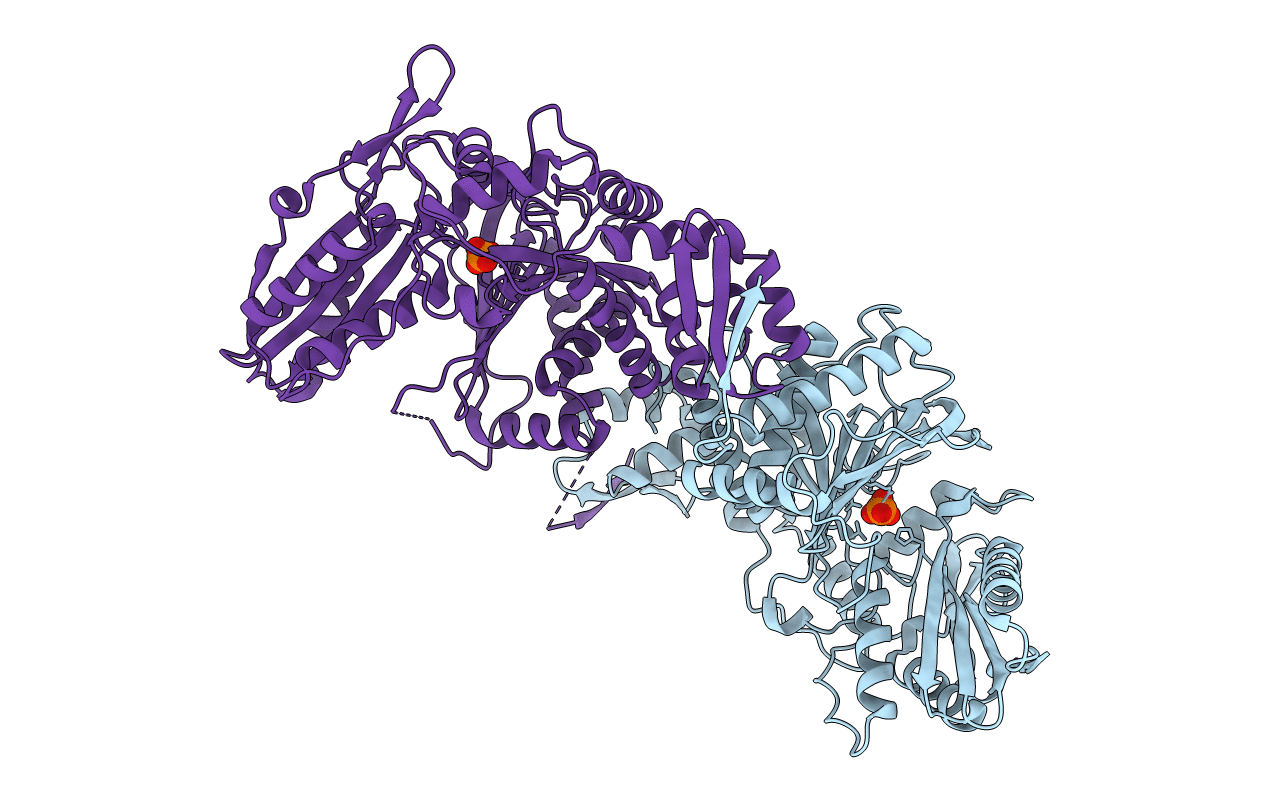
6CGO image
Deposition Date 2018-02-20
Release Date 2019-02-27
Last Version Date 2024-03-13
Entry Detail
PDB ID:
6CGO
Title:
Molecular basis for condensation domain-mediated chain release from the enacyloxin polyketide synthase
Biological Source:
Method Details:
Experimental Method:
Resolution:
2.00 Å
R-Value Free:
0.21
R-Value Work:
0.18
R-Value Observed:
0.18
Space Group:
P 1 21 1
Macromolecular Entities
Structures with similar UniProt ID
Protein Blast
Polymer Type:polypeptide(L)
Molecule:Condensation domain protein
Gene (Uniprot):Bamb_5915
Chain IDs:A, B
Chain Length:545
Number of Molecules:2
Biological Source:Burkholderia ambifaria (strain ATCC BAA-244 / AMMD)
Ligand Molecules
Primary Citation
Structural basis for chain release from the enacyloxin polyketide synthase.
Nat.Chem. 11 913 923 (2019)
PMID: 31548674 DOI: 10.1038/s41557-019-0335-5

Abstact

Modular polyketide synthases and non-ribosomal peptide synthetases are molecular assembly lines that consist of several multienzyme subunits that undergo dynamic self-assembly to form a functional megacomplex. N- and C-terminal docking domains are usually responsible for mediating the interactions between subunits. Here we show that communication between two non-ribosomal peptide synthetase subunits responsible for chain release from the enacyloxin polyketide synthase, which assembles an antibiotic with promising activity against Acinetobacter baumannii, is mediated by an intrinsically disordered short linear motif and a β-hairpin docking domain. The structures, interactions and dynamics of these subunits were characterized using several complementary biophysical techniques to provide extensive insights into binding and catalysis. Bioinformatics analyses reveal that short linear motif/β-hairpin docking domain pairs mediate subunit interactions in numerous non-ribosomal peptide and hybrid polyketide-non-ribosomal peptide synthetases, including those responsible for assembling several important drugs. Short linear motifs and β-hairpin docking domains from heterologous systems are shown to interact productively, highlighting the potential of such interfaces as tools for biosynthetic engineering.

Legend

Protein

Chemical

Disease

Primary Citation of related structures
Feedback Form
Name
Email
Institute
Feedback