6CGE image
Deposition Date 2018-02-20
Release Date 2019-01-16
Last Version Date 2024-10-23
Entry Detail
PDB ID:
6CGE
Keywords:
Title:
Crystal structure of human 17beta-HSD type 1 in ternary complex with PBRM and NADP+
Biological Source:
Source Organism:
Homo sapiens (Taxon ID: 9606)
Host Organism:
Method Details:
Experimental Method:
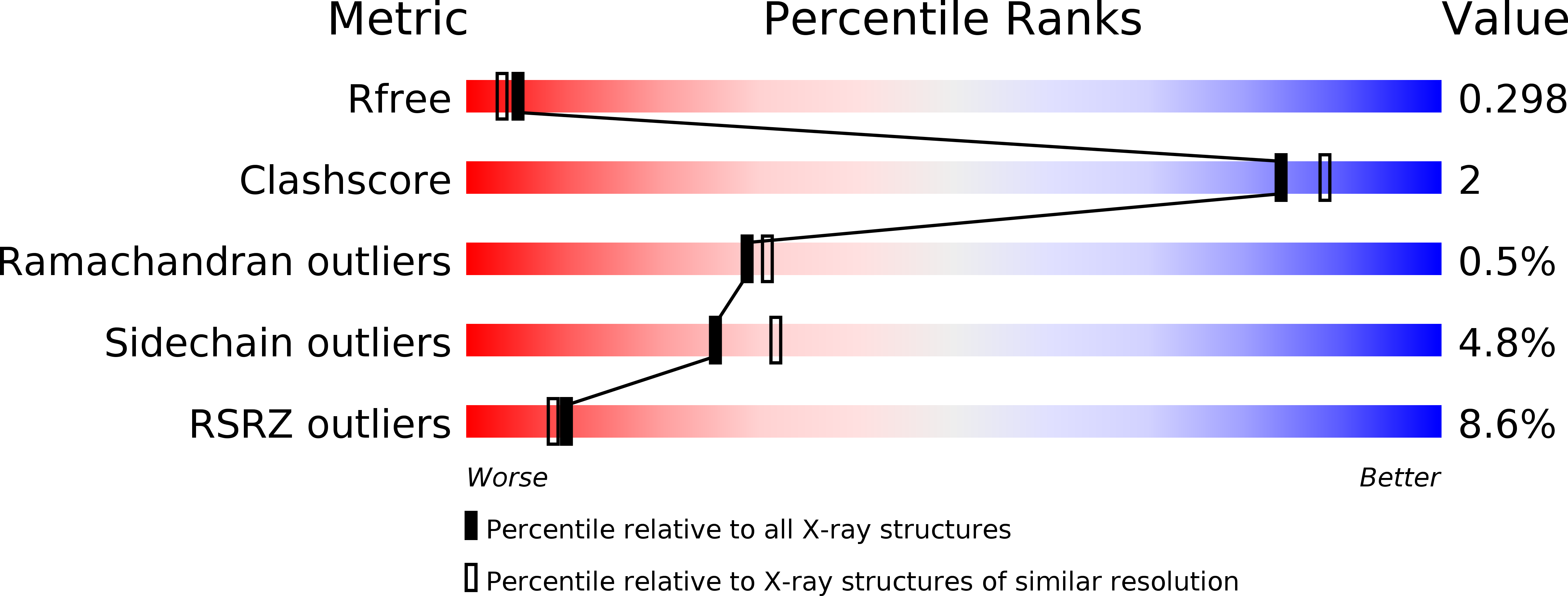
Resolution:
2.20 Å
R-Value Free:
0.30
R-Value Work:
0.22
R-Value Observed:
0.22
Space Group:
P 21 21 21
Macromolecular Entities
Structures with similar UniProt ID
Protein Blast
Polymer Type:polypeptide(L)
Molecule:Estradiol 17-beta-dehydrogenase 1
Gene (Uniprot):HSD17B1
Chain IDs:A, B
Chain Length:328
Number of Molecules:2
Biological Source:Homo sapiens
Primary Citation
Combined Biophysical Chemistry Reveals a New Covalent Inhibitor with a Low-Reactivity Alkyl Halide.
J Phys Chem Lett 9 5275 5280 (2018)
PMID: 30148957 DOI: 10.1021/acs.jpclett.8b02225

Abstact

17β-Hydroxysteroid dehydrogenase type 1 (17β-HSD1) plays a pivotal role in the progression of estrogen-related diseases because of its involvement in the biosynthesis of estradiol (E2), constituting a valuable therapeutic target for endocrine treatment. In the present study, we successfully cocrystallized the enzyme with the reversible inhibitor 2-methoxy-16β-(m-carbamoylbenzyl)-E2 (2-MeO-CC-156) as well as the enzyme with the irreversible inhibitor 3-(2-bromoethyl)-16β-(m-carbamoylbenzyl)-17β-hydroxy-1,3,5(10)-estratriene (PBRM). The structures of ternary complexes of 17β-HSD1-2-MeO-CC-156-NADP+ and 17β-HSD1-PBRM-NADP+ comparatively show the formation of a covalent bond between His221 and the bromoethyl side chain of the inhibitor in the PBRM structure. A dynamic process including beneficial molecular interactions that favor the specific binding of a low-reactivity inhibitor and subsequent N-alkylation event through the participation of His221 in the enzyme catalytic site clearly demonstrates the covalent bond formation. This finding opens the door to a new design of alkyl halide-based specific covalent inhibitors as potential therapeutic agents for different enzymes, contributing to the development of highly efficient inhibitors.

Legend

Protein

Chemical

Disease

Primary Citation of related structures
Feedback Form
Name
Email
Institute
Feedback