6CFH image
Deposition Date 2018-02-15
Release Date 2018-05-23
Last Version Date 2024-05-15
Entry Detail
PDB ID:
6CFH
Keywords:
Title:
SWGMMGMLASQ segment from the low complexity domain of TDP-43
Biological Source:
Source Organism(s):
Homo sapiens (Taxon ID: 9606)
Method Details:
Experimental Method:
Resolution:
1.50 Å
R-Value Free:
0.31
R-Value Work:
0.28
R-Value Observed:
0.28
Space Group:
P 1
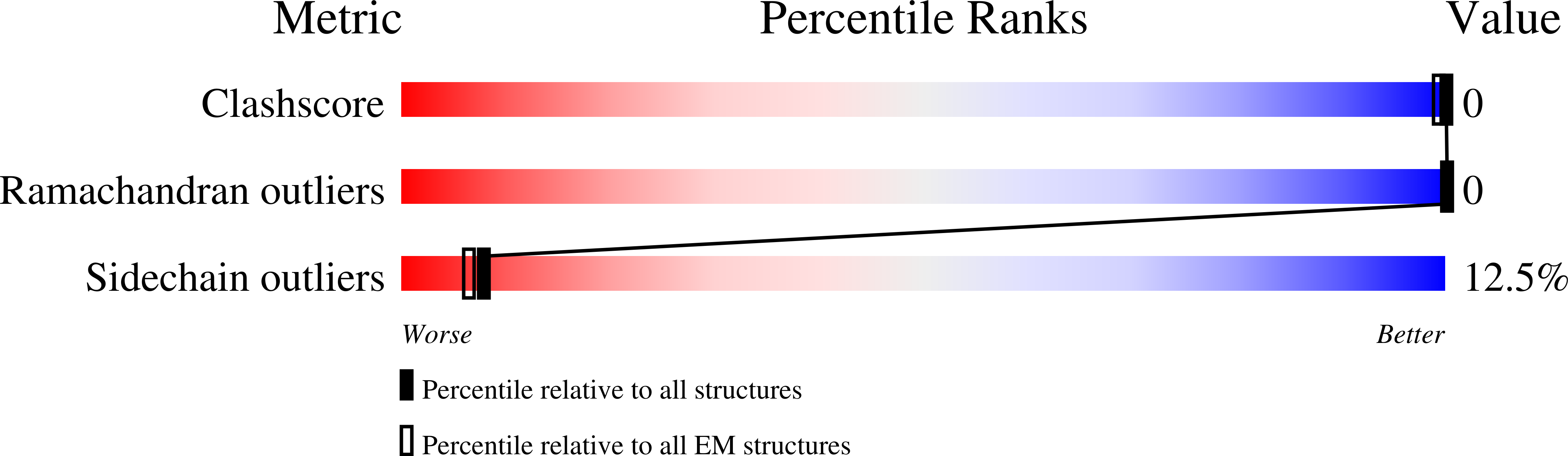
Macromolecular Entities
Structures with similar UniProt ID
Protein Blast
Polymer Type:polypeptide(L)
Molecule:TAR DNA-binding protein 43
Gene (Uniprot):TARDBP
Chain IDs:A, B
Chain Length:11
Number of Molecules:2
Biological Source:Homo sapiens
Ligand Molecules
Primary Citation
Atomic structures of TDP-43 LCD segments and insights into reversible or pathogenic aggregation.
Nat. Struct. Mol. Biol. 25 463 471 (2018)
PMID: 29786080 DOI: 10.1038/s41594-018-0064-2

Abstact

The normally soluble TAR DNA-binding protein 43 (TDP-43) is found aggregated both in reversible stress granules and in irreversible pathogenic amyloid. In TDP-43, the low-complexity domain (LCD) is believed to be involved in both types of aggregation. To uncover the structural origins of these two modes of β-sheet-rich aggregation, we have determined ten structures of segments of the LCD of human TDP-43. Six of these segments form steric zippers characteristic of the spines of pathogenic amyloid fibrils; four others form LARKS, the labile amyloid-like interactions characteristic of protein hydrogels and proteins found in membraneless organelles, including stress granules. Supporting a hypothetical pathway from reversible to irreversible amyloid aggregation, we found that familial ALS variants of TDP-43 convert LARKS to irreversible aggregates. Our structures suggest how TDP-43 adopts both reversible and irreversible β-sheet aggregates and the role of mutation in the possible transition of reversible to irreversible pathogenic aggregation.

Legend

Protein

Chemical

Disease

Primary Citation of related structures
Feedback Form
Name
Email
Institute
Feedback