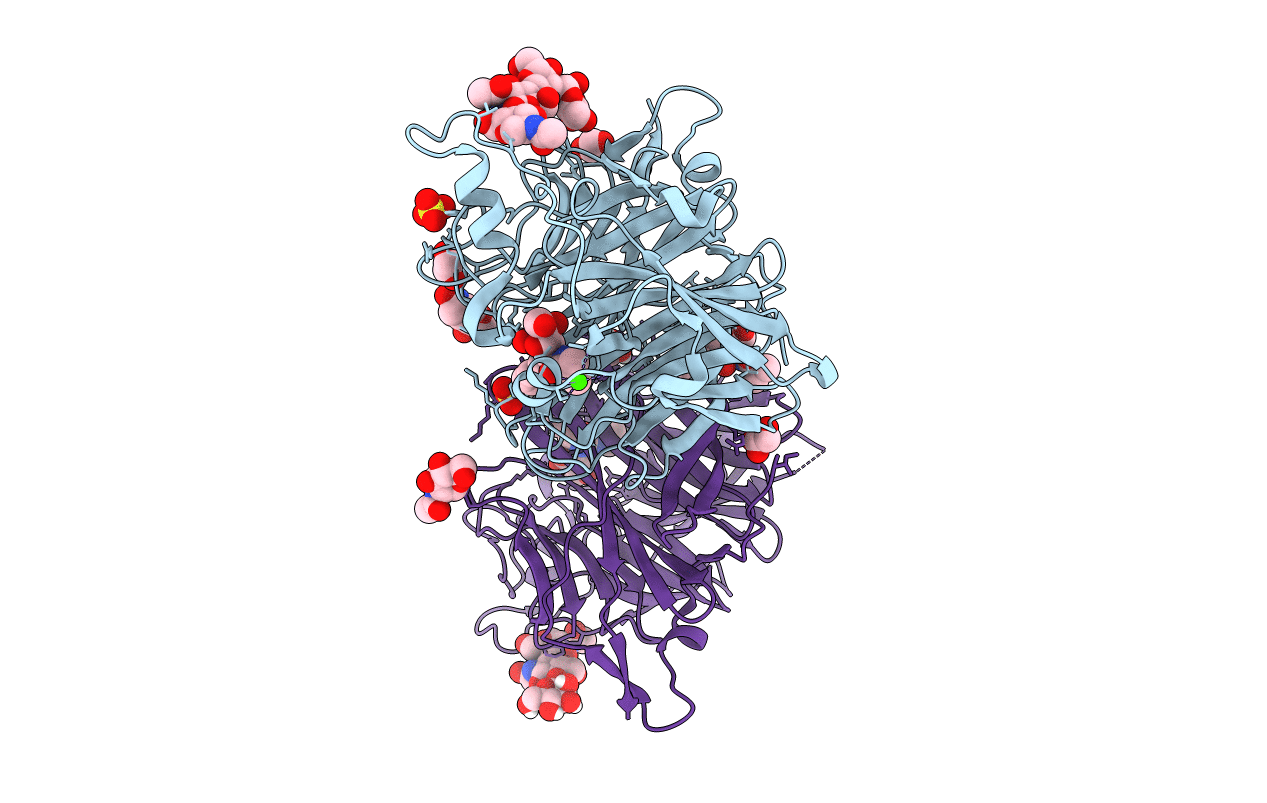
6C0M image
Deposition Date 2018-01-01
Release Date 2018-06-27
Last Version Date 2024-11-13
Entry Detail
PDB ID:
6C0M
Title:
The synthesis, biological evaluation and structural insights of unsaturated 3-N-substituted sialic acids as probes of human parainfluenza virus-3 haemagglutinin-neuraminidase
Biological Source:
Source Organism:
Host Organism:
Method Details:
Experimental Method:
Resolution:
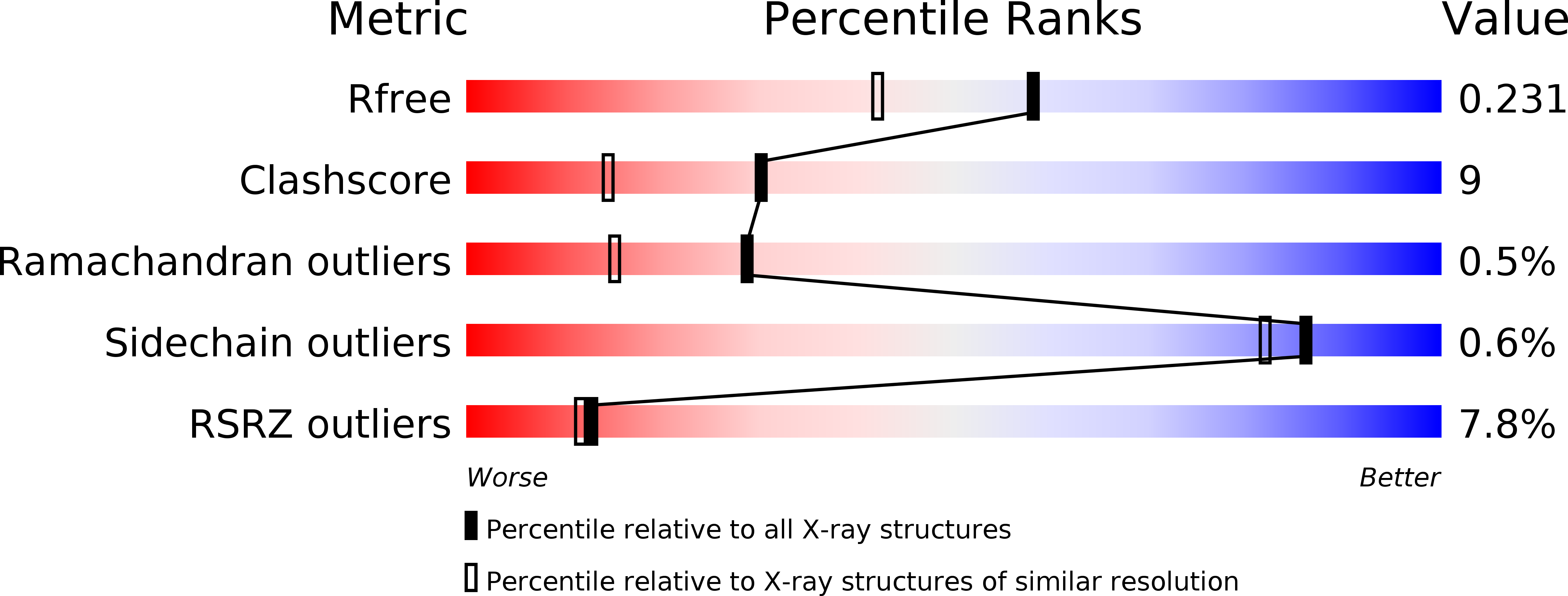
1.83 Å
R-Value Free:
0.22
R-Value Work:
0.18
R-Value Observed:
0.18
Space Group:
P 21 21 21
Macromolecular Entities
Structures with similar UniProt ID
Protein Blast
Polymer Type:polypeptide(L)
Molecule:Hemagglutinin-neuraminidase
Gene (Uniprot):HN
Chain IDs:A, B
Chain Length:431
Number of Molecules:2
Biological Source:Human respirovirus 3
Primary Citation
Structural Insights into Human Parainfluenza Virus 3 Hemagglutinin-Neuraminidase Using Unsaturated 3- N-Substituted Sialic Acids as Probes.
ACS Chem. Biol. 13 1544 1550 (2018)
PMID: 29693380 DOI: 10.1021/acschembio.8b00150

Abstact

A novel approach to human parainfluenza virus 3 (hPIV-3) inhibitor design has been evaluated by targeting an unexplored pocket within the active site region of the hemagglutinin-neuraminidase (HN) of the virus that is normally occluded upon ligand engagement. To explore this opportunity, we developed a highly efficient route to introduce nitrogen-based functionalities at the naturally unsubstituted C-3 position on the neuraminidase inhibitor template N-acyl-2,3-dehydro-2-deoxy-neuraminic acid (N-acyl-Neu2en), via a regioselective 2,3-bromoazidation. Introduction of triazole substituents at C-3 on this template provided compounds with low micromolar inhibition of hPIV-3 HN neuraminidase activity, with the most potent having 48-fold improved potency over the corresponding C-3 unsubstituted analogue. However, the C-3-triazole N-acyl-Neu2en derivatives were significantly less active against the hemagglutinin function of the virus, with high micromolar IC50 values determined, and showed insignificant in vitro antiviral activity. Given the different pH optima of the HN protein's neuraminidase (acidic pH) and hemagglutinin (neutral pH) functions, the influence of pH on inhibitor binding was examined using X-ray crystallography and STD NMR spectroscopy, providing novel insights into the multifunctionality of hPIV-3 HN. While the 3-phenyltriazole- N-isobutyryl-Neu2en derivative could bind HN at pH 4.6, suitable for neuraminidase inhibition, at neutral pH binding of the inhibitor was substantially reduced. Importantly, this study clearly demonstrates for the first time that potent inhibition of HN neuraminidase activity is not necessarily directly correlated with a strong antiviral activity, and suggests that strong inhibition of the hemagglutinin function of hPIV HN is crucial for potent antiviral activity. This highlights the importance of designing hPIV inhibitors that primarily target the receptor-binding function of hPIV HN.

Legend

Protein

Chemical

Disease

Primary Citation of related structures
Feedback Form
Name
Email
Institute
Feedback