6BJE image
Deposition Date 2017-11-06
Release Date 2018-11-14
Last Version Date 2024-11-06
Entry Detail
PDB ID:
6BJE
Keywords:
Title:
Crystal Structure of Lysophospholipase A2 Conjugated with Phenylmethylsulfonyl Fluoride
Biological Source:
Source Organism:
Homo sapiens (Taxon ID: 9606)
Host Organism:
Method Details:
Experimental Method:
Resolution:
2.70 Å
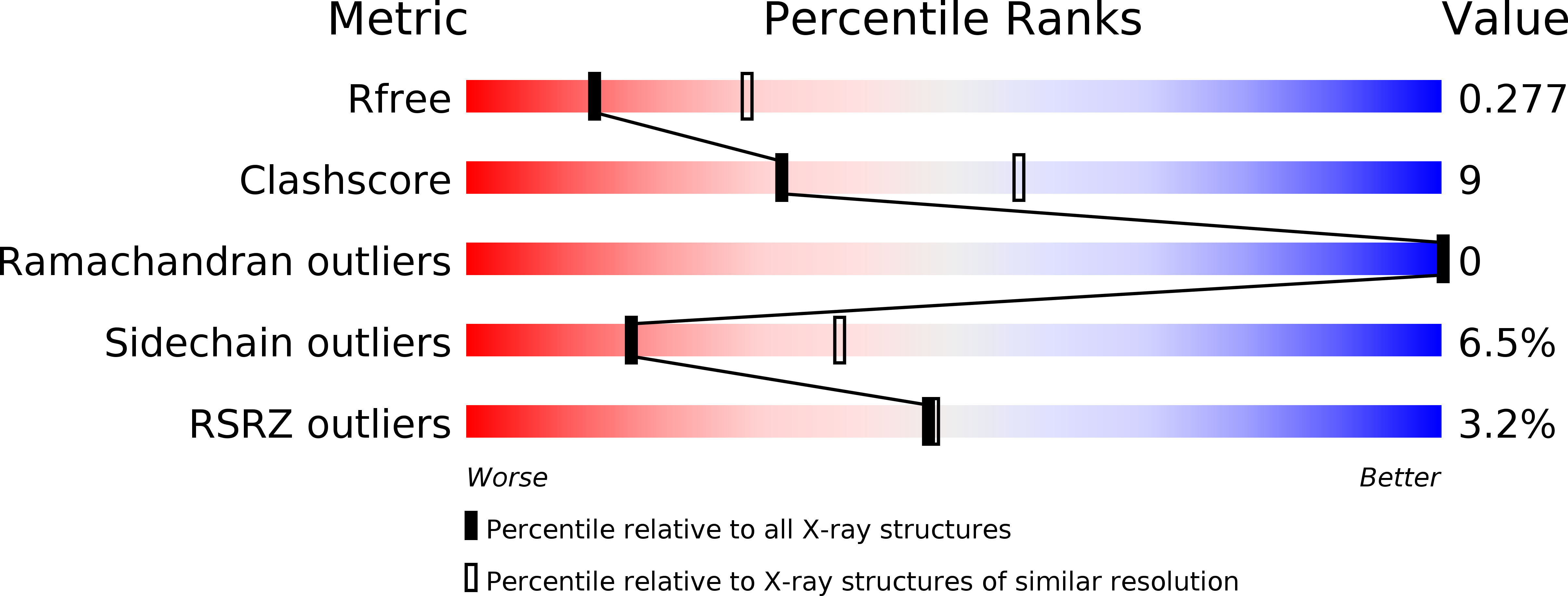
R-Value Free:
0.26
R-Value Work:
0.22
R-Value Observed:
0.22
Space Group:
P 43 21 2
Macromolecular Entities
Structures with similar UniProt ID
Protein Blast
Polymer Type:polypeptide(L)
Molecule:Acyl-protein thioesterase 2
Gene (Uniprot):LYPLA2
Chain IDs:A, B
Chain Length:222
Number of Molecules:2
Biological Source:Homo sapiens
Ligand Molecules
Primary Citation
Lysophospholipases cooperate to mediate lipid homeostasis and lysophospholipid signaling.
J. Lipid Res. 60 360 374 (2019)
PMID: 30482805 DOI: 10.1194/jlr.M087890

Abstact

Lysophospholipids (LysoPLs) are bioactive lipid species involved in cellular signaling processes and the regulation of cell membrane structure. LysoPLs are metabolized through the action of lysophospholipases, including lysophospholipase A1 (LYPLA1) and lysophospholipase A2 (LYPLA2). A new X-ray crystal structure of LYPLA2 compared with a previously published structure of LYPLA1 demonstrated near-identical folding of the two enzymes; however, LYPLA1 and LYPLA2 have displayed distinct substrate specificities in recombinant enzyme assays. To determine how these in vitro substrate preferences translate into a relevant cellular setting and better understand the enzymes' role in LysoPL metabolism, CRISPR-Cas9 technology was utilized to generate stable KOs of Lypla1 and/or Lypla2 in Neuro2a cells. Using these cellular models in combination with a targeted lipidomics approach, LysoPL levels were quantified and compared between cell lines to determine the effect of losing lysophospholipase activity on lipid metabolism. This work suggests that LYPLA1 and LYPLA2 are each able to account for the loss of the other to maintain lipid homeostasis in cells; however, when both are deleted, LysoPL levels are dramatically increased, causing phenotypic and morphological changes to the cells.

Legend

Protein

Chemical

Disease

Primary Citation of related structures
Feedback Form
Name
Email
Institute
Feedback