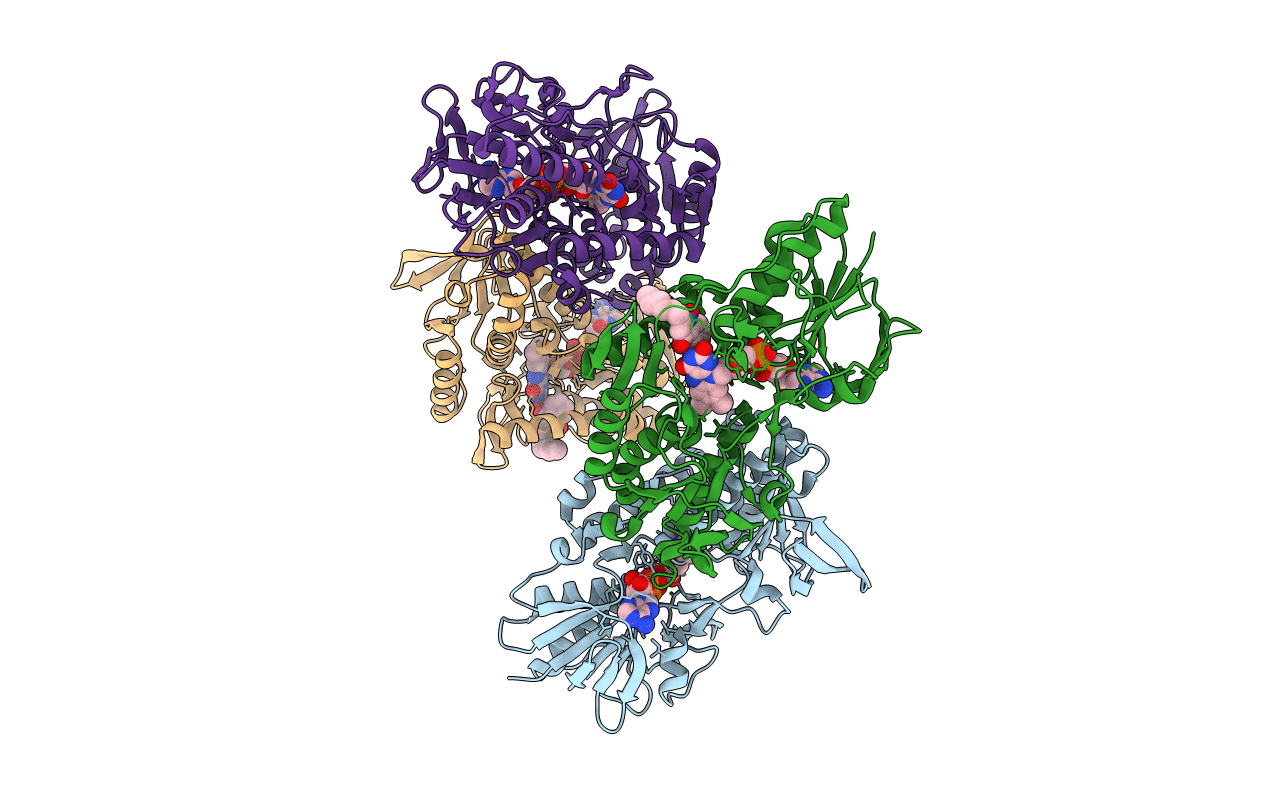
6BDO image
Deposition Date 2017-10-23
Release Date 2018-05-16
Last Version Date 2023-10-25
Entry Detail
PDB ID:
6BDO
Title:
Structure of bacterial type II NADH dehydrogenase from Caldalkalibacillus thermarum complexed with a quinone inhibitor HQNO at 2.8A resolution
Biological Source:
Source Organism:
Host Organism:
Method Details:
Experimental Method:
Resolution:
2.80 Å
R-Value Free:
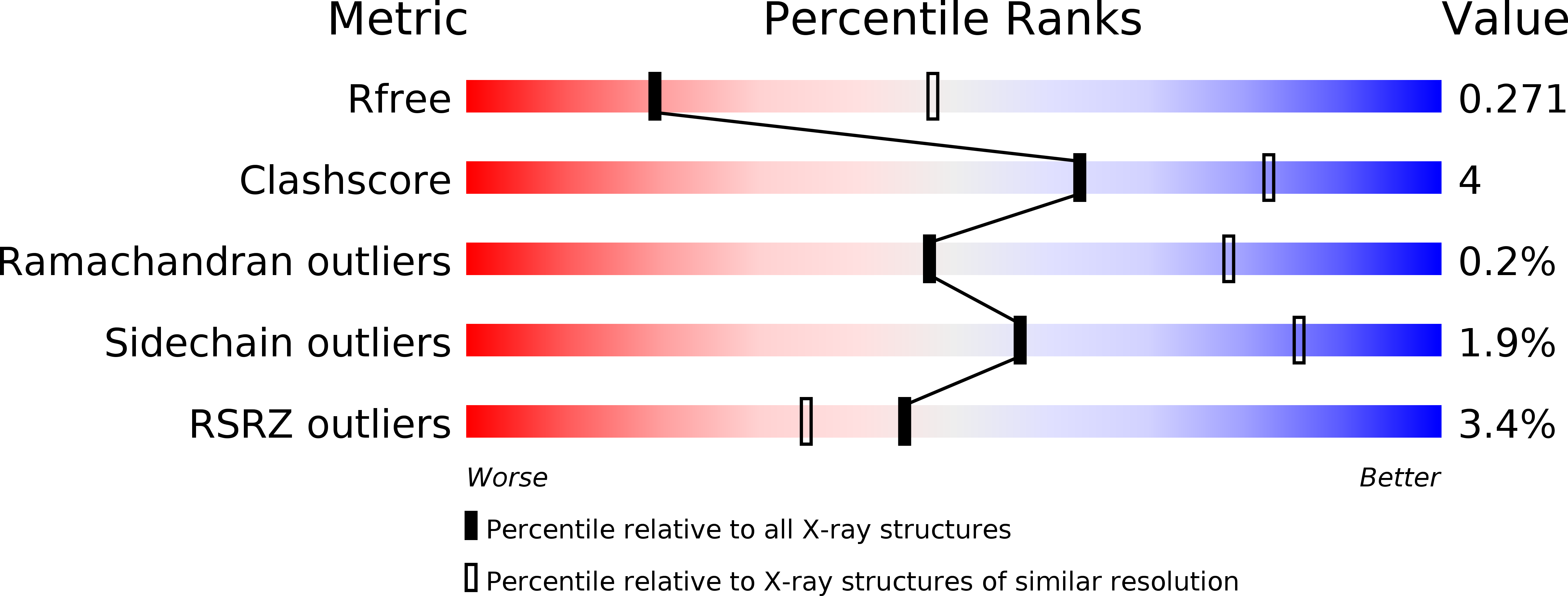
0.26
R-Value Work:
0.22
R-Value Observed:
0.22
Space Group:
P 1 21 1
Macromolecular Entities
Structures with similar UniProt ID
Protein Blast
Polymer Type:polypeptide(L)
Molecule:FAD-dependent pyridine nucleotide-disulfide oxidoreductase
Gene (Uniprot):CathTA2_0279, HUR95_15605
Chain IDs:A (auth: B), B (auth: A), C (auth: D), D (auth: C)
Chain Length:405
Number of Molecules:4
Biological Source:Caldalkalibacillus thermarum TA2.A1
Primary Citation
Structure of the NDH-2 - HQNO inhibited complex provides molecular insight into quinone-binding site inhibitors.
Biochim. Biophys. Acta 1859 482 490 (2018)
PMID: 29621505 DOI: 10.1016/j.bbabio.2018.03.014

Abstact

Type II NADH:quinone oxidoreductase (NDH-2) is a proposed drug-target of major pathogenic microorganisms such as Mycobacterium tuberculosis and Plasmodium falciparum. Many NDH-2 inhibitors have been identified, but rational drug development is impeded by the lack of information regarding their mode of action and associated inhibitor-bound NDH-2 structure. We have determined the crystal structure of NDH-2 complexed with a quinolone inhibitor 2-heptyl-4-hydroxyquinoline-N-oxide (HQNO). HQNO is nested into the slot-shaped tunnel of the Q-site, in which the quinone-head group is clamped by Q317 and I379 residues, and hydrogen-bonds to FAD. The interaction of HQNO with bacterial NDH-2 is very similar to the native substrate ubiquinone (UQ1) interactions in the yeast Ndi1-UQ1 complex structure, suggesting a conserved mechanism for quinone binding. Further, the structural analysis provided insight how modifications of quinolone scaffolds improve potency (e.g. quinolinyl pyrimidine derivatives) and suggests unexplored target space for the rational design of new NDH-2 inhibitors.

Legend

Protein

Chemical

Disease

Primary Citation of related structures
Feedback Form
Name
Email
Institute
Feedback