6B9B image
Deposition Date 2017-10-10
Release Date 2018-07-04
Last Version Date 2023-11-15
Entry Detail
PDB ID:
6B9B
Keywords:
Title:
Crystal structure of the catalase-peroxidase from B. pseudomallei with maltose bound
Biological Source:
Source Organism:
Host Organism:
Method Details:
Experimental Method:
Resolution:
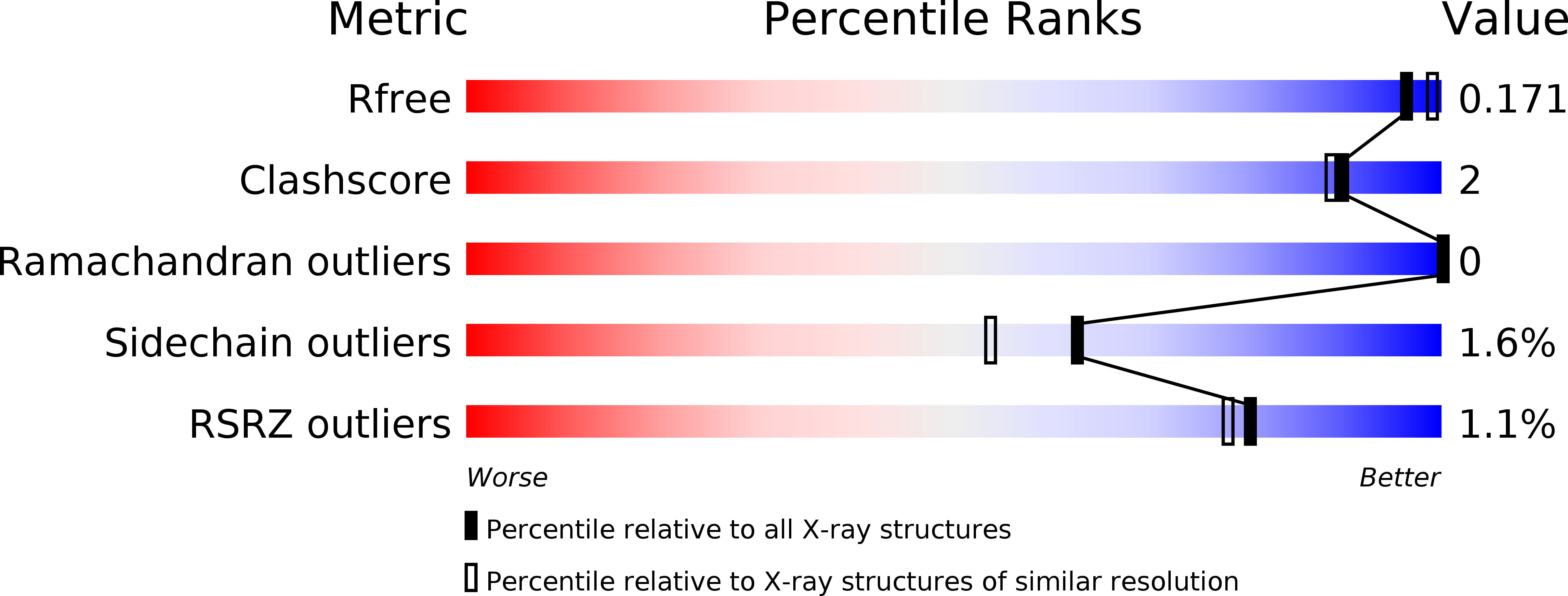
1.80 Å
R-Value Free:
0.16
R-Value Work:
0.13
R-Value Observed:
0.13
Space Group:
P 21 21 21
Macromolecular Entities
Structures with similar UniProt ID
Protein Blast
Polymer Type:polypeptide(L)
Molecule:Catalase-peroxidase
Gene (Uniprot):katG
Chain IDs:A, B
Chain Length:728
Number of Molecules:2
Biological Source:Burkholderia pseudomallei 1710b
Modified Residue
Compound ID Chain ID Parent Comp ID Details 2D Image
TOX A TRP modified residue
Peptide-like Molecules
PRD_900001
Primary Citation
KatG-Mediated Oxidation Leading to Reduced Susceptibility of Bacteria to Kanamycin.
ACS Omega 3 4213 4219 (2018)
PMID: 29732452 DOI: 10.1021/acsomega.8b00356

Abstact

Resistance to antibiotics has become a serious problem for society, and there are increasing efforts to understand the reasons for and sources of resistance. Bacterial-encoded enzymes and transport systems, both innate and acquired, are the most frequent culprits for the development of resistance, although in Mycobacterium tuberculosis, the catalase-peroxidase, KatG, has been linked to the activation of the antitubercular drug isoniazid. While investigating a possible link between aminoglycoside antibiotics and the induction of oxidative bursts, we observed that KatG reduces susceptibility to aminoglycosides. Investigation revealed that kanamycin served as an electron donor for the peroxidase reaction, reducing the oxidized ferryl intermediates of KatG to the resting state. Loss of electrons from kanamycin was accompanied by the addition of a single oxygen atom to the aminoglycoside. The oxidized form of kanamycin proved to be less effective as an antibiotic. Kanamycin inhibited the crystallization of KatG, but the smaller, structurally related glycoside maltose did cocrystallize with KatG, providing a suggestion as to the possible binding site of kanamycin.

Legend

Protein

Chemical

Disease

Primary Citation of related structures
Feedback Form
Name
Email
Institute
Feedback