6B8C image
Deposition Date 2017-10-06
Release Date 2019-01-16
Last Version Date 2023-10-04
Entry Detail
PDB ID:
6B8C
Keywords:
Title:
Crystal structure of NlpC/p60 domain of peptidoglycan hydrolase SagA
Biological Source:
Source Organism:
Host Organism:
Method Details:
Experimental Method:
Resolution:
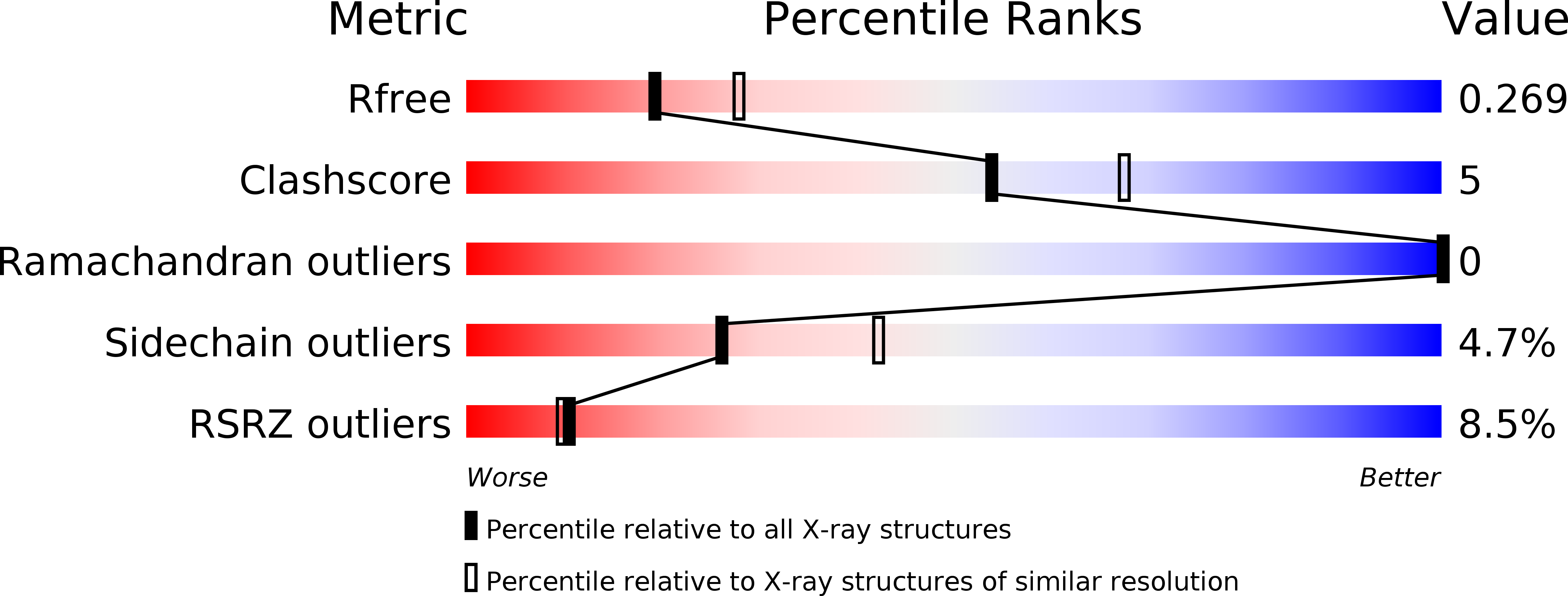
2.40 Å
R-Value Free:
0.26
R-Value Work:
0.23
R-Value Observed:
0.24
Space Group:
P 4 3 2
Macromolecular Entities
Polymer Type:polypeptide(L)
Molecule:NLP/P60
Chain IDs:A
Chain Length:150
Number of Molecules:1
Biological Source:Enterococcus faecium
Primary Citation
Enterococcus faeciumsecreted antigen A generates muropeptides to enhance host immunity and limit bacterial pathogenesis.
Elife 8 ? ? (2019)
PMID: 30969170 DOI: 10.7554/eLife.45343

Abstact

We discovered that Enterococcus faecium (E. faecium), a ubiquitous commensal bacterium, and its secreted peptidoglycan hydrolase (SagA) were sufficient to enhance intestinal barrier function and pathogen tolerance, but the precise biochemical mechanism was unknown. Here we show E. faecium has unique peptidoglycan composition and remodeling activity through SagA, which generates smaller muropeptides that more effectively activates nucleotide-binding oligomerization domain-containing protein 2 (NOD2) in mammalian cells. Our structural and biochemical studies show that SagA is a NlpC/p60-endopeptidase that preferentially hydrolyzes crosslinked Lys-type peptidoglycan fragments. SagA secretion and NlpC/p60-endopeptidase activity was required for enhancing probiotic bacteria activity against Clostridium difficile pathogenesis in vivo. Our results demonstrate that the peptidoglycan composition and hydrolase activity of specific microbiota species can activate host immune pathways and enhance tolerance to pathogens.

Legend

Protein

Chemical

Disease

Primary Citation of related structures
Feedback Form
Name
Email
Institute
Feedback