6AVG image
Deposition Date 2017-09-02
Release Date 2018-02-28
Last Version Date 2024-10-23
Entry Detail
PDB ID:
6AVG
Keywords:
Title:
Crystal structure of the KFJ37 TCR-NY-ESO-1-HLA-B*07:02 complex
Biological Source:
Source Organism:
Homo sapiens (Taxon ID: 9606)
Host Organism:
Method Details:
Experimental Method:
Resolution:
2.60 Å
R-Value Free:
0.24
R-Value Work:
0.19
R-Value Observed:
0.19
Space Group:
P 1
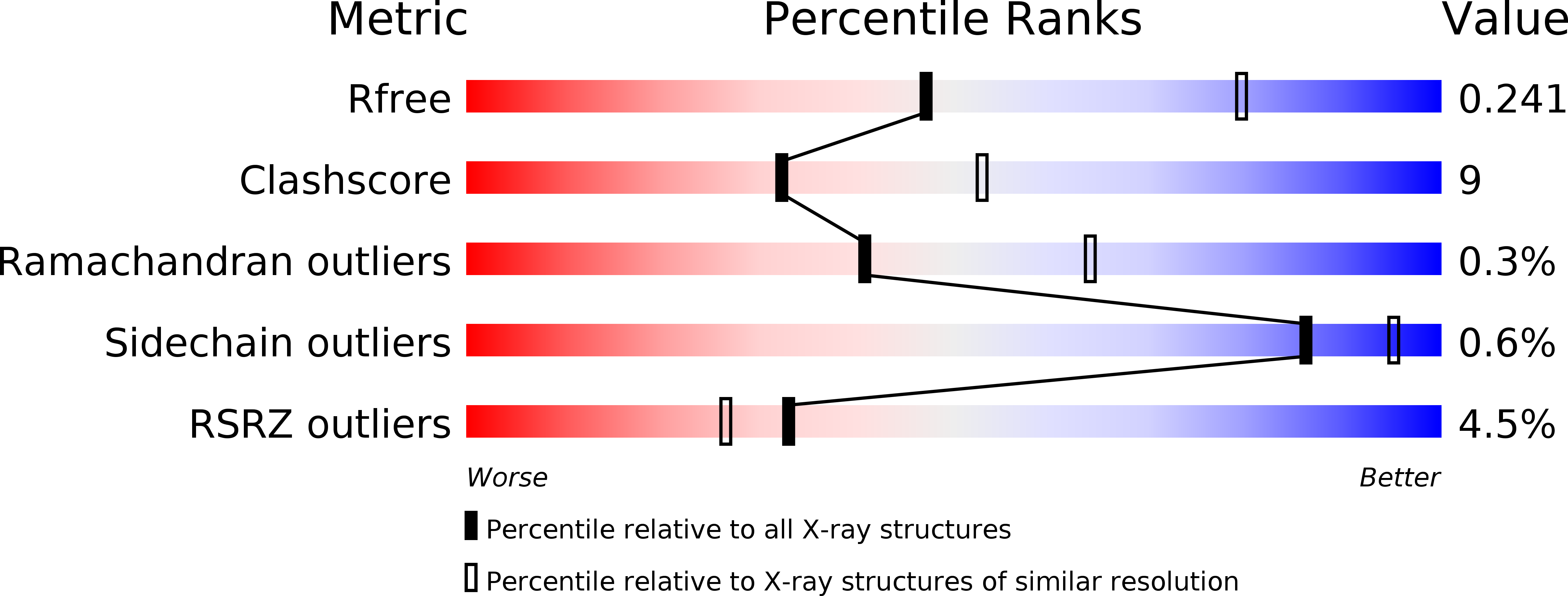
Macromolecular Entities
Structures with similar UniProt ID
Protein Blast
Polymer Type:polypeptide(L)
Molecule:T-cell receptor alpha variable 4,TCR alpha chain
Gene (Uniprot):TRAV4
Chain IDs:B (auth: C), F (auth: B)
Chain Length:202
Number of Molecules:2
Biological Source:Homo sapiens
Structures with similar UniProt ID
Protein Blast
Polymer Type:polypeptide(L)
Molecule:T-cell receptor beta variable 9,TCR beta chain
Gene (Uniprot):TRBV9
Chain IDs:C (auth: D), G (auth: E)
Chain Length:245
Number of Molecules:2
Biological Source:Homo sapiens
Structures with similar UniProt ID
Protein Blast
Polymer Type:polypeptide(L)
Molecule:HLA class I histocompatibility antigen, B-7 alpha chain
Gene (Uniprot):HLA-B
Chain IDs:D (auth: G), H (auth: F)
Chain Length:362
Number of Molecules:2
Biological Source:Homo sapiens
Structures with similar UniProt ID
Protein Blast
Polymer Type:polypeptide(L)
Molecule:Beta-2-microglobulin
Gene (Uniprot):B2M
Chain IDs:A (auth: H), E (auth: A)
Chain Length:107
Number of Molecules:2
Biological Source:Homo sapiens
Structures with similar UniProt ID
Protein Blast
Polymer Type:polypeptide(L)
Molecule:ALA-PRO-ARG-GLY-PRO-HIS-GLY-GLY-ALA-ALA-SER-GLY-LEU
Chain IDs:I (auth: Q), J (auth: P)
Chain Length:13
Number of Molecules:2
Biological Source:Homo sapiens
Primary Citation
Divergent T-cell receptor recognition modes of a HLA-I restricted extended tumour-associated peptide.
Nat Commun 9 1026 1026 (2018)
PMID: 29531227 DOI: 10.1038/s41467-018-03321-w

Abstact

Human leukocyte antigen (HLA)-I molecules generally bind short peptides (8-10 amino acids), although extended HLA-I restricted peptides (>10 amino acids) can be presented to T cells. However, the function of such extended HLA-I epitopes in tumour immunity, and how they would be recognised by T-cell receptors (TCR) remains unclear. Here we show that the structures of two distinct TCRs (TRAV4+TRAJ21+-TRBV28+TRBJ2-3+ and TRAV4 + TRAJ8+-TRBV9+TRBJ2-1+), originating from a polyclonal T-cell repertoire, bind to HLA-B*07:02, presenting a 13-amino-acid-long tumour-associated peptide, NY-ESO-160-72. Comparison of the structures reveals that the two TCRs differentially binds NY-ESO-160-72-HLA-B*07:02 complex, and induces differing extent of conformational change of the NY-ESO-160-72 epitope. Accordingly, polyclonal TCR usage towards an extended HLA-I restricted tumour epitope translates to differing TCR recognition modes, whereby extensive flexibility at the TCR-pHLA-I interface engenders recognition.

Legend

Protein

Chemical

Disease

Primary Citation of related structures
Feedback Form
Name
Email
Institute
Feedback