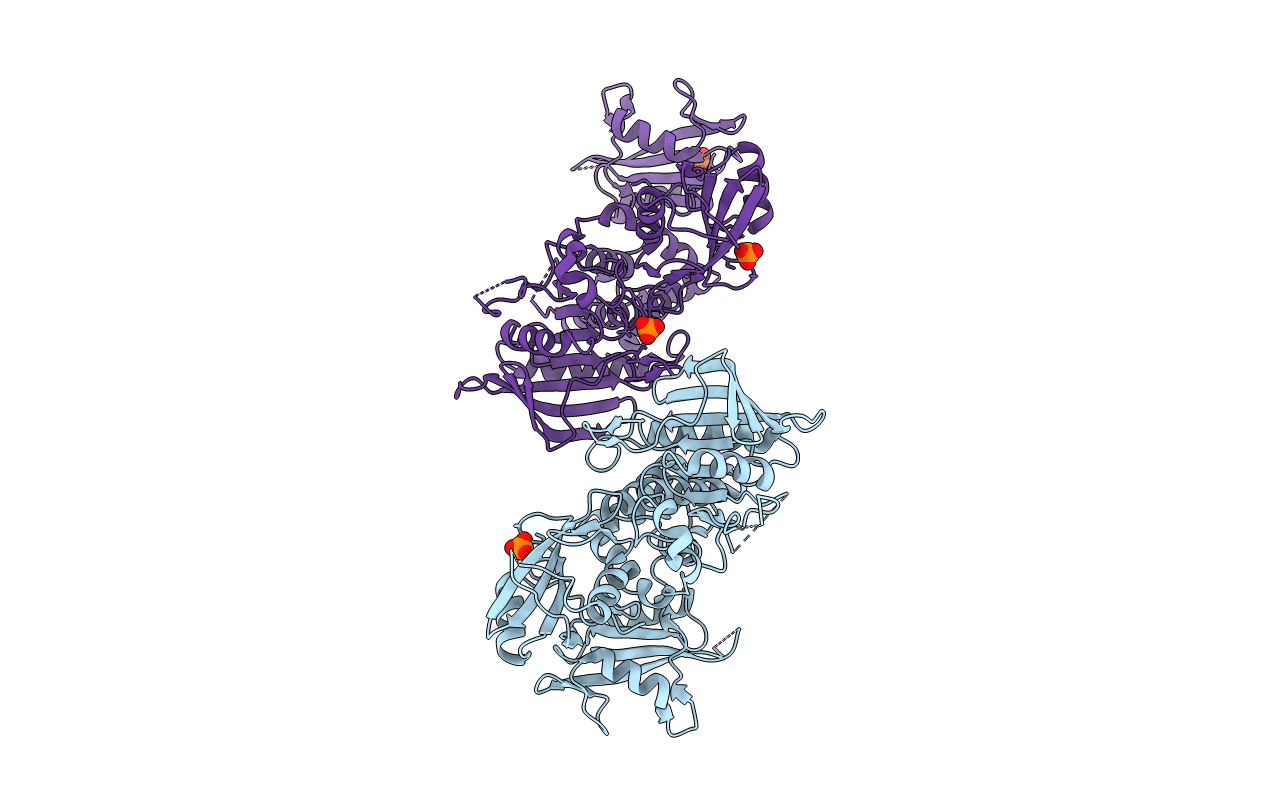
6ATD image
Deposition Date 2017-08-28
Release Date 2018-07-11
Last Version Date 2024-11-13
Entry Detail
PDB ID:
6ATD
Keywords:
Title:
Oxidized SHP2 forms a disulfide bond between Cys367 and Cys459
Biological Source:
Source Organism:
Homo sapiens (Taxon ID: 9606)
Host Organism:
Method Details:
Experimental Method:
Resolution:
2.50 Å
R-Value Free:
0.24
R-Value Work:
0.19
R-Value Observed:
0.19
Space Group:
P 1 21 1

Macromolecular Entities
Structures with similar UniProt ID
Protein Blast
Polymer Type:polypeptide(L)
Molecule:Tyrosine-protein phosphatase non-receptor type 11
Gene (Uniprot):PTPN11
Mutagens:N308D
Chain IDs:A, B
Chain Length:528
Number of Molecules:2
Biological Source:Homo sapiens
Ligand Molecules
Primary Citation
Redox Regulation of a Gain-of-Function Mutation (N308D) in SHP2 Noonan Syndrome.
ACS Omega 2 8313 8318 (2017)
PMID: 29214238 DOI: 10.1021/acsomega.7b01318

Abstact

SHP2 (Src homology 2 domain-containing protein tyrosine phosphatase 2; PTPN11) is a ubiquitous multidomain, nonreceptor protein tyrosine phosphatase (PTP) that plays an important role in diseases such as cancer, diabetes, and Noonan syndrome (NS). NS is one of the most common genetic disorders associated with congenital heart disease, and approximately half of the patients with Noonan syndrome have gain-of-function mutations in SHP2. One of the most common NS mutations is N308D. The activity of SHP2, like that of most PTPs, is reversibly inactivated by reactive oxygen species (ROS). However, the molecular basis of this inactivation and the consequences of NS-related mutations in PTPN11 on ROS-mediated inhibition are poorly understood. Here, we investigated the mechanistic and structural details of the reversible oxidation of the NS variant SHP2N308D. We show that SHP2N308D is more sensitive to oxidation when compared with wild-type SHP2. We also show that although the SHP2N308D catalytic domain can be reactivated by dithiothreitol as effectively as the wild-type, full-length SHP2N308D is only poorly reactivated by comparison. To understand the mechanism of oxidation at a molecular level, we determined the crystal structure of oxidized SHP2N308D. The structure shows that the catalytic Cys459 residue forms a disulfide bond with Cys367, which confirms that Cys367 functions as the "backdoor" cysteine in SHP2. Together, our data suggest that the reversible oxidation of SHP2 contributes negligibly, if at all, to the symptoms associated with NS.

Legend

Protein

Chemical

Disease

Primary Citation of related structures
Feedback Form
Name
Email
Institute
Feedback