6AOJ image
Deposition Date 2017-08-16
Release Date 2018-01-10
Last Version Date 2023-10-04
Entry Detail
PDB ID:
6AOJ
Keywords:
Title:
Crystal structure of Legionella pneumophila effector Ceg4 with N-terminal yeast Hog1p sequence
Biological Source:
Method Details:
Experimental Method:
Resolution:
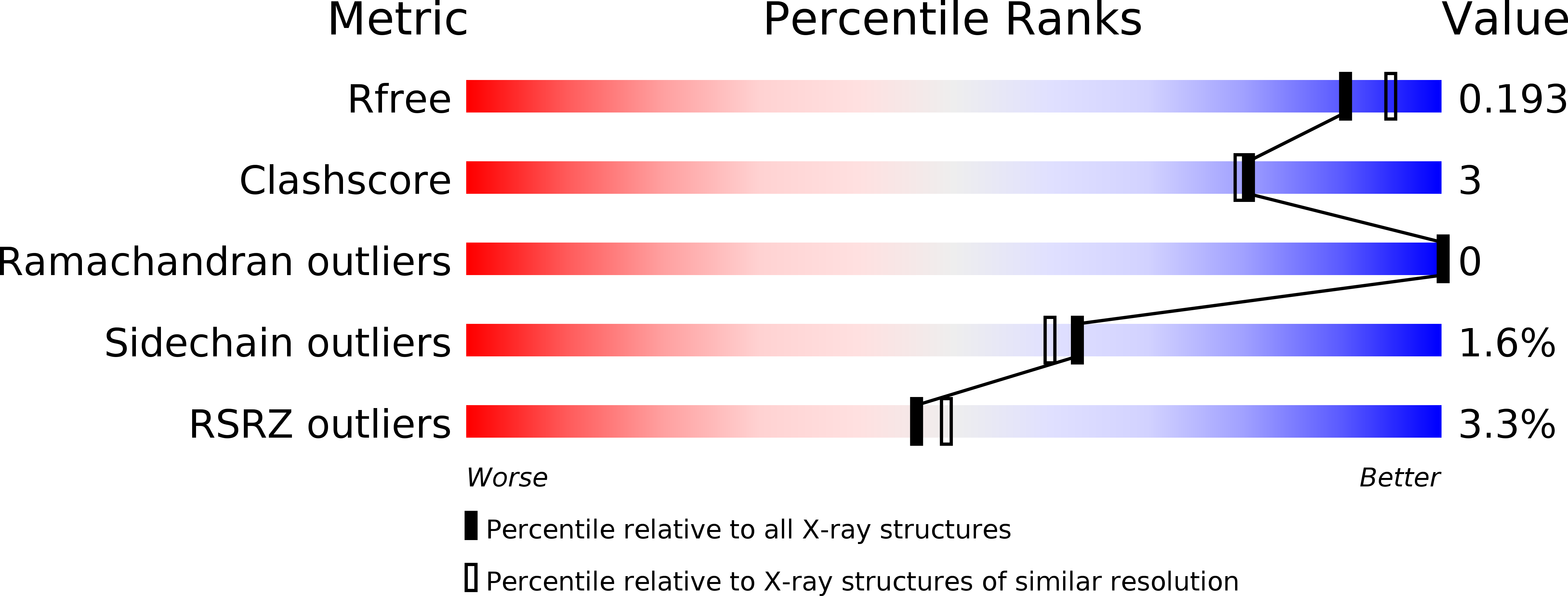
1.90 Å
R-Value Free:
0.19
R-Value Work:
0.16
R-Value Observed:
0.16
Space Group:
C 1 2 1
Macromolecular Entities
Structures with similar UniProt ID
Protein Blast
Polymer Type:polypeptide(L)
Molecule:Ceg4
Gene (Uniprot):lpg0096
Chain IDs:A
Chain Length:214
Number of Molecules:1
Biological Source:Legionella pneumophila subsp. pneumophila (strain Philadelphia 1 / ATCC 33152 / DSM 7513)
Primary Citation
TheLegionella pneumophilaeffector Ceg4 is a phosphotyrosine phosphatase that attenuates activation of eukaryotic MAPK pathways.
J. Biol. Chem. 293 3307 3320 (2018)
PMID: 29301934 DOI: 10.1074/jbc.M117.812727

Abstact

Host colonization by Gram-negative pathogens often involves delivery of bacterial proteins called "effectors" into the host cell. The pneumonia-causing pathogen Legionella pneumophila delivers more than 330 effectors into the host cell via its type IVB Dot/Icm secretion system. The collective functions of these proteins are the establishment of a replicative niche from which Legionella can recruit cellular materials to grow while evading lysosomal fusion inhibiting its growth. Using a combination of structural, biochemical, and in vivo approaches, we show that one of these translocated effector proteins, Ceg4, is a phosphotyrosine phosphatase harboring a haloacid dehalogenase-hydrolase domain. Ceg4 could dephosphorylate a broad range of phosphotyrosine-containing peptides in vitro and attenuated activation of MAPK-controlled pathways in both yeast and human cells. Our findings indicate that L. pneumophila's infectious program includes manipulation of phosphorylation cascades in key host pathways. The structural and functional features of the Ceg4 effector unraveled here provide first insight into its function as a phosphotyrosine phosphatase, paving the way to further studies into L. pneumophila pathogenicity.

Legend

Protein

Chemical

Disease

Primary Citation of related structures
Feedback Form
Name
Email
Institute
Feedback