6AE9 image
Deposition Date 2018-08-03
Release Date 2019-01-02
Last Version Date 2023-11-22
Entry Detail
PDB ID:
6AE9
Keywords:
Title:
X-ray structure of the photosystem II phosphatase PBCP
Biological Source:
Source Organism:
Host Organism:
Method Details:
Experimental Method:
Resolution:
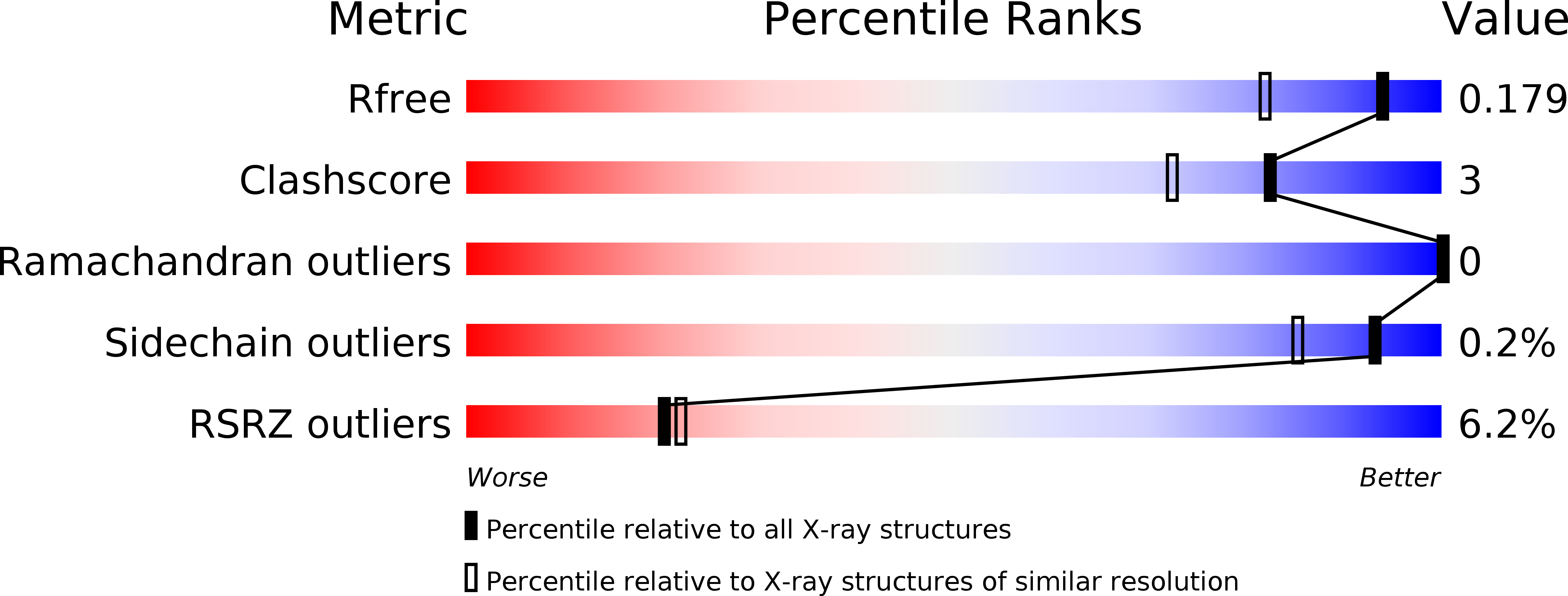
1.47 Å
R-Value Free:
0.17
R-Value Work:
0.15
R-Value Observed:
0.16
Space Group:
H 3
Macromolecular Entities
Structures with similar UniProt ID
Protein Blast
Polymer Type:polypeptide(L)
Molecule:Probable protein phosphatase 2C 1
Gene (Uniprot):B1189A09.48, OsJ_000491, P0701D05.3
Mutagens:D283N
Chain IDs:A, B
Chain Length:260
Number of Molecules:2
Biological Source:Oryza sativa subsp. japonica
Modified Residue
Compound ID Chain ID Parent Comp ID Details 2D Image
OCY A CYS modified residue
Primary Citation
Structural Insights into Substrate Selectivity, Catalytic Mechanism, and Redox Regulation of Rice Photosystem II Core Phosphatase.
Mol Plant 12 86 98 (2019)
PMID: 30453087 DOI: 10.1016/j.molp.2018.11.006

Abstact

Photosystem II (PSII) core phosphatase (PBCP) selectively dephosphorylates PSII core proteins including D1, D2, CP43, and PsbH. PBCP function is required for efficient degradation of the D1 protein in the repair cycle of PSII, a supramolecular machinery highly susceptible to photodamage during oxygenic photosynthesis. Here we present structural and functional studies of PBCP from Oryza sativa (OsPBCP). In a symmetrical homodimer of OsPBCP, each monomer contains a PP2C-type phosphatase core domain, a large motif characteristic of PBCPs, and two small motifs around the active site. The large motif contributes to the formation of a substrate-binding surface groove, and is crucial for the selectivity of PBCP toward PSII core proteins and against the light-harvesting proteins. Remarkably, the phosphatase activity of OsPBCP is strongly inhibited by glutathione and H2O2. S-Glutathionylation of cysteine residues may introduce steric hindrance and allosteric effects to the active site. Collectively, these results provide detailed mechanistic insights into the substrate selectivity, redox regulation, and catalytic mechanism of PBCP.

Legend

Protein

Chemical

Disease

Primary Citation of related structures
Feedback Form
Name
Email
Institute
Feedback