Planned Maintenance: Some services may turn out to be unavailable from 15th January, 2026 to 16th January, 2026. We apologize for the inconvenience!

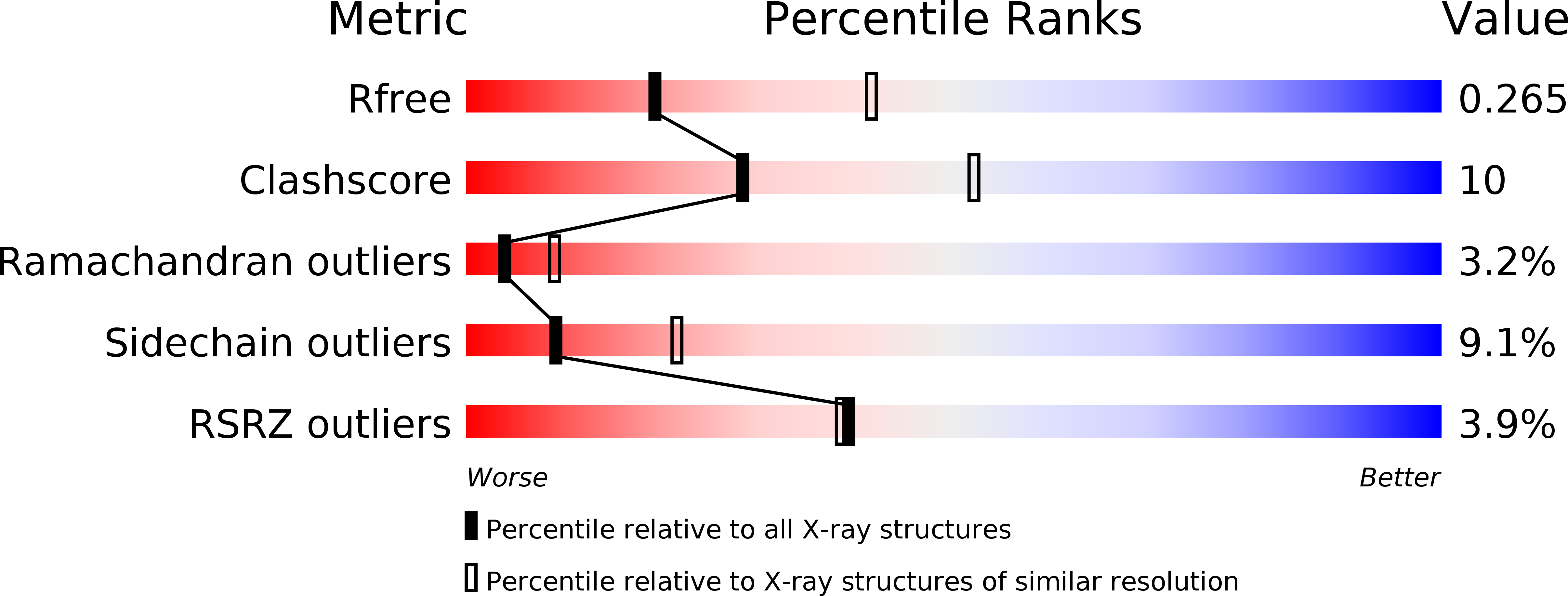
6A9Y image
Deposition Date 2018-07-16
Release Date 2018-09-26
Last Version Date 2023-11-22
Entry Detail
PDB ID:
6A9Y
Keywords:
Title:
The crystal structure of Mu homology domain of SGIP1
Biological Source:
Source Organism(s):
Homo sapiens (Taxon ID: 9606)
Expression System(s):
Method Details:
Experimental Method:
Resolution:
2.70 Å
R-Value Free:
0.26
R-Value Work:
0.19
R-Value Observed:
0.20
Space Group:
P 21 21 2
Macromolecular Entities
Structures with similar UniProt ID
Protein Blast
Polymer Type:polypeptide(L)
Molecule:SH3-containing GRB2-like protein 3-interacting protein 1
Gene (Uniprot):SGIP1
Chain IDs:A
Chain Length:284
Number of Molecules:1
Biological Source:Homo sapiens
Primary Citation
SGIP1 dimerizes via intermolecular disulfide bond in mu HD domain during cellular endocytosis.
Biochem. Biophys. Res. Commun. 505 99 105 (2018)
PMID: 30236986 DOI: 10.1016/j.bbrc.2018.09.075

Abstact

Along with its homologs FCHo1 and FCHo2, SGIP1 plays an important role in clathrin-mediated endocytosis. The highly conserved C-terminal μHD domains in these proteins are the critical regions interacting with adapter molecules such as Eps15. The crystal structure of μHD domain of SGIP1 has been reported previously. In this study, we found that μHD domain of SGIP1 is capable of forming a stable dimer by an intermolecular disulfide bond formed by C632 in our crystal structure. The mutational study of C632 revealed that this residue is important for the function of SGIP1 during cellular endocytosis. Our study revealed a new dimerization and/or oligomerization manner in theses adaptor proteins, which is a critical prerequisite for their proper function.

Legend

Protein

Chemical

Disease

Primary Citation of related structures
Feedback Form
Name
Email
Institute
Feedback