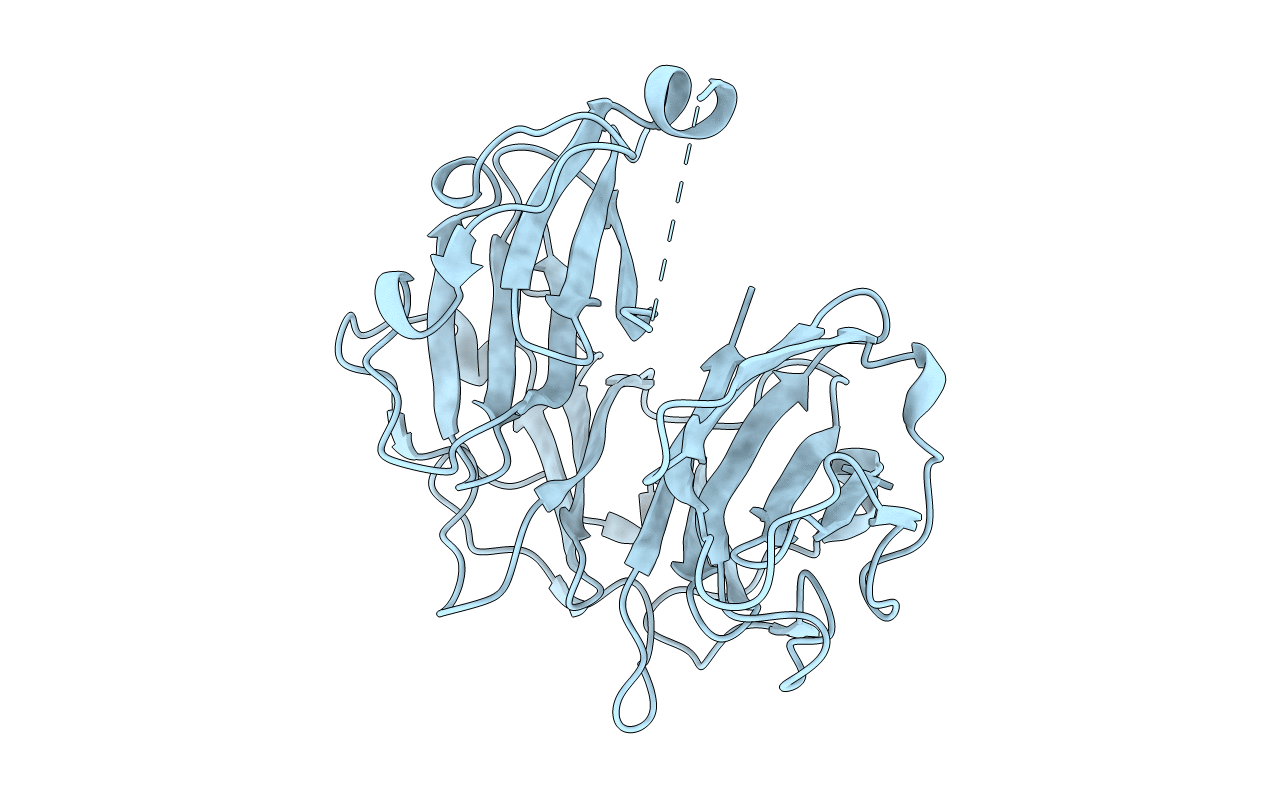
5ZTJ image
Deposition Date 2018-05-03
Release Date 2019-05-15
Last Version Date 2024-11-13
Entry Detail
PDB ID:
5ZTJ
Title:
Crystal Structure of GyraseA C-Terminal Domain from Salmonella typhi at 2.4A Resolution
Biological Source:
Host Organism:
Method Details:
Experimental Method:
Resolution:
2.40 Å
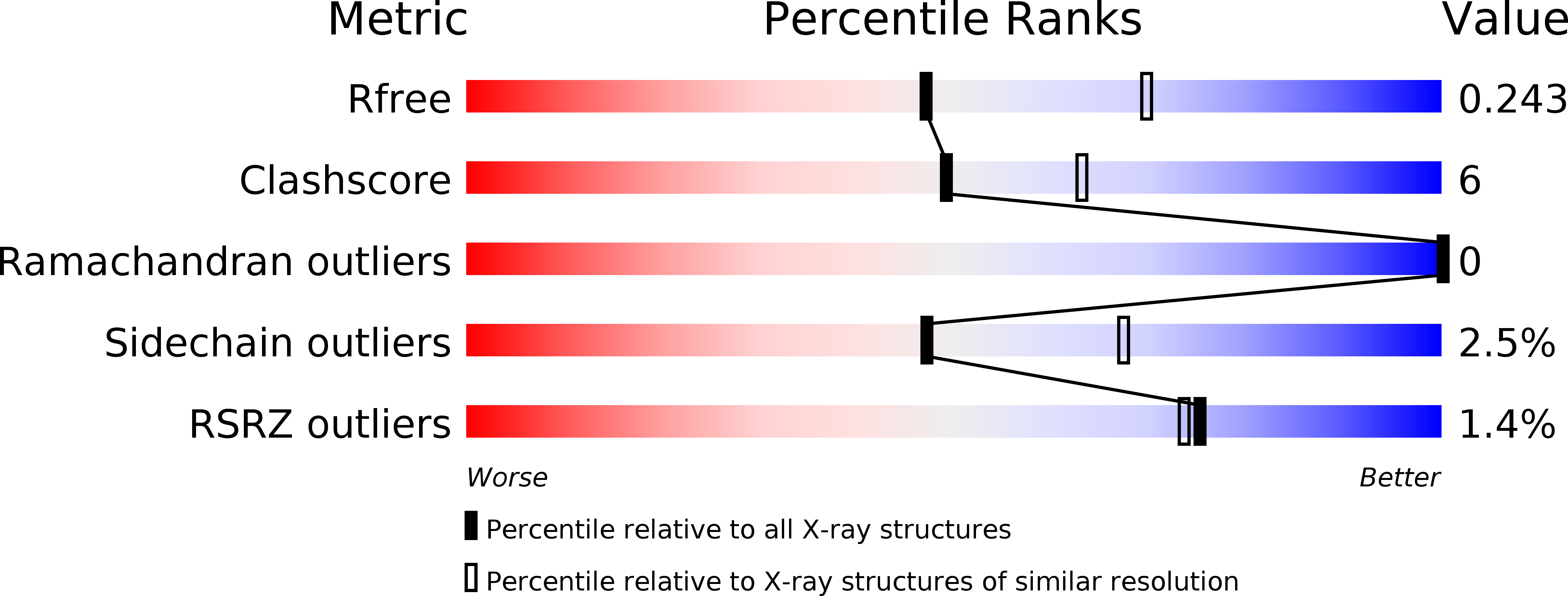
R-Value Free:
0.24
R-Value Work:
0.19
R-Value Observed:
0.19
Space Group:
P 41 21 2
Macromolecular Entities
Structures with similar UniProt ID
Protein Blast
Polymer Type:polypeptide(L)
Molecule:DNA gyrase subunit A
Gene (Uniprot):gyrA
Chain IDs:A
Chain Length:312
Number of Molecules:1
Biological Source:Salmonella enterica subsp. enterica serovar Typhi
Primary Citation
The pivot point arginines identified in the beta-pinwheel structure of C-terminal domain from Salmonella Typhi DNA Gyrase A subunit.
Sci Rep 10 7817 7817 (2020)
PMID: 32385379 DOI: 10.1038/s41598-020-64792-w

Abstact

The essentiality of DNA Gyrase in basic cellular processes in bacterial pathogens makes it an ideal drug target. Though the Gyrase has a conserved mechanism of action, the complete DNA wrapping and binding process is still unknown. In this study, we have identified six arginine residues R556, R612, R667, R716, R766, and R817 in the DNA GyraseA - C-terminal domain from Salmonella enterica serovar Typhi (StGyrA-CTD) to be essential for DNA wrapping and sliding by a sequence and structure analysis. Through site-directed mutagenesis and EMSA studies, we observed that the substitution of R667 (blade 3) and R716 (blade 4) in StGyrA-CTD led to loss of DNA binding. Whereas, upon mutation of residue R612 (blade2), R766 (blade5) and R817 (blade6) along with supporting residue R712 (blade 4) a decrease in binding affinity was seen. Our results indicate that R667 and R716 act as a pivot point in DNA wrapping and sliding during gyrase catalytic activity. In this study, we propose that the DNA wrapping mechanism commences with DNA binding at blade3 and blade4 followed by other blades to facilitate the DNA sliding during supercoiling activity. This study provides a better understanding of the DNA binding and wrapping mechanism of GyrA-CTD in DNA Gyrase.

Legend

Protein

Chemical

Disease

Primary Citation of related structures
Feedback Form
Name
Email
Institute
Feedback