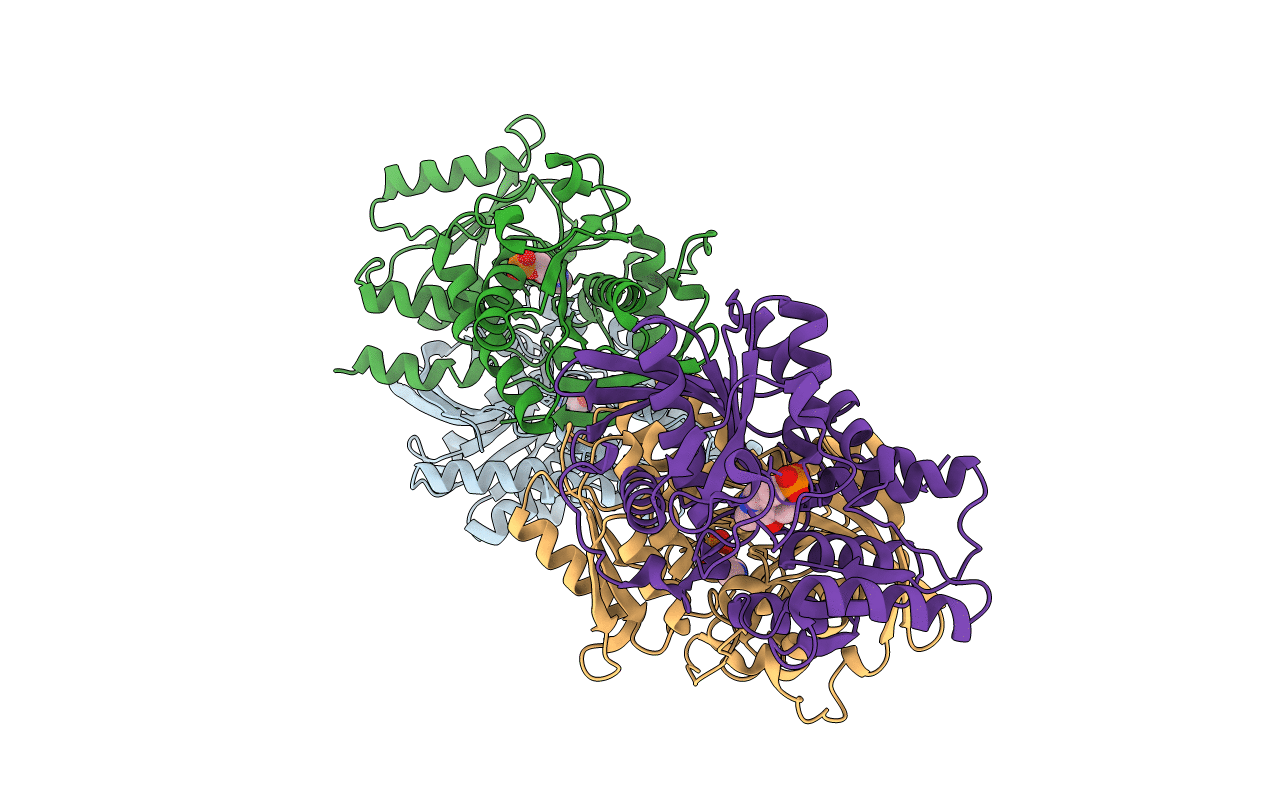
5Z5C image
Deposition Date 2018-01-17
Release Date 2018-02-14
Last Version Date 2025-04-09
Entry Detail
PDB ID:
5Z5C
Keywords:
Title:
Crystal structure of hydrogen sulfide-producing enzyme (Fn1055) from Fusobacterium nucleatum: lysine-dimethylated form
Biological Source:
Method Details:
Experimental Method:
Resolution:
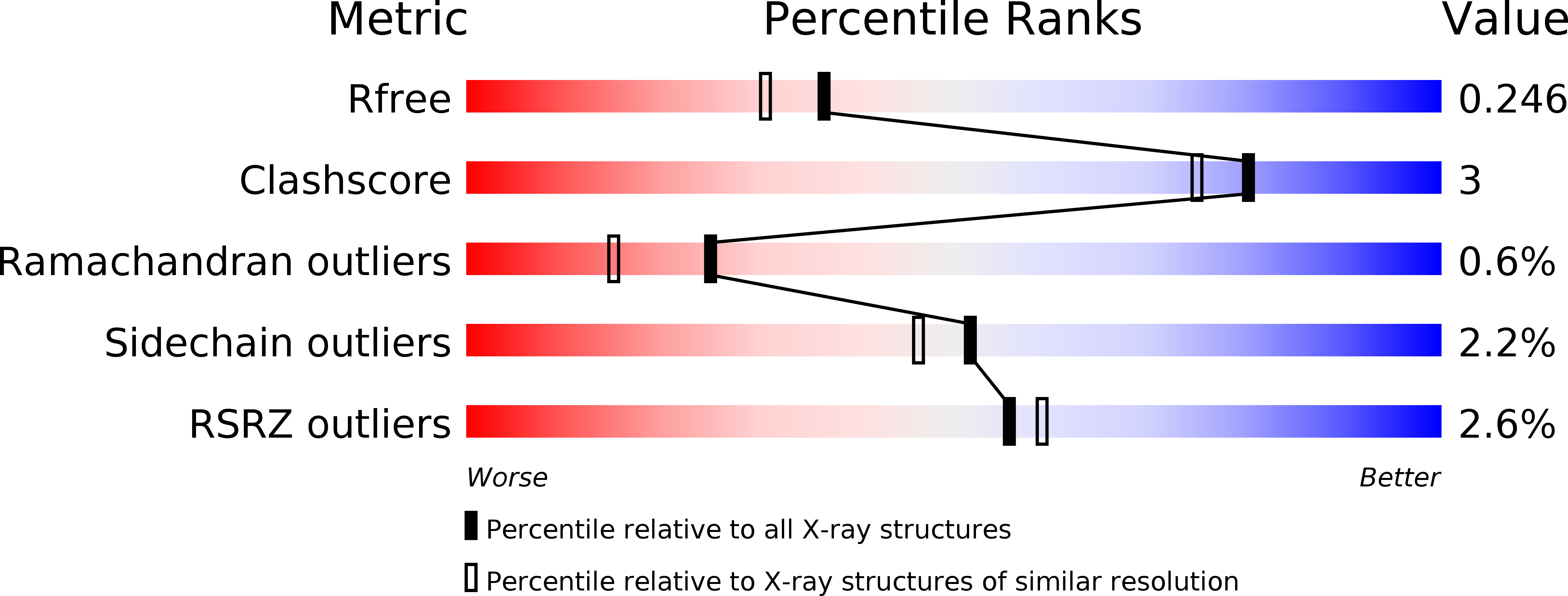
2.07 Å
R-Value Free:
0.24
R-Value Work:
0.18
R-Value Observed:
0.18
Space Group:
P 2 21 21
Macromolecular Entities
Structures with similar UniProt ID
Protein Blast
Polymer Type:polypeptide(L)
Molecule:Cysteine synthase
Gene (Uniprot):C7Y58_08300
Chain IDs:A, B, C, D
Chain Length:340
Number of Molecules:4
Biological Source:Fusobacterium nucleatum subsp. nucleatum (strain ATCC 25586 / CIP 101130 / JCM 8532 / LMG 13131)
Modified Residue
Compound ID Chain ID Parent Comp ID Details 2D Image
MLY A LYS modified residue
Primary Citation
Structural insights into the catalytic mechanism of cysteine (hydroxyl) lyase from the hydrogen sulfide-producing oral pathogen,
Biochem. J. 475 733 748 (2018)
PMID: 29343611 DOI: 10.1042/BCJ20170838

Abstact

Hydrogen sulfide (H2S) plays important roles in the pathogenesis of periodontitis. Oral pathogens typically produce H2S from l-cysteine in addition to pyruvate and [Formula: see text] However, fn1055 from Fusobacterium nucleatum subsp. nucleatum ATCC 25586 encodes a pyridoxal 5'-phosphate (PLP)-dependent enzyme that catalyzes the production of H2S and l-serine from l-cysteine and H2O, an unusual cysteine (hydroxyl) lyase reaction (β-replacement reaction). To reveal the reaction mechanism, the crystal structure of substrate-free Fn1055 was determined. Based on this structure, a model of the l-cysteine-PLP Schiff base suggested that the thiol group forms hydrogen bonds with Asp232 and Ser74, and the substrate α-carboxylate interacts with Thr73 and Gln147 Asp232 is a unique residue to Fn1055 and its substitution to asparagine (D232N) resulted in almost complete loss of β-replacement activity. The D232N structure obtained in the presence of l-cysteine contained the α-aminoacrylate-PLP Schiff base in the active site, indicating that Asp232 is essential for the addition of water to the α-aminoacrylate to produce the l-serine-PLP Schiff base. Rapid-scan stopped-flow kinetic analyses showed an accumulation of the α-aminoacrylate intermediate during the reaction cycle, suggesting that water addition mediated by Asp232 is the rate-limiting step. In contrast, mutants containing substitutions of other active-site residues (Ser74, Thr73, and Gln147) exhibited reduced β-replacement activity by more than 100-fold. Finally, based on the structural and biochemical analyses, we propose a mechanism of the cysteine (hydroxyl) lyase reaction by Fn1055. The present study leads to elucidation of the H2S-producing mechanism in F. nucleatum.

Legend

Protein

Chemical

Disease

Primary Citation of related structures
Feedback Form
Name
Email
Institute
Feedback