5Y96 image
Deposition Date 2017-08-22
Release Date 2018-02-28
Last Version Date 2024-11-06
Entry Detail
PDB ID:
5Y96
Keywords:
Title:
Crystal structure of ANXUR1 extracellular domain from Arabidopsis thaliana
Biological Source:
Source Organism:
Host Organism:
Method Details:
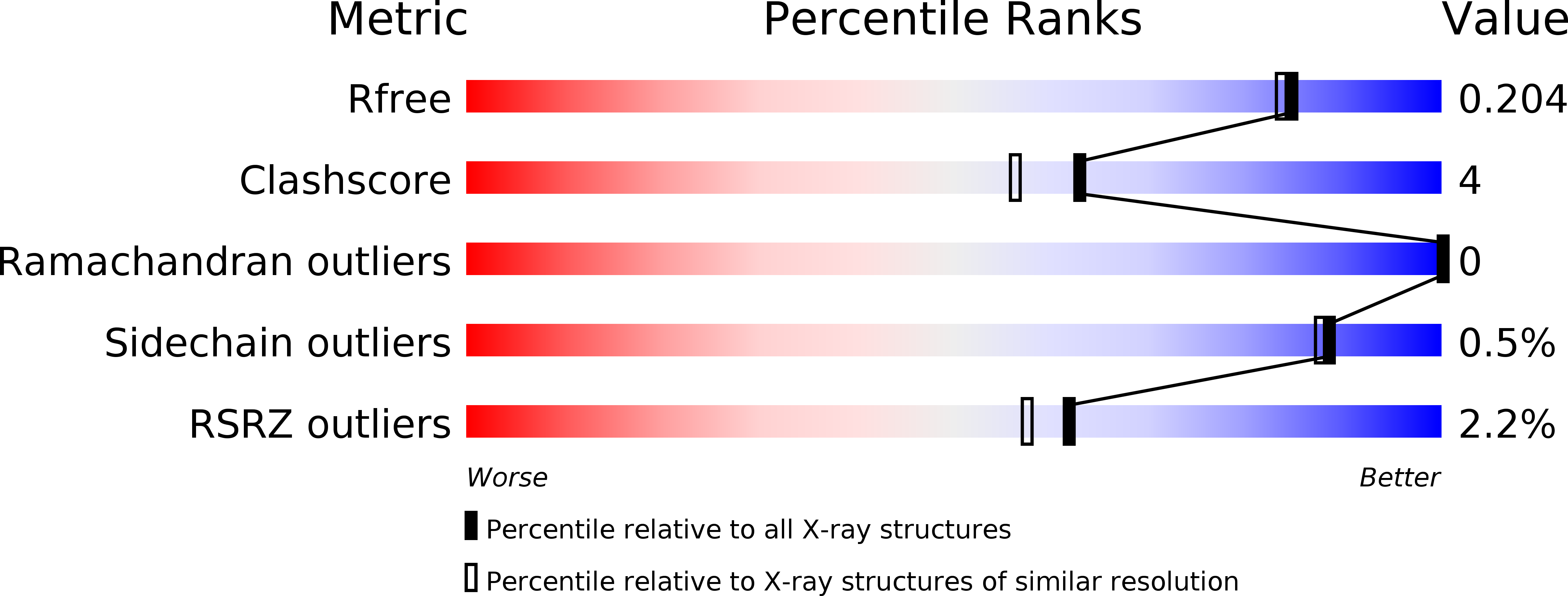
Experimental Method:
Resolution:
1.80 Å
R-Value Free:
0.20
R-Value Work:
0.18
R-Value Observed:
0.18
Space Group:
P 1
Macromolecular Entities
Structures with similar UniProt ID
Protein Blast
Polymer Type:polypeptide(L)
Molecule:Receptor-like protein kinase ANXUR1
Gene (Uniprot):ANX1
Chain IDs:A
Chain Length:384
Number of Molecules:1
Biological Source:Arabidopsis thaliana
Structures with similar UniProt ID
Protein Blast
Polymer Type:polypeptide(L)
Molecule:Receptor-like protein kinase ANXUR1
Gene (Uniprot):ANX1
Chain IDs:B
Chain Length:383
Number of Molecules:1
Biological Source:Arabidopsis thaliana
Ligand Molecules
Primary Citation
Crystal structures of the extracellular domains of the CrRLK1L receptor-like kinases ANXUR1 and ANXUR2
Protein Sci. 27 886 892 (2018)
PMID: 29388293 DOI: 10.1002/pro.3381

Abstact

Catharanthus roseus Receptor-Like Kinase 1-like (CrRLK1L) proteins contain two tandem malectin-like modules in their extracellular domains (ECDs) and function in diverse signaling pathways in plants. Malectin is a carbohydrate-binding protein in animals and recognizes a number of diglucosides; however, it remains unclear how the two malectin-like domains in the CrRLK1L proteins sense the ligand molecule. In this study, we reveal the crystal structures of the ECDs of ANXUR1 and ANXUR2, two CrRLK1L members in Arabidopsis thaliana that have critical functions in controlling pollen tube rupture during the fertilization process. We show that the two malectin-like domains in these proteins pack together to form a rigid architecture. Unlike animal malectin, these malectin-like domains lack residues involved in binding to the diglucosides, suggesting that they have a distinct ligand-binding mechanism. A cleft is observed between the two malectin-like domains, which might function as a potential ligand-binding pocket.

Legend

Protein

Chemical

Disease

Primary Citation of related structures
Feedback Form
Name
Email
Institute
Feedback