5Y6Q image
Deposition Date 2017-08-13
Release Date 2018-01-24
Last Version Date 2023-11-22
Entry Detail
PDB ID:
5Y6Q
Keywords:
Title:
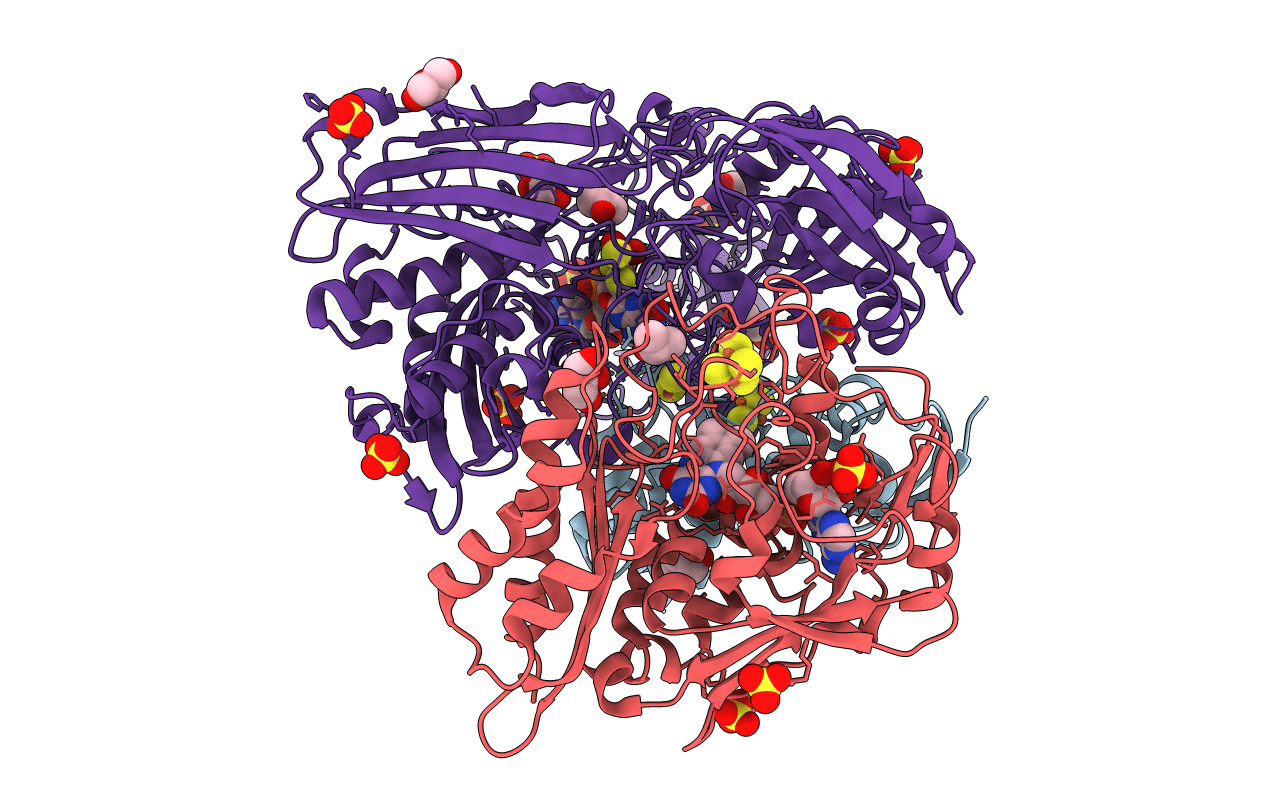
Crystal structure of an aldehyde oxidase from Methylobacillus sp. KY4400
Biological Source:
Source Organism:
Host Organism:
Method Details:
Experimental Method:
Resolution:
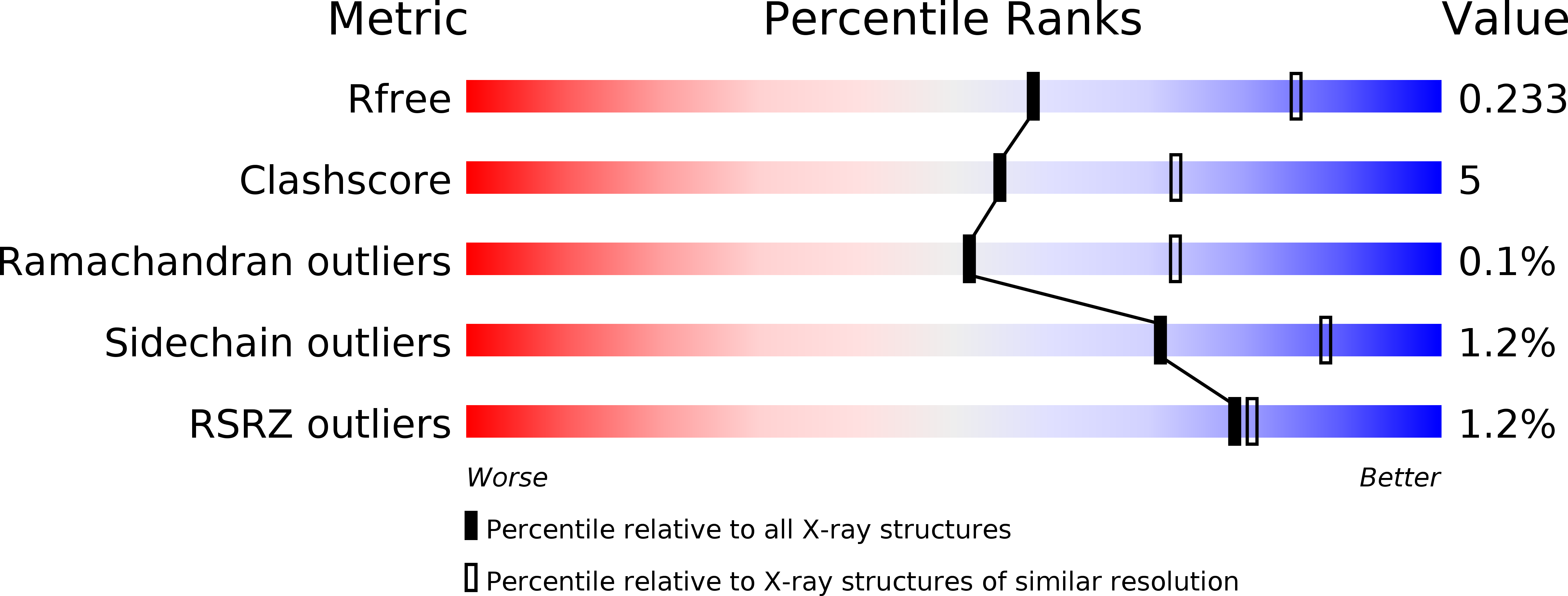
2.50 Å
R-Value Free:
0.23
R-Value Work:
0.17
R-Value Observed:
0.18
Space Group:
P 41 21 2
Macromolecular Entities
Structures with similar UniProt ID
Protein Blast
Polymer Type:polypeptide(L)
Molecule:Aldehyde oxidase small subunit
Gene (Uniprot):aoms
Chain IDs:A
Chain Length:162
Number of Molecules:1
Biological Source:Methylobacillus sp. KY4400
Structures with similar UniProt ID
Protein Blast
Polymer Type:polypeptide(L)
Molecule:Aldehyde oxidase medium subunit
Gene (Uniprot):aomm
Chain IDs:B
Chain Length:330
Number of Molecules:1
Biological Source:Methylobacillus sp. KY4400
Structures with similar UniProt ID
Protein Blast
Polymer Type:polypeptide(L)
Molecule:Aldehyde oxidase large subunit
Gene (Uniprot):aoml
Chain IDs:C
Chain Length:775
Number of Molecules:1
Biological Source:Methylobacillus sp. KY4400
Primary Citation
Crystal structure of an aldehyde oxidase from Methylobacillus sp. KY4400.
J. Biochem. 163 321 328 (2018)
PMID: 29319807 DOI: 10.1093/jb/mvy004

Abstact

Hetero-trimeric aldehyde oxidases of bacterial origin, which use O2 to catalyse the oxidation of various aldehydes but not those of aromatic N-heterocycles, belong to the xanthine oxidase family. In the present study, the crystal structure of a recombinant aldehyde oxidase from Methylobacillus sp. KY4400 (Mb-AOX) was determined at 2.5 Å resolution. The structures of its subunits resemble those of the corresponding subunits or domains of other structurally characterised enzymes belonging to the family, and include a [4Fe-4 S] cluster in the medium subunit like that found in Escherichia coli periplasmic aldehyde oxidoreductase (EP-AOR). A funnel leading to the si-face of the isoalloxazine ring of FAD, which is narrower than those in mouse liver AOX3 and human AOX1, is also present and it is even narrower than that in EP-AOR. The environment surrounding the ring in Mb-AOX and EP-AOR is subtly different, which might account for their different abilities to use O2. A remarkable characteristic of the Mo catalytic centre in Mb-AOX is a tryptophan situated near the centre instead of the alanine present in other xanthine oxidase family members. The tryptophan residue together with other residue differences might play an important role in binding to aldehydes such as n-heptylaldehyde in Mb-AOX.

Legend

Protein

Chemical

Disease

Primary Citation of related structures
Feedback Form
Name
Email
Institute
Feedback