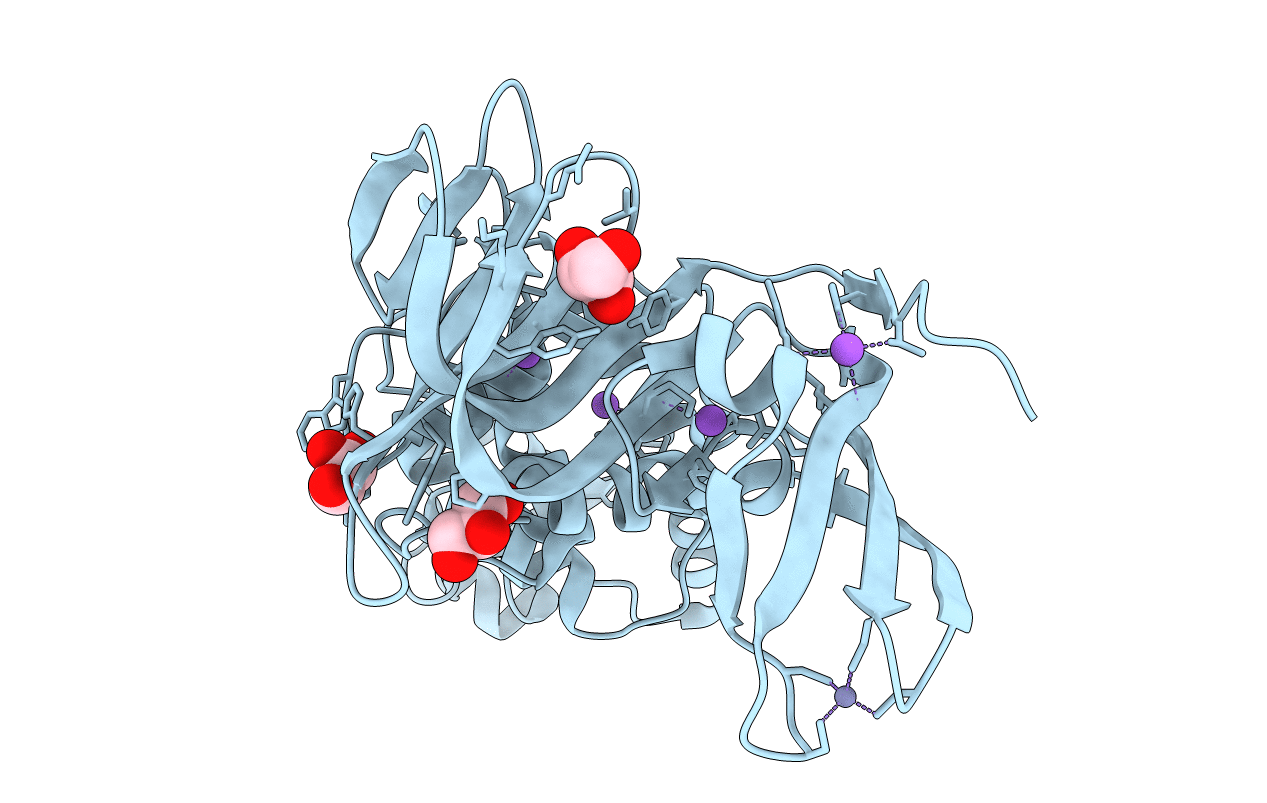
5Y3E image
Deposition Date 2017-07-28
Release Date 2018-01-10
Last Version Date 2024-10-30
Entry Detail
PDB ID:
5Y3E
Keywords:
Title:
Crystal structure of SARS coronavirus papain-like protease in complex with glycerol
Biological Source:
Source Organism:
Host Organism:
Method Details:
Experimental Method:
Resolution:
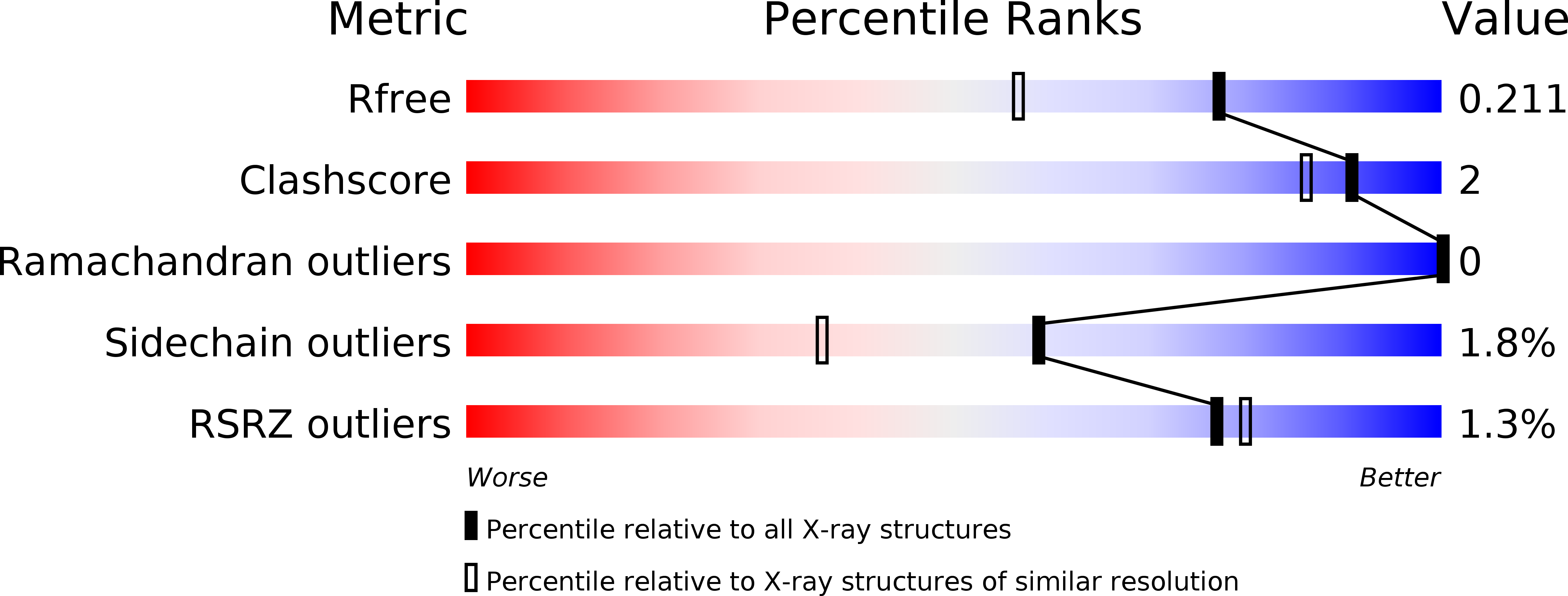
1.65 Å
R-Value Free:
0.19
R-Value Work:
0.16
R-Value Observed:
0.16
Space Group:
C 1 2 1
Macromolecular Entities
Structures with similar UniProt ID
Protein Blast
Polymer Type:polypeptide(L)
Molecule:Replicase polyprotein 1a
Gene (Uniprot):1a
Chain IDs:A
Chain Length:323
Number of Molecules:1
Biological Source:Human SARS coronavirus
Primary Citation
Disulfiram can inhibit MERS and SARS coronavirus papain-like proteases via different modes
Antiviral Res. 150 155 163 (2017)
PMID: 29289665 DOI: 10.1016/j.antiviral.2017.12.015

Abstact

Severe acute respiratory syndrome coronavirus (SARS-CoV) emerged in southern China in late 2002 and caused a global outbreak with a fatality rate around 10% in 2003. Ten years later, a second highly pathogenic human CoV, MERS-CoV, emerged in the Middle East and has spread to other countries in Europe, North Africa, North America and Asia. As of November 2017, MERS-CoV had infected at least 2102 people with a fatality rate of about 35% globally, and hence there is an urgent need to identify antiviral drugs that are active against MERS-CoV. Here we show that a clinically available alcohol-aversive drug, disulfiram, can inhibit the papain-like proteases (PLpros) of MERS-CoV and SARS-CoV. Our findings suggest that disulfiram acts as an allosteric inhibitor of MERS-CoV PLpro but as a competitive (or mixed) inhibitor of SARS-CoV PLpro. The phenomenon of slow-binding inhibition and the irrecoverability of enzyme activity after removing unbound disulfiram indicate covalent inactivation of SARS-CoV PLpro by disulfiram, while synergistic inhibition of MERS-CoV PLpro by disulfiram and 6-thioguanine or mycophenolic acid implies the potential for combination treatments using these three clinically available drugs.

Legend

Protein

Chemical

Disease

Primary Citation of related structures
Feedback Form
Name
Email
Institute
Feedback