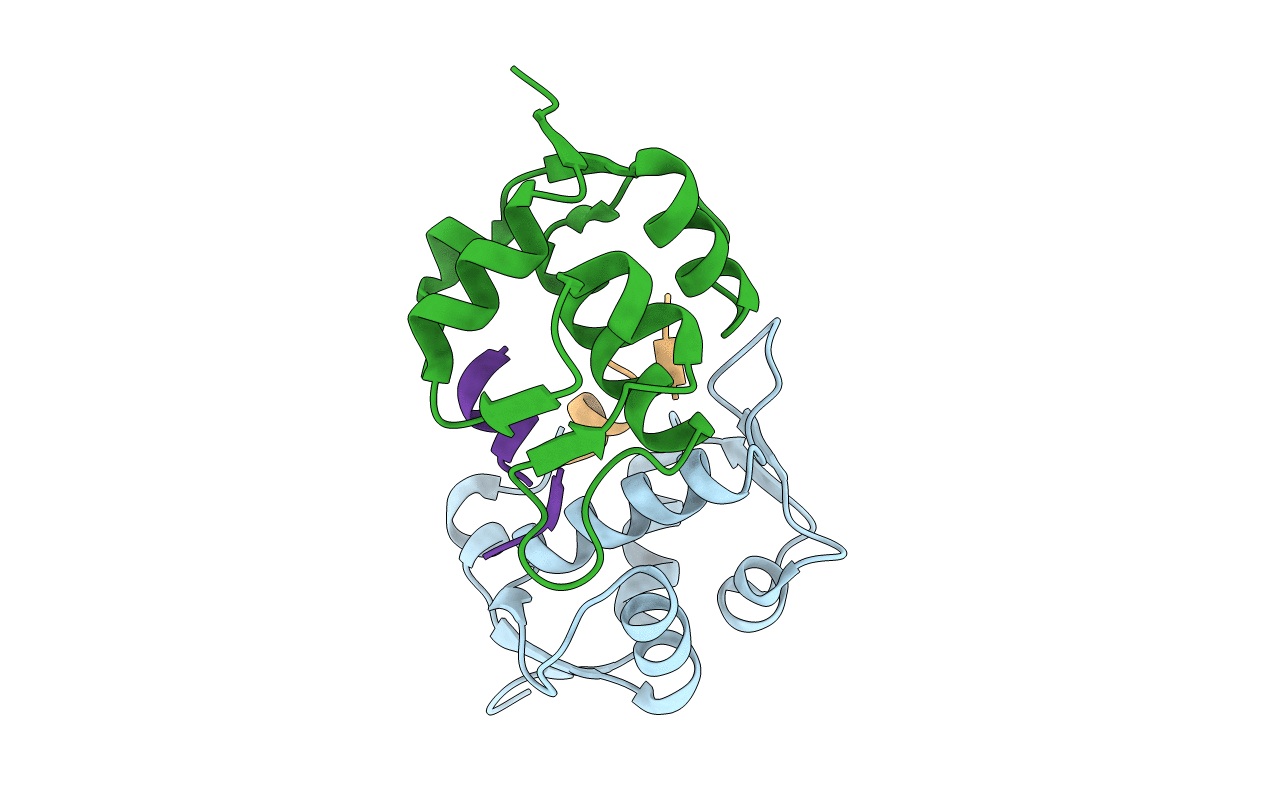
5XXK image
Deposition Date 2017-07-04
Release Date 2017-12-27
Last Version Date 2023-11-22
Entry Detail
PDB ID:
5XXK
Title:
Structure-activity studies of Mdm2/Mdm4-binding stapled peptides comprising non-natural amino acids
Biological Source:
Source Organism:
Host Organism:
Method Details:
Experimental Method:
Resolution:
1.66 Å
R-Value Free:
0.20
R-Value Work:
0.18
R-Value Observed:
0.18
Space Group:
P 21 21 2

Macromolecular Entities
Structures with similar UniProt ID
Protein Blast
Polymer Type:polypeptide(L)
Molecule:E3 ubiquitin-protein ligase Mdm2
Gene (Uniprot):MDM2
Mutagens:M62A
Chain IDs:A, B
Chain Length:122
Number of Molecules:2
Biological Source:Homo sapiens
Polymer Type:polypeptide(L)
Molecule:Hydrocarbon stapled peptide THC-SER-PHE-0EH-GLU-TYR-6CW-ALA-LEU-LEU-MK8-NH2
Chain IDs:C, D
Chain Length:12
Number of Molecules:2
Biological Source:Phage display vector pTDisp
Primary Citation
Structure-activity studies of Mdm2/Mdm4-binding stapled peptides comprising non-natural amino acids.
PLoS ONE 12 e0189379 e0189379 (2017)
PMID: 29228061 DOI: 10.1371/journal.pone.0189379

Abstact

As primary p53 antagonists, Mdm2 and the closely related Mdm4 are relevant cancer therapeutic targets. We have previously described a series of cell-permeable stapled peptides that bind to Mdm2 with high affinity, resulting in activation of the p53 tumour suppressor. Within this series, highest affinity was obtained by modification of an obligate tryptophan residue to the non-natural L-6-chlorotryptophan. To understand the structural basis for improved affinity we have solved the crystal structure of this stapled peptide (M011) bound to Mdm2 (residues 6-125) at 1.66 Å resolution. Surprisingly, near identity to the structure of a related peptide (M06) without the 6-chloro modification is observed. Further analysis of linear and stapled peptides comprising 6-Me-tryptophan provides mechanistic insight into dual Mdm2/Mdm4 antagonism and confirms L98 of Mdm4 as a mutable steric gate. The results also highlight a possible role of the flexible hinge region in determining Mdm2/Mdm4 plasticity.

Legend

Protein

Chemical

Disease

Primary Citation of related structures
Feedback Form
Name
Email
Institute
Feedback